Hospitality interior design: manufacturers, FF&E and trends
Hospitality interior design: manufacturers, FF&E and trends for hotels, restaurants and bars
Hospitality is a multi-billion-dollar global FF&E sector. From limited-service properties in suburban America to luxury resorts on the Andaman Sea, every guestroom, lobby, restaurant and pool deck depends on furniture built for commercial endurance — fire-safety-rated, abrasion-resistant, designed for daily commercial-grade use, scheduled for replacement on a seven-to-fifteen-year cycle.
The manufacturer landscape is divided between US contract specialists like Bernhardt and Kimball Hospitality, European premium full-line manufacturers like Pedrali, Andreu World and Vitra, and dedicated boutique manufacturers serving Hilton Tapestry, Marriott Autograph, IHG Vignette and the wider soft-brand ecosystem. For architects, interior designers and FF&E managers, the challenge is no longer finding manufacturers — it's selecting from too many. This hub maps the contract hospitality sector: definitions, standards, current developments, 40 manufacturers across five subcategories, and a complete manufacturer database. Curated for specifiers.
What hospitality interior design means in the contract sector
Hospitality interior design is a discipline. Hospitality furniture is a product category. The two are related but not identical — and in the contract sector, the distinction matters. Interior design is the planning service: a designer or design firm conceives a space, specifies materials, selects furniture, coordinates millwork, lighting, fabric, art and operational equipment. Hospitality furniture is the physical product that gets manufactured, shipped, installed and depreciated. This hub addresses both — but with a manufacturer focus, because that's where the specifier's most consequential decisions are made.
Distinguishing hospitality furniture from consumer furniture
The line between hospitality furniture and consumer furniture runs through four dimensions: fire safety, durability, cleanability, and lifecycle. Hospitality furniture has to meet BS 5852 Crib 5 for upholstery flammability in most international hotel chain specifications, plus ANSI/BIFMA performance standards for commercial seating (BIFMA X5.1 for general use, X5.4 for lounge seating). Consumer furniture rarely meets either. Hospitality upholstery is specified with Wyzenbeek or Martindale abrasion ratings starting at 30,000 double rubs for guestroom applications and reaching 100,000+ for high-traffic public areas. Consumer textiles typically sit below 15,000.
The commercial vs residential boundary creates a parallel manufacturer landscape. Wayfair Professional and IKEA Business sell to small operators and budget hotels at the lower end. Above that, true contract specialists take over: Bernhardt, Kimball Hospitality, Pedrali, Andreu World, Walter Knoll. These manufacturers build for a seven-to-fifteen-year service life under daily commercial use, with replacement parts available across that span. A residential sofa from a mass-market retailer won't survive eighteen months in a hotel lobby. The economics aren't comparable — and neither is the warranty exposure.
Market and key players
Global hospitality FF&E spending sits in the tens of billions of dollars annually, with three structural drivers: new-build hotel construction (concentrated in Asia-Pacific and the Middle East), renovation cycles (every seven to fifteen years for soft-brand collections, every five to seven years for limited-service chains), and the expanding pool-and-outdoor segment (growing faster than indoor across most resort markets).
The manufacturer landscape divides geographically. The United States hosts the contract specialists shaped by decades of supplying Hilton, Marriott, IHG, Hyatt and Wyndham — Bernhardt, Kimball Hospitality, Stylecraft, ISA Seating and dozens of regional players. Italy and Spain dominate the European premium segment with full-line manufacturers like Pedrali, Andreu World (Spanish, but in the Italian-oriented premium cluster), Poltrona Frau, Cassina and B&B Italia. Belgium and France lead outdoor, with Tribù, Manutti, and Fermob. Scandinavia contributes design-led brands across all segments — Fritz Hansen, Carl Hansen & Søn, HAY, &Tradition. The DACH region (Germany, Austria, Switzerland) holds the engineering-driven middle ground with Vitra, Walter Knoll and Brunner. Asia-Pacific contributes both volume manufacturers (China, Vietnam, Indonesia) and design-led specialists (Japan's Maruni and Karimoku, both increasingly visible in international hotel specifications).
For specifiers, the consequential split isn't geographic but structural: full-line manufacturers versus subcategory specialists. Full-line manufacturers serve guestroom, lobby, restaurant and partial outdoor from one program. Subcategory specialists go deep on one application — beds, lounge seating, outdoor, casegoods. Both have their place. Mixing them is where FF&E specification gets interesting.
Subcategories of hospitality furniture
Hospitality furniture splits into five subcategories, each with its own specification logic, supplier landscape and procurement rhythm.
Guestroom and suite is the volume segment — beds, casegoods, desks, lounge seating, lighting. Every guestroom needs the full package, every renovation cycle replaces it. This is where US contract specialists earn their margins and where European premium manufacturers compete on suite-level upgrades.
Lobby and public areas is the representation segment — lounge sofas, modular seating, occasional tables, reception furniture, co-working zones. Here a hotel signals what kind of property it is. The supplier mix is design-heavy: Italian premium, Scandinavian studio brands, US contract specialists for volume.
Restaurant and bar is the function segment — chairs, tables, barstools, banquettes. Durability and stackability matter more than statement design. The supplier landscape is dense, with strong wood-chair specialists across central Europe and Scandinavia.
Outdoor and pool is the growth segment — modular outdoor sofas, sun loungers, dining sets, parasols, daybeds. The product life is shorter (weather exposure), the design is increasingly premium, and the procurement cycles are accelerating as hotels add and refresh outdoor zones year over year.
Full-line manufacturers sit across all four — usually with deeper strength in one or two categories, but with programs that allow project-wide specification from a single supplier. For specifiers managing rollouts across multiple property types, full-line manufacturers reduce coordination overhead. For boutique properties seeking distinctive identity, subcategory specialists offer more.
This hub's manufacturer section follows the same split: full-line first, then four subcategory chapters, then a complete database. Forty manufacturers are profiled in depth. The wider supplier landscape — several hundred manufacturers — is accessible through the filterable database at the end.
The European new-build leg of those growth drivers in numbers: 315 hotels with 44,666 rooms opening in 2026, a 46% jump in rooms over 2025. The plateau from 2027 onwards signals delays in the late-pipeline phase.

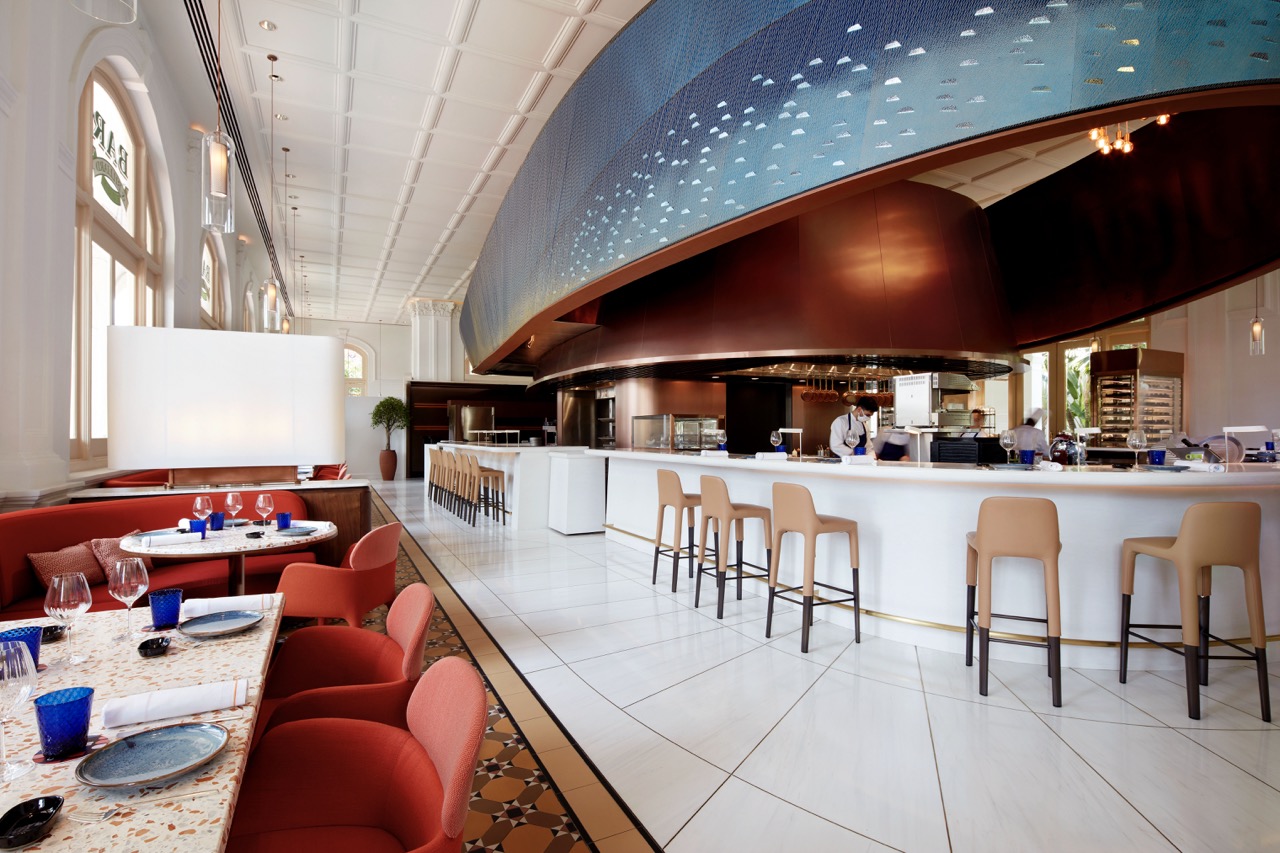
Osteria BBR at Raffles Hotel Singapore — Pedrali Ester chairs and bar stools (design Patrick Jouin) in the Alain Ducasse restaurant concept. Architecture and interior: Studio Jouin Manku. Photo: Pedrali.
Requirements: fire safety, durability, sustainability
Hospitality furniture has to meet three categories of requirement before aesthetics enter the conversation: fire safety, durability and hygiene, and sustainability. These aren't optional. They are the floor for any specification that will hold up under hotel chain procurement, insurance review, and renovation-cycle replacement.
Fire safety as the central requirement
Fire safety is the non-negotiable. For US-specified properties, California Technical Bulletin 117-2013 (CAL TB 117-2013) is the baseline for upholstered seating — the standard that replaced the older TB 117 in 2013 with a smolder-only test protocol after concerns about flame-retardant chemistry. Many state codes and most major hotel chains require CAL TB 133 for public-area upholstery, a more demanding open-flame test originally developed for high-occupancy commercial spaces. For wall finishes and decorative materials, ASTM E84 (the Steiner Tunnel Test) classifies flame spread and smoke developed, with Class A required for most public-area applications.
International hotel chains layer their own specifications on top. BS 5852 Crib 5 — a British standard testing upholstery resistance to a wooden crib ignition source — is widely specified for Hilton, Marriott, IHG and Hyatt properties globally, regardless of local code. It's the de facto international benchmark for chain-branded hospitality. European projects add EN 1021-1 and -2 (cigarette and match resistance) and the construction-product classifications under EN 13501-1 (B-s1, d0 and similar ratings for wall and ceiling materials).
Asian markets follow a fragmented landscape. Japan's Fire Service Law and China's GB standards (GB 17927 for upholstery, GB 8624 for building materials) operate alongside, not under, the Western norms — and resort properties operated by international chains in Bali, Phuket, Sanya or the Maldives typically specify to the chain's global FF&E standards (usually BS 5852 plus chain-specific addenda) rather than to local-only codes. For specifiers, the practical takeaway: BS 5852 Crib 5 plus CAL TB 117-2013 covers most international hotel chain work; chain-specific FF&E manuals add further detail.
Durability, hygiene, and cleanability
Commercial seating durability is measured against ANSI/BIFMA X5.1 for general-purpose chairs and X5.4 for lounge seating — both require manufacturers to pass cyclic load testing, drop tests, and stability checks that residential furniture isn't engineered to survive. European projects often specify EN 16139 (non-domestic seating) and EN 16121 (non-domestic storage) instead of or alongside BIFMA. Many international chains accept either, provided the documentation is in order.
Upholstery abrasion is the second durability axis. US specifiers use the Wyzenbeek scale, measured in double rubs, with thresholds typically set at 30,000 for guestroom upholstery, 50,000 for lobby and lounge, and 100,000+ for high-traffic public-area applications like restaurant banquettes and conference seating. International projects use Martindale instead, with roughly comparable thresholds (40,000 Martindale cycles for guestroom, 100,000+ for heavy public-area use). The two scales aren't directly convertible — Wyzenbeek tests with a cotton duck rubbing material, Martindale with a wool felt — but most contract textile suppliers publish ratings in both for international hospitality applications.
Hygiene and cleanability have moved up the requirements stack since 2020. Hospitality upholstery is increasingly specified for hospital-grade disinfectant compatibility — sodium hypochlorite, quaternary ammonium compounds, hydrogen peroxide. Crypton, Sunbrella Contract and similar performance fabric platforms have become category leaders by guaranteeing this compatibility in writing. Antimicrobial coatings (silver-ion, zinc-pyrithione) appear in many specifications, though their actual hygiene value is contested — the EPA has taken a stricter line on antimicrobial marketing claims since 2023, and several US hotel chains have quietly removed antimicrobial language from their FF&E specifications to avoid regulatory exposure.
Sustainability, ESPR, and hotel brand standards
Sustainability requirements have shifted from marketing differentiator to procurement floor. The EU's Ecodesign for Sustainable Products Regulation (ESPR), in force since 2024 and rolling out category by category, will eventually require digital product passports for furniture sold into European markets — including FF&E destined for European hotel properties. US-manufactured furniture sold into European hospitality projects will need to comply, regardless of where it's made. The Digital Product Passport requirement is expected to reach furniture categories by the late 2020s.
For US-specified projects, the regulatory environment is less unified but moving in parallel. California's SB 343 governs recycled-content claims; the FTC's Green Guides (currently under revision, with updates expected in 2026) govern broader sustainability marketing language. EPA's TSCA Section 8 imposes reporting on certain chemical-of-concern substances in furniture supply chains. Most major US hotel chains incorporate these requirements into their FF&E specifications directly.
Certification systems provide common ground. GREENGUARD Gold for low-emission indoor air quality is widely specified. FSC certification for wood traceability is standard in premium specifications. BREEAM (international, with strong UK and EU adoption) and LEED (US-led, but globally applied to hotel new-builds and major renovations) drive the project-level sustainability framework that pulls FF&E specifications along. WELL Building Standard, with its focus on occupant health rather than building environmental impact, has become the third major certification framework — particularly for wellness-positioned properties.
Hotel chain sustainability programs add further layers. Marriott's Serve 360, Hilton's Travel with Purpose 2030, IHG's Journey to Tomorrow, Hyatt's World of Care, Accor's Planet 21 — these aren't decorative. They translate into concrete FF&E specifications: minimum recycled content, certified wood, fabric provenance documentation, end-of-life reporting. For manufacturers, sustainability documentation has become as integral to a quote as fire safety certification was a generation ago.
Current developments in hospitality interior design
The hospitality market is moving faster than it has in two decades. Four developments shape the furniture specification today. They overlap, they reinforce each other, and they change what FF&E managers procure.
Eight years of the German lodging market — from the pre-pandemic record through the 2020 collapse to full recovery in 2024. The volume is back; what's shifting now are the expectations placed on the furniture.
Bleisure and hybrid hospitality
Business travel and leisure travel have converged. Someone in San Francisco for a Tuesday meeting extends through the weekend. Someone vacationing in Bali takes two hours of calls from the hotel room each morning. Bleisure is no longer a marketing term — it's a procurement reality.
For specification, this means guestrooms need a workstation that actually functions. Not the narrow desk wedged between the TV and the window, but an ergonomically usable work surface with accessible power, daylight access, and a chair that holds up for three hours of focused work. Lobbies are becoming co-working zones with modular sofas, acoustic dividers, and power outlets distributed throughout the space.
CitizenM played this early, designing its lobbies as mixed lounge-work areas from the beginning. Marriott AC Hotels and Hilton Tempo by Hilton pursue similar logic. Yotel, with its compact-cabin guestroom format, took the same idea into the room itself. In the premium segment, boutique hotels prioritize workstations that don't look like open-plan offices — here Vitra, Walter Knoll, and Brunner deliver lounge-desk hybrids that read as residential rather than corporate.
Wellness, wellbeing, and biophilic design
Wellness has moved out of the spa. The entire property is now meant to be a health experience. Yoga mat holders in the closet, air quality sensors on the nightstand, circadian lighting tuned to the guest's sleep rhythm. For furniture specification, this means natural materials, organic shapes, biophilic accents throughout public and private areas.
Biophilic design has arrived in lobby and public-area work. Living walls, wood surfaces, natural stone, plant islands. Vitra, Cassina, and Walter Knoll offer collections that align with this direction. HAY and &Tradition serve the mid-premium segment. In Asia-Pacific, wellness-positioned resort brands like Six Senses and Aman have driven this aesthetic into the high end of the market — and increasingly into the renovation cycles of mainstream chain properties.
The WELL Building Standard is the central certification framework here. Unlike BREEAM or LEED, WELL doesn't certify the building's environmental impact — it certifies the building's effect on occupant health and wellbeing. For hotels positioning themselves as wellness properties, WELL is becoming a near-mandatory label. Furniture contributes through materials, emissions ratings, and ergonomic properties.
Localization and storytelling design
The hotel uniformity of the 2000s is over. A guest entering a hotel room today doesn't want to guess whether they're in Hamburg, Houston, or Hanoi. The chains' answer is the soft-brand collection. Hilton Tapestry, Marriott Autograph, IHG Vignette, Hyatt Unbound, Choice Ascend. Properties operating under a chain umbrella but designed with individual character. Locally anchored architecture, regional materials, place-specific stories.
For specification, this means a shift away from the bulk order of 300 identical chairs and toward curated selection. Boutique manufacturers, Italian premium houses, and regional specialists are winning contracts that a decade ago went to volume suppliers. Pedrali, Andreu World, Poltrona Frau, Cassina, and Molteni&C benefit. Smaller brands like Tacchini, Arper, or ClassiCon also appear in hotel specifications that used to be volume-supplier territory.

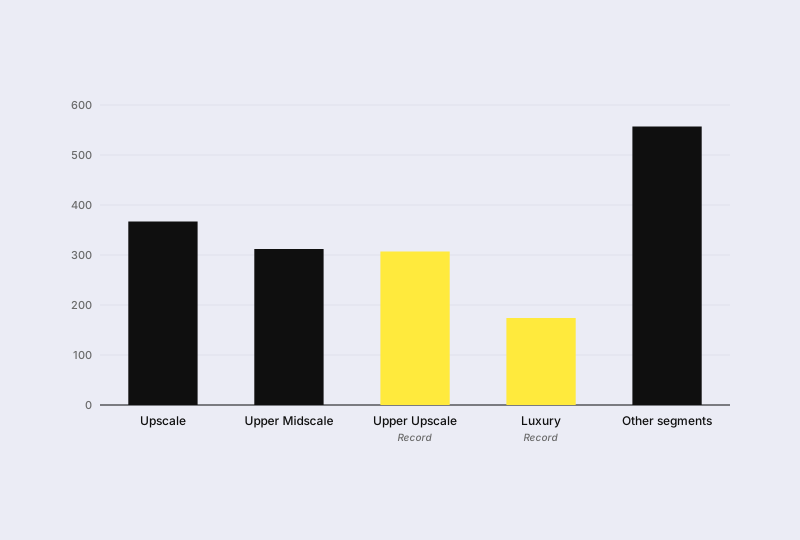
Soft-brand collections such as Tapestry, Autograph and Vignette operate in exactly the two segments that hit record pipeline levels in Q4 2025 — Upper Upscale (307 projects) and Luxury (174 projects). FF&E budgets per room concentrate here.
For FF&E managers, this means more coordination effort. Smaller order volumes per brand, more suppliers, longer procurement cycles. For manufacturers: those with a coherent brand narrative gain an advantage. Those that are interchangeable lose ground.
Outdoor expansion and sustainability
Outdoor used to be seasonal. Today it's a year-round investment. Pool bar, rooftop lounge, outdoor restaurant, terrace dining. These zones now contribute a meaningful share of revenue in many properties, and in Mediterranean, Caribbean, Southeast Asian, and US-Sunbelt locations they operate nearly the full calendar.
Outdoor specialists are benefiting disproportionately. Kettal and Gandiablasco from Spain. Tribù and Manutti from Belgium. Roda from Italy. Dedon from Germany with production in the Philippines. Fermob from France in the mid-tier. JANUS et Cie and Brown Jordan in the US-anchored premium segment. These brands are growing faster than the broader hospitality FF&E market.
Sustainability pressure is intensifying in parallel. Refurbishment instead of replacement is moving from European procurement experiment to international specification option. Lobby sofas get reupholstered rather than discarded, casegoods get refinished, outdoor frames get re-strapped. In the outdoor segment, recycled fibers — Sunbrella Renaissance, Sunbrella Contract recycled lines, Kvadrat upholstery from PET — and FSC-certified tropical hardwoods are becoming standard rather than optional. Performance fabric platforms like Crypton increasingly offer recycled-content versions.
What was marketing differentiation a decade ago is procurement requirement today. A manufacturer without refurbishment options or recycled-content documentation will be falling out of relevant bid lists by 2030.
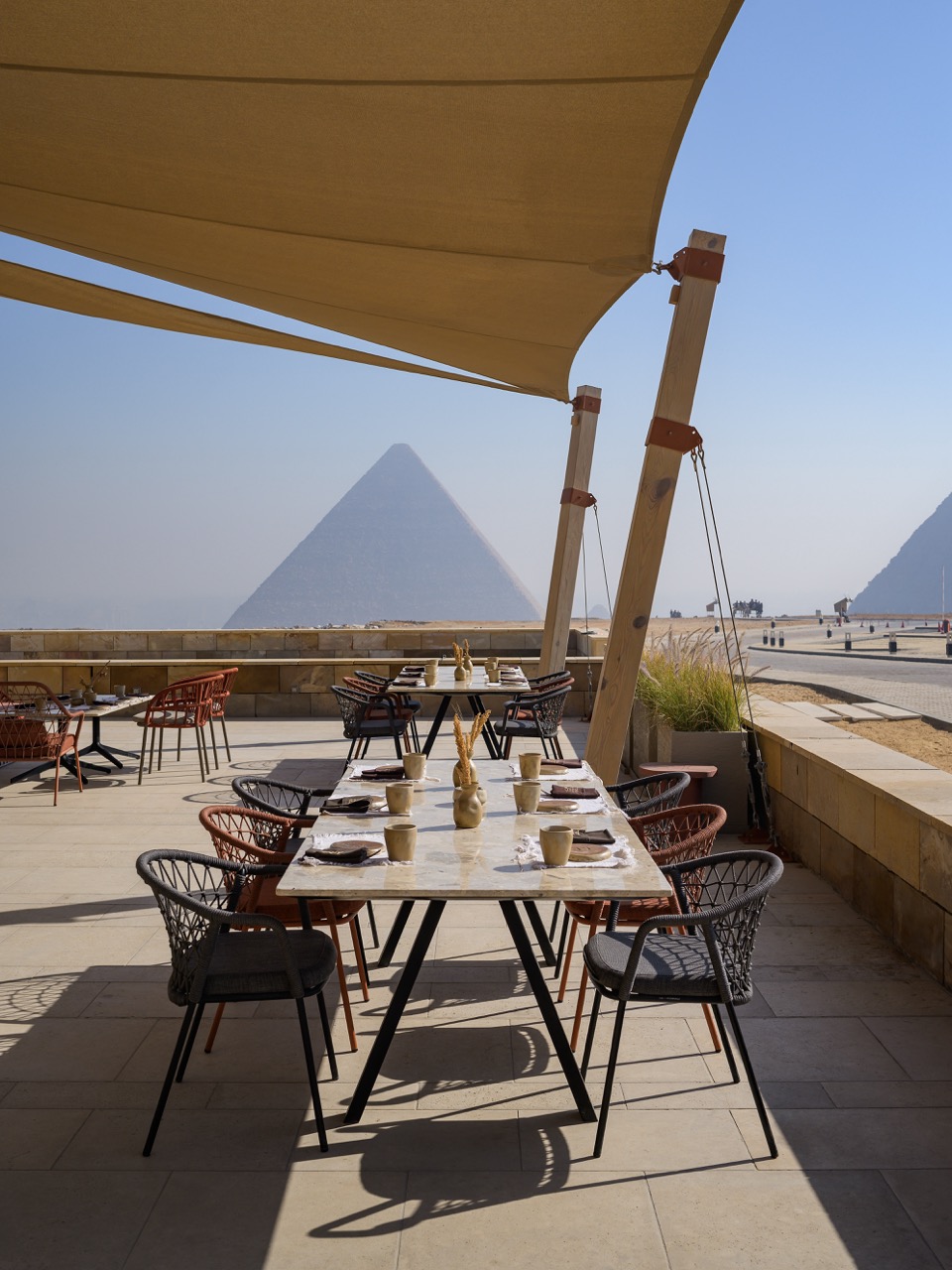
Khufu's, restaurant at the Giza pyramid plateau — Pedrali Panarea chairs (design Cazzaniga Mandelli Pagliarulo) on the outdoor terrace overlooking the Pyramid of Khufu. Architecture: Hisham Ghorab, Style Design Architects. Photo: Nour el Refai.
Hospitality furniture manufacturers at a glance
Hospitality furniture comes from several hundred manufacturers worldwide. The 41 profiled below are, from a furnomics perspective, the most relevant for international hospitality specification — with an explicit weighting toward US contract specialists, European premium full-line manufacturers, and the Asia-Pacific design houses gaining ground in chain specifications. Full-line manufacturers come first, followed by four subcategory chapters: guestroom and suite, lobby and public areas, restaurant and bar, outdoor and pool. Sorting within each subcategory follows market relevance, not alphabet. Each brand is named once — even when active across multiple subcategories. The complete filterable hospitality manufacturer database is accessible here.
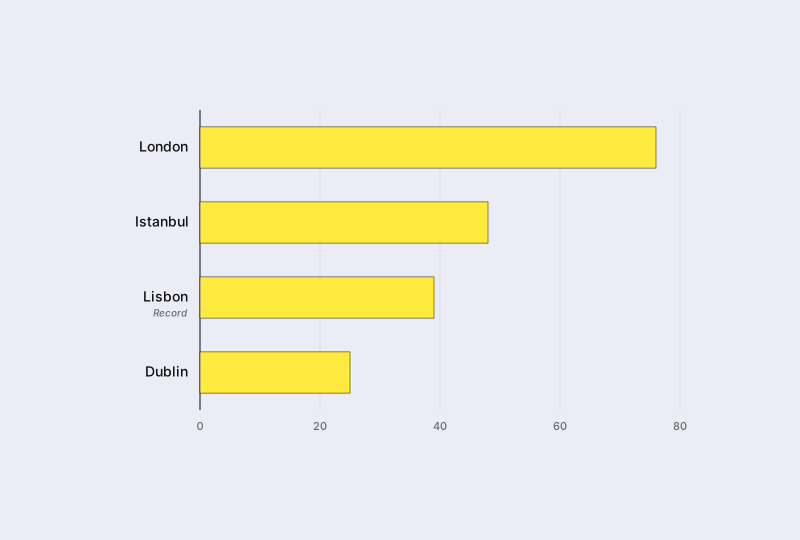
Where the curated brands below will be delivering over the coming years: five European pipeline hotspots, with London the clear lead market and Lisbon at a record high.
Full-line manufacturers
Full-line manufacturers serve all hospitality subcategories from a single program — guestroom, lobby, restaurant, partial outdoor. They are the first stop for FF&E managers handling project-wide specifications, multi-property rollouts, and brand-standard programs that require coordinated furniture documentation.
Bernhardt Hospitality is the hospitality division of Bernhardt Furniture Industries, based in Lenoir, North Carolina. Bernhardt operates three sister brands under one roof: Bernhardt Design for workplace, Bernhardt Interiors for premium residential, and Bernhardt Hospitality for hotel and resort properties. In the US hospitality market, Bernhardt is one of the dominant suppliers to Hilton, Marriott, IHG and Hyatt, with deep penetration in select-service through full-service segments. International specifications for US chain properties in Europe and Asia regularly include Bernhardt Hospitality programs.
Kimball Hospitality is the hospitality division of Kimball International, headquartered in Jasper, Indiana, and now part of HNI Corporation following the 2023 acquisition. Kimball Hospitality supplies casegoods, upholstered seating, and lobby furniture to US hotel chains and boutique properties, with particular strength in guestroom programs for upscale and upper-upscale segments. The HNI Corporation umbrella now includes Steelcase, Allsteel, HBF, Kimball International and Orangebox — a corporate consolidation that has reshaped the US contract landscape since late 2025.
Pedrali is an Italian family-owned manufacturer based in Mornico al Serio near Bergamo, founded 1963. Pedrali has emerged as one of Europe's most important hospitality full-line manufacturers, with pronounced strength in outdoor and restaurant-and-bar furniture. Designers including Patrick Jouin, Claudio Bellini, Patrick Norguet, and Dondoli & Pocci have developed hospitality lines for Pedrali that appear in international hotel chains and restaurants from Singapore (Raffles Hotel) to Egypt (Khufu's at Giza). Pedrali combines its own Italian production with a dense international distribution network — a profile rare in the hospitality premium segment.
Andreu World is a Spanish family-owned manufacturer based in Chiva near Valencia, founded 1955. Andreu World has evolved from chair specialist to hospitality full-line manufacturer, with particular strength in lounge and restaurant seating. The Solid series and the Nub collection are established in international hotel specifications. Sustainability reporting became a central Andreu World selling point early on — the brand was one of the first European manufacturers with comprehensive Cradle-to-Cradle certification.
Brunner is a German manufacturer based in Rheinau, Baden, founded 1977. Brunner covers contract and hospitality from a single program and is often the first German address in DACH hotel projects when Italian premium doesn't fit the budget. Lounge seating, restaurant chairs and lobby sofas form the core of the hospitality program. Strongly represented in conference and meeting hotels, where Brunner's configurable systems give the brand a structural advantage.
Walter Knoll is a German family-owned manufacturer based in Herrenberg near Stuttgart, with origins reaching back to 1865. Walter Knoll is not primarily a hospitality manufacturer — the core focus is residential and workplace premium — but hospitality lines for lobby and lounge are established in the upper-tier hotel segment. Properties at Mandarin Oriental, Four Seasons and Park Hyatt level regularly specify Walter Knoll. In the DACH market one of the most important premium suppliers for high-end hospitality.
Guestroom and suite
Guestroom and suite is the volume segment of hospitality furniture. Beds, casegoods, desks, lounge seating, lighting. The range stretches from DACH-region hospitality specialists offering full project solutions to Italian premium houses with dedicated contract divisions, plus French and Scandinavian bed specialists serving the luxury segment.
Wilkening Hoteldesign is a German hospitality full-service supplier based in eastern Westphalia. The focus is on complete guestroom and suite outfitting — furniture, fabrics, lighting, structural integration. Wilkening works project-based with hotel chains and boutique properties across the German-speaking market and is one of the first addresses when DACH hospitality requires turn-key concepts from a single source. Increasingly positioned around sustainability reporting in recent years.
Schuster Hoteleinrichtungen is a southern German family-owned company in the hospitality full-service segment. Schuster plans and delivers guestroom furniture as complete solutions, typically for mid-tier through premium hospitality in DACH and adjacent markets. The focus is on customized project solutions rather than standard product programs.
MD Hoteleinrichtungen is another German hospitality specialist in the project-sourcing middle segment. MD serves chain hospitality and mid-tier through upscale properties with guestroom and suite furniture. Particular strength in the process-driven execution of multi-site rollouts for hotel chains.
Poltrona Frau is an Italian premium furniture house, founded 1912 by Renzo Frau in Turin. Today part of Haworth Lifestyle Design, alongside Cassina and Cappellini. Poltrona Frau is renowned for high-grade leather upholstery and supplies premium hospitality globally through its contract division — from luxury hotel suites to first-class cabins in aircraft and yachts.
Cassina is an Italian premium furniture house, founded 1927 in Meda. Also part of Haworth Lifestyle Design. Cassina holds the official production rights to the furniture classics of Le Corbusier (the LC series) and supplies high-end hospitality and branded residences through its contract division. Specified at Mandarin Oriental, Four Seasons and comparable properties internationally.
Molteni&C is an Italian premium furniture house, founded 1934 in Giussano. Family-owned, with its own corporate structure (Molteni Group including UniFor and Dada). Molteni&C Contract supplies premium hospitality and branded residences, with particular strength in suite furniture and custom millwork and storage solutions.
B&B Italia Project is the contract division of B&B Italia, the furniture house founded in 1966 by Piero Ambrogio Busnelli. B&B Italia today belongs to Design Holding (Investindustrial and Carlyle). B&B Italia Project serves hospitality projects with designer furniture by Antonio Citterio, Patricia Urquiola and others — from lobby sofas to complete suite specifications.
Tréca is a French luxury bed manufacturer, founded 1922 in Reichshoffen in Alsace. Tréca produces handmade premium box-spring beds and is regularly specified in five-star hospitality. Properties such as the Ritz Paris and Le Bristol use Tréca beds. In the international luxury hospitality market, Tréca is the established French premium bed supplier.
Carpe Diem Beds is a Swedish luxury bed manufacturer based in Lyrestad. Carpe Diem produces handcrafted premium beds in the Scandinavian wellness-premium cluster — similar in positioning and price to Hästens, but with its own design language. Specified in premium boutique hospitality and wellness properties across DACH, Scandinavia, and increasingly the international wellness-resort segment.
Lobby und Public Areas
Nine manufacturers. Lobby and public areas is the representation segment of hospitality furniture. Lounge seating, modular sofas, occasional tables, reception furniture, bar groupings, co-working pieces. Here a hotel signals what it wants to be. The brand mix is particularly dense in the premium segment — Italian designer premium, Danish studio premium, international lifestyle brands.
Vitra is a Swiss family-owned manufacturer based in Birsfelden near Basel, founded 1950. Vitra produces both the twentieth-century furniture classics (Eames, Panton, Prouvé) and contemporary designer furniture by Hella Jongerius, Jasper Morrison, Edward Barber and Jay Osgerby. In urban boutique hotels and lifestyle properties, Vitra is hard to miss in lobby and lounge settings. One of the most important addresses for hospitality with design ambition — strong across Europe, North America, and increasingly in Asia-Pacific premium properties.
Fritz Hansen is a Danish furniture house with roots reaching back to 1872. Fritz Hansen is home to some of the most iconic pieces of Danish design — Arne Jacobsen's Egg, Swan and Ant chairs, Poul Kjærholm's PK series. Specified in premium hospitality worldwide, from lobby seating groups to restaurant chairs. One of the most important premium suppliers in Scandinavian-influenced hospitality, with strong presence in Japan, Singapore and Hong Kong as well.
HAY is a Danish designer brand, founded 2002 in Copenhagen by Rolf and Mette Hay. Majority stake held by MillerKnoll since 2018 (then Herman Miller). HAY has evolved from a furniture brand into a lifestyle brand and serves the mid through upper hospitality market with lounge furniture, chairs and accessories. Strongly present in boutique and lifestyle hotels — including chain concepts like Hoxton and Ace Hotel where HAY appears repeatedly in specifications.
Cappellini is an Italian designer furniture house, founded 1946 in Arosio. Today part of Haworth Lifestyle Design — alongside Poltrona Frau and Cassina. Cappellini has developed collections over decades with designers like Jasper Morrison, Tom Dixon, Marc Newson and Patricia Urquiola that define the Italian designer premium segment. Regularly specified for lobby statement pieces in upmarket boutique hospitality.
Moroso is an Italian family-owned manufacturer based in Cavalicco near Udine, founded 1952. Today led by Patrizia Moroso. Moroso works closely with Patricia Urquiola, Ron Arad, Tord Boontje and others — the collections are color- and form-forward, often sculptural. Regularly specified in boutique hospitality and in hotel chains with narrative design ambition (Mama Shelter, Hoxton, 25hours).
Magis is an Italian designer furniture house based in Motta di Livenza, founded 1976. Magis is known for its playful design language and collaborations with Konstantin Grcic, Jasper Morrison, Stefano Giovannoni and others. Strong in restaurant and bar furniture, but also in lobby settings where hotels want to set a younger or more playful accent.
Arper is an Italian furniture house based in Monastier di Treviso, founded 1989. Arper is positioned in the mid-premium segment and supplies reduced-functional furniture for hospitality, office and public spaces. Established in lobby and lounge settings for lifestyle hotels and boutique properties with a restrained design ambition.
Tacchini is an Italian furniture house based in Baruccana di Seveso near Milan, founded 1965. Tacchini has evolved from a classical upholstered furniture manufacturer into a designer premium house with reissues of historical Italian designer furniture and new collections with contemporary designers. Increasingly present in upmarket boutique hospitality and branded residences.
ClassiCon is a German furniture house based in Munich, founded 1990. ClassiCon produces the originals of Eileen Gray (Adjustable Table E 1027, Bibendum, Day Bed) as well as contemporary designer furniture by Konstantin Grcic, Sebastian Herkner, Nendo and others. An established premium address for iconic statement pieces in lobby and suite settings in high-end hotel design.
Restaurant and bar
Restaurant and bar is the function segment of hospitality furniture. Chairs, tables, barstools, banquettes. Statement design matters less here than durability, stackability and rapid cleaning. Still, the premium brand mix is well developed — particularly the wood-chair specialists across central Europe and Scandinavia have their traditional market here.
Ton is a Czech furniture house based in Bystřice pod Hostýnem, with roots reaching back to 1861. Ton is today one of the most important bentwood-chair manufacturers in Europe and works closely with contemporary designers like Alexander Gufler, Thinkk Studio and Hagit Pincovici. Established in restaurant furniture worldwide, from boutique bistros to restaurant chains with high design ambition. In the European market one of the first addresses for wood chairs in hospitality specification.
Carl Hansen & Søn is a Danish family-owned manufacturer based in Odense, founded 1908. Carl Hansen & Søn holds the official production rights to the chair classics of Hans J. Wegner — including the Wishbone Chair (CH24), the Shell Chair and the Wegner lounge pieces. Specified in premium restaurant and hospitality settings worldwide. Wegner chairs in restaurant seating are near-unavoidable in Scandinavian-influenced hospitality.
Stua is a Spanish designer furniture house based in Astigarraga in the Basque Country, founded 1979. Stua produces reduced-functional wood chairs and tables with a pronounced craft sensibility, often developed with designers like Jesús Gasca. Specified in restaurant furniture and bar seating with a quieter design language — an established address for properties that want to position themselves restrained and functional rather than Italian-prominent.
Plank is an Italian furniture house based in Ora in South Tyrol, founded 1965. Plank became internationally known through the Konstantin Grcic collaborations — Chair_One and the Myto chair are among the most-specified designer chairs in modern restaurant and café settings. Strong in outdoor restaurant seating because many Plank chairs are weather-resistant.
Gebrüder Thonet Vienna (GTV) is an Italian brand based in Bassano del Grappa, operating as an independent company since 2017, continuing the historical Viennese bentwood tradition. Not to be confused with the German Thonet GmbH in Frankenberg, which serves a separate branch of the Thonet history. GTV produces handmade bentwood chairs and designer furniture for premium hospitality, with designers like Front, GamFratesi and Lucidi-Pevere.
Calligaris is an Italian family-owned manufacturer based in Manzano in Friuli, founded 1923. Calligaris supplies chain hospitality and mid through upmarket restaurant hospitality through its contract division. Established in the volume segment of Italian hospitality procurement, with a broad program spanning chairs, tables and upholstered banquettes.
&Tradition is a Danish designer brand based in Copenhagen, founded 2010. &Tradition combines reissues of historical Scandinavian designer pieces (including Verner Panton) with contemporary collections by designers like Jaime Hayón, Space Copenhagen and Khaled El Mays. Increasingly specified in boutique hospitality and restaurant settings with Scandinavian design ambition.
Sika Design is a Danish family-owned manufacturer, founded 1942. Sika Design has specialized in rattan and woven furniture and produces the original Nanna Ditzel hanging chair as well as classics by Arne Jacobsen and Franco Albini. Strong in restaurant seating, bar settings and lobby spaces that want a craft-warm accent — the transition between indoor and outdoor furniture is fluid at Sika Design.
Mater is a Danish sustainability-oriented designer brand, founded 2006 in Copenhagen. Mater produces furniture from FSC-certified wood, recycled aluminum and plastic waste from the fishing industry (ocean-bound and ocean-recovered plastics). Designers like Eva Harlou, Henrik Pedersen and Space Copenhagen develop collections with sustainability-first ambition. Increasingly specified in hospitality projects with ESG reporting requirements.
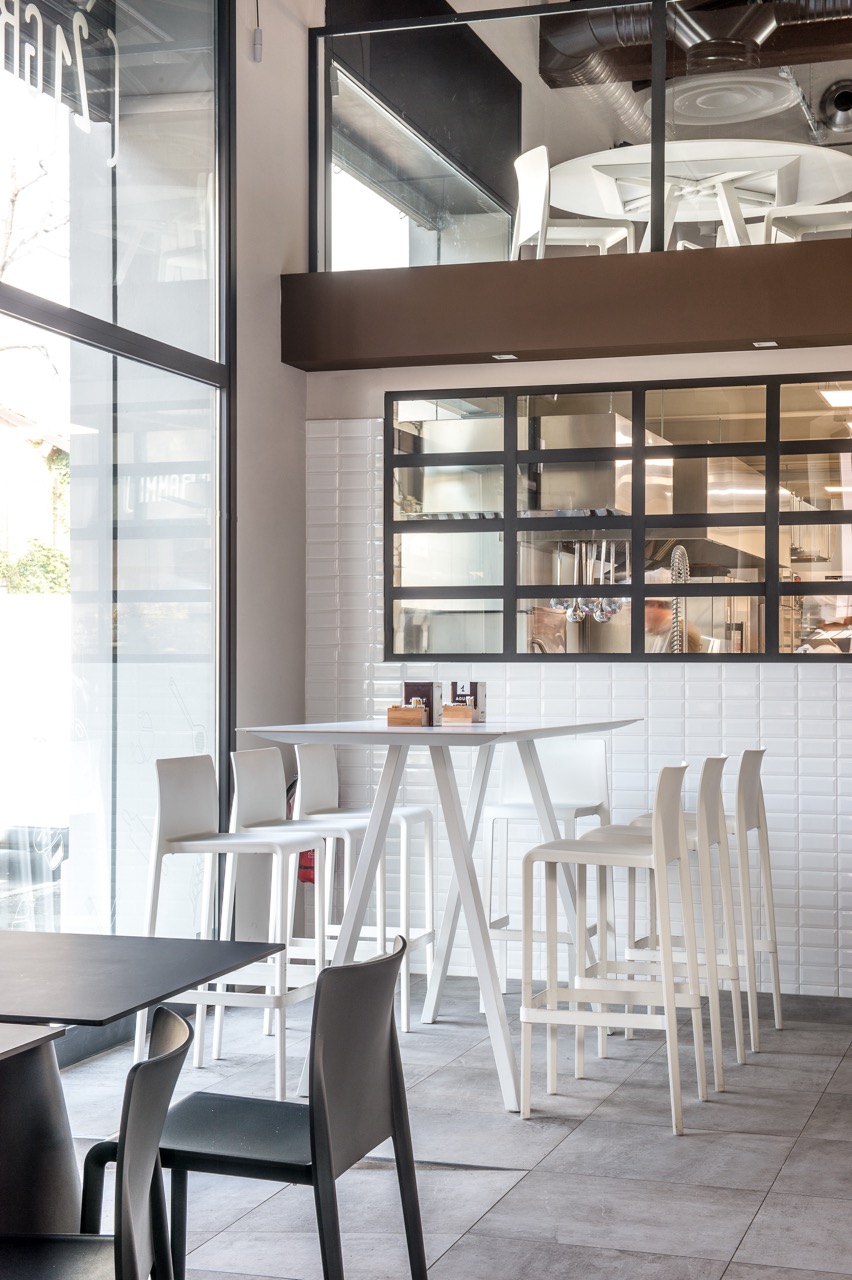
21Grammi® restaurant, Brescia — Pedrali Volt seating (design Dondoli & Pocci) and Ikon tables (Pio & Tito Toso) in an inclusion project run by Centro Bresciano Down. The restaurant offers vocational training to young people with Down syndrome; Pedrali contributed the furnishings.
Outdoor and pool
Outdoor and pool is the fastest-growing segment of hospitality furniture. Pool bar, rooftop lounge, outdoor restaurant, terrace dining. In Mediterranean, Caribbean, US-Sunbelt and Southeast Asian locations these zones operate nearly the full calendar and contribute a relevant share of revenue in many properties. The brand selection concentrates on three geographic clusters: Spain and Italy for Mediterranean premium, Belgium and France for northern European outdoor premium, and the US-anchored premium segment serving North American resort hospitality.
Kettal is a Spanish family-owned manufacturer based in Barcelona, founded 1964. Kettal is today one of the dominant premium brands in outdoor hospitality, working with designers like Patricia Urquiola, Jasper Morrison, Doshi Levien and Marcio Kogan. Mediterranean resort hospitality, pool areas in five-star properties and rooftop lounges frequently specify Kettal. The manufacturer combines aluminum structures with weather-resistant fabrics and outdoor wood accents.
Gandiablasco is a Spanish family-owned manufacturer based in Gandía near Valencia, founded 1941 and today specialized in outdoor. Gandiablasco works with José A. Gandía-Blasco Canales as owner-designer alongside designers like Patricia Urquiola and Jean-Marie Massaud. Strong in modular outdoor sofa systems, pool daybeds and shade-providing pergola structures. An established premium address in the Mediterranean resort segment.
Roda is an Italian family-owned manufacturer based in Gallarate near Milan, founded 1980. Roda specialized in outdoor from the beginning and is today one of the most important manufacturers in the Italian outdoor premium segment. Designers like Rodolfo Dordoni and Gordon Guillaumier develop collections for Roda that are regularly specified in luxury resort hospitality and on private yachts.
Dedon is a German company headquartered in Lüneburg with production on Cebu, Philippines — founded 1990 by Bobby Dekeyser. Dedon redefined the woven outdoor furniture segment with its proprietary Dedon fiber. Specified in premium pool and resort hospitality worldwide. Designers like Philippe Starck, Jean-Marie Massaud and Patricia Urquiola have developed collections for Dedon.
Tribù is a Belgian family-owned manufacturer based in Wielsbeke, founded 1992. Tribù is together with Manutti the leading manufacturer in the Belgian outdoor premium cluster. Reduced, almost minimalist outdoor furniture, with designers like Piergiorgio Cazzaniga and Andrew Trotter. Specified in northern-European-influenced resort hospitality and in boutique properties with a calm outdoor aesthetic.
Manutti is a Belgian family-owned manufacturer based in Sint-Eloois-Winkel, founded 1995. Manutti stands for a warmer, more material-driven outdoor language than Tribù — with pronounced use of teak, outdoor leather and fabric combinations. An increasingly specified brand in garden areas of premium resort hospitality and in outdoor lounge settings.
Fermob is a French company based in Thoissey near Lyon, founded 1953. Fermob is renowned for color-intense steel outdoor furniture — the Luxembourg chair has been a Parisian park classic for decades. Fermob serves the mid-tier outdoor hospitality segment, from café terraces and bistros to hotel outdoor zones with a French-Mediterranean note. The volume standard for colored steel outdoor in hospitality.
JANUS et Cie is a US-anchored outdoor manufacturer founded 1978 in Los Angeles by Janice Feldman. Since 2015 part of the Poltrona Frau Group (Haworth Lifestyle Design), JANUS et Cie operates as the US-international hospitality outdoor specialist with manufacturing in the US, Italy and Indonesia. Specified across North American luxury resort hospitality from Florida to Hawaii, with growing penetration in Caribbean and Mexican resort projects. In the US-anchored premium outdoor segment one of the dominant brands.
Complete hospitality manufacturer database
The 41 brands curated above are, from a furnomics perspective, the most relevant for international hospitality specification. The hospitality sector as a whole, however, comprises several hundred additional manufacturers — from the Italian family workshop with twenty employees to the Turkish volume supplier serving chain hospitality, from the US contract specialist serving select-service properties to the Asia-Pacific design house gaining ground in luxury resort projects. For FF&E managers specifying beyond the premium brands, the breadth of the market is decisive.
The filterable furnomics hospitality manufacturer database aggregates these brands: by subcategory (guestroom, lobby, restaurant, outdoor), by country of origin, by premium positioning, by sustainability status. Access the complete hospitality manufacturer database.
Frequently asked questions about hospitality interior design
Six questions that come up repeatedly in hospitality FF&E procurement. Answered concisely. For deeper context, see the relevant chapters above.
What is hospitality interior design?
Hospitality interior design is the discipline of planning and specifying interiors for hotels, resorts, restaurants and bars — distinct from residential interior design in its emphasis on durability, fire safety, brand-standard compliance, and FF&E procurement coordination. Hospitality furniture is the product side of the equation: commercial-grade pieces engineered for seven-to-fifteen-year service life under daily use. Specifiers source either from full-line manufacturers covering all subcategories (Pedrali, Andreu World, Bernhardt) or from subcategory specialists for guestroom, lobby, restaurant or outdoor.
What standards apply to hospitality furniture in international specifications?
For US-specified properties, California Technical Bulletin 117-2013 (CAL TB 117-2013) is the baseline for upholstered seating, with CAL TB 133 frequently required for public areas. ANSI/BIFMA X5.1 governs general-use commercial seating, X5.4 governs lounge seating. For international hotel chain projects, BS 5852 Crib 5 is the de facto benchmark — widely specified by Hilton, Marriott, IHG and Hyatt regardless of local jurisdiction. European projects add EN 1021-1 and -2, EN 16139 for non-domestic seating, and EN 13501-1 for wall and ceiling materials. Asian markets layer national codes (Japan's Fire Service Law, China's GB standards) but international resort properties typically specify to chain global standards.
What does FF&E mean in hospitality?
FF&E stands for Furniture, Fixtures & Equipment — the movable and semi-fixed elements of a hotel beyond construction and building services. This includes furniture, lighting, decorative elements, and certain appliances. Distinct from OS&E (Operating Supplies & Equipment) — the consumables and operational items like tableware, linens, cleaning equipment. FF&E managers plan, specify and procure the FF&E package for a property, typically within hotel chain procurement departments or specialized consultancies. FF&E procurement budgets per guestroom typically range from USD 5,000 for limited-service properties to USD 50,000+ for luxury suites.
Which manufacturers dominate the hospitality furniture market?
In the US market, Bernhardt Hospitality, Kimball Hospitality, Stylecraft and ISA Seating dominate the contract specialist segment, supplying Hilton, Marriott, IHG, Hyatt and Wyndham at scale. In the European premium segment, Italian and Spanish full-line manufacturers lead: Pedrali, Andreu World, Poltrona Frau, Cassina, Molteni&C and B&B Italia Project. In the DACH-region mid-premium, Brunner, Walter Knoll and Vitra are central. In outdoor, Spanish (Kettal, Gandiablasco), Italian (Roda), Belgian (Tribù, Manutti), French (Fermob) and US-anchored (JANUS et Cie) brands lead the market. In Asia-Pacific, Japanese design houses Maruni and Karimoku are gaining ground in luxury hotel specifications.
How does contract furniture differ from residential furniture in hospitality?
Contract furniture is engineered for commercial duty cycles, residential furniture for private home use. The differences run through four dimensions: fire safety (contract pieces meet BS 5852 Crib 5 and CAL TB 117-2013, residential rarely does), durability (hospitality upholstery rated 30,000 to 100,000+ Wyzenbeek double rubs or 40,000+ Martindale cycles, residential typically below 15,000), cleanability (contract surfaces withstand commercial disinfectants including sodium hypochlorite and quaternary ammonium compounds), and service life (contract furniture engineered for 7 to 15 years of daily commercial use). Wayfair Professional and IKEA Business serve the lower edge of the market with consumer-adjacent products; in serious hospitality procurement they play minimal roles.
What is the difference between FF&E and OS&E?
FF&E (Furniture, Fixtures & Equipment) covers the longer-life fixtures of a property — furniture, lighting, window treatments, mirrors, decorative elements. OS&E (Operating Supplies & Equipment) covers consumables and operational items — linens, towels, tableware, flatware, cleaning equipment, kitchen supplies. FF&E is procured typically once at initial outfitting or during major renovation cycles; OS&E is procured continuously throughout property operation. The boundary between FF&E and OS&E is not always clear-cut — items like in-room televisions, kettles, irons and minibars vary in classification depending on the hotel chain's accounting standards.
Related topics
Hospitality furniture doesn't sit in isolation. The sector overlaps with adjacent contract furniture domains — not only conceptually, but in concrete procurement decisions.
Workplace and hospitality have been converging since the pandemic. Bleisure travelers expect a functioning workstation in the guestroom, hotel lobbies are becoming co-working zones, and office manufacturers like Vitra, Walter Knoll, Bernhardt Design, Steelcase and Brunner supply both segments in parallel. Specifiers working in hospitality benefit from familiarity with office ergonomics, acoustic dividers and conference furniture — particularly as hybrid hospitality drives investment into work-friendly guestroom and lounge typologies.
Restaurant and bar furniture beyond hospitality follows its own logic. Standalone restaurants and bars without hotel context operate on different procurement cycles, different lease structures, and often shorter refurbishment intervals. The manufacturer overlap with this hub's restaurant and bar section is substantial — Ton, Carl Hansen & Søn, Pedrali, Plank and Calligaris are at home in both worlds. For US specifiers, restaurant procurement is increasingly handled by dedicated design-and-build firms rather than traditional FF&E consultancies, which shapes brand selection and timeline expectations.
Healthcare and wellness hospitality are converging. Senior living resorts with care components, wellness hotels with medical positioning, and rehabilitation properties with hospitality ambition require furniture that mediates between two worlds: hygienic to healthcare standards, atmospheric to hospitality logic. Brands like Carpe Diem Beds and Hästens straddle this boundary on the bed side; in seating, the overlap is wider and more fluid.
Retail furniture plays a growing role in lifestyle hospitality. Hotel shops, integrated concept stores, and pop-up surfaces in lobbies require display systems and retail-grade fixtures that integrate into the hotel aesthetic. The recent expansion of in-hotel retail at chains like Ace Hotel, Hoxton and 25hours shows how strongly this category is moving from peripheral to programmed.
Above all of these sits the broader category of contract furniture — the umbrella of commercial-grade furniture of which hospitality is one segment among several. Specifiers who understand hospitality grasp the sector more easily when they also know the neighbors: workplace, healthcare, education, retail, public spaces. These segments share related standards, similar procurement logic, and partly the same manufacturers.
Inhalt
Read more …Hospitality interior design: manufacturers, FF&E and trends
- Hits: 207