
- Details
- Hits: 21
- Schlagzeile-EN: Orbital Design Collective appoints former Flos CEO Matteo Luoni
- Verwandte Artikel: From Workplace to Use, Vom Arbeitsplatz zur Nutzung
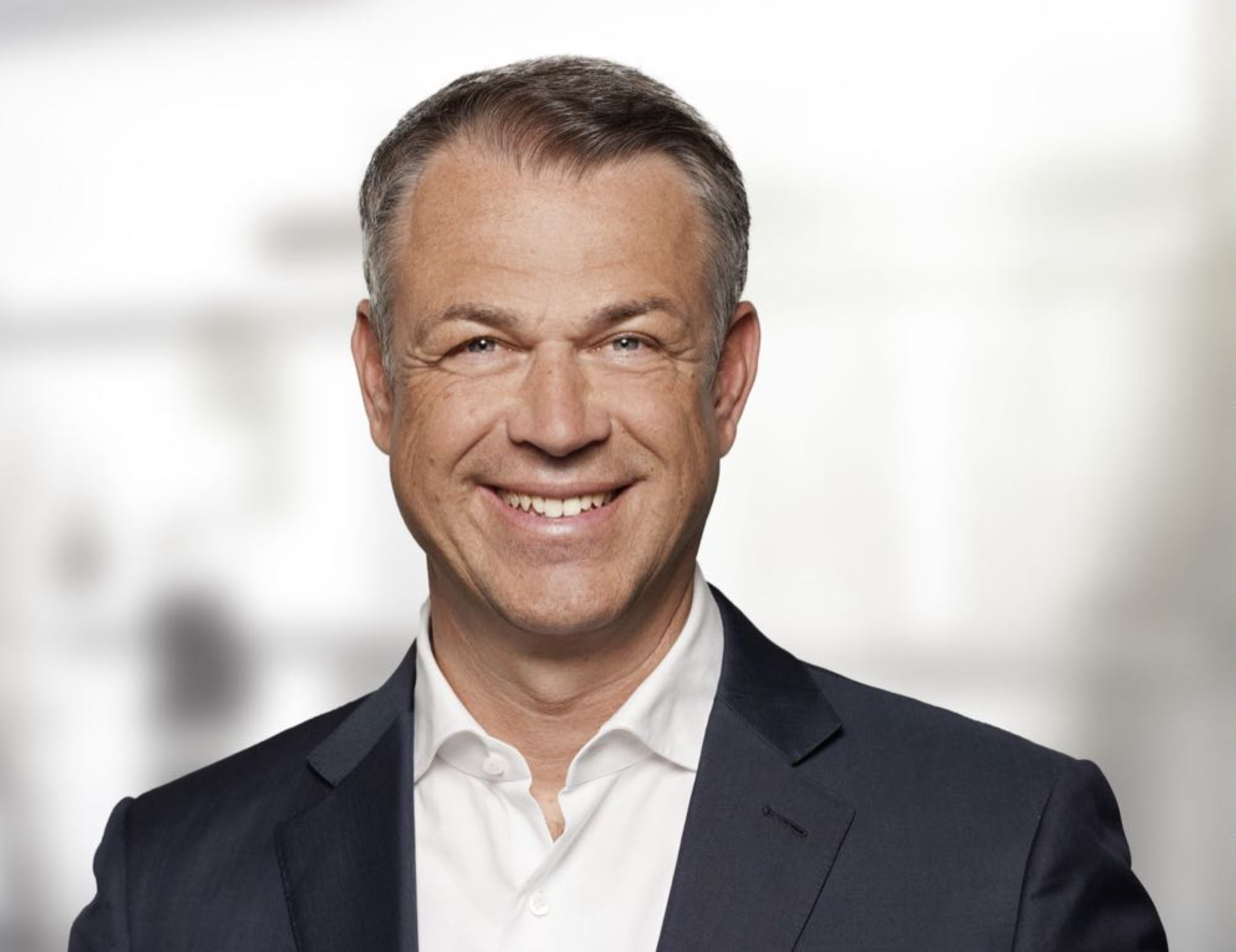
A strategic shift needs a face. Orbital Design Collective – known as Calligaris Group until 2023 – has appointed a new CEO. And he does not come from within, but from a heavyweight neighbor in design: Flos.
Matteo Luoni takes over the role, succeeding Alexander Zschokke, who had held the position since 2023. Luoni brings the kind of profile currently in demand in Milan: strategy, M&A, brand positioning. Most recently, he held a top executive role at Flos, including serving as CEO. Before that, he was responsible for strategy, business development and acquisitions within Design Holding. A stint as Executive Vice Chairman at Arclinea adds further depth.
The mission is clearly defined. Luoni is expected to lead the company into a “new phase of development” and sharpen its positioning in key markets. In other words: more focus, more impact, more relevance in a highly competitive global landscape.
That an external impulse was needed comes as little surprise. The group has been restructuring itself in recent years. In 2023, it rebranded as Orbital Design Collective. At the same time, the heritage brand Calligaris moved into its own space in Milan. The break with the past is deliberate – at least from a communication standpoint.
At its core, however, the DNA runs deep. Founded in 1923 as a craft workshop in Manzano, Calligaris has evolved into a multi-brand platform. Today, the portfolio includes Calligaris, Ditre Italia and Luceplan. The offering is complemented by newer labels such as Connubia and Fatboy – the latter acquired in 2021.
Behind the scenes, Alpha Private Equity has been shaping the group since 2018. That also explains the current focus: refining the portfolio, structuring growth and keeping strategic options open.
- Details
- Hits: 6
- Schlagzeile-EN: König+Neurath can breathe again – and has a plan
- Verwandte Artikel: From Workplace to Use
The insolvency proceedings for König + Neurath are winding down, the future is financed – that's the current official line. Behind it lies a sharp cut: around 130 of the current 830 or so employees have to leave. Roughly 700 jobs remain. The price of the restructuring is clearly quantified.
The continuation plan has been in place since the beginning of the month. Three pillars are meant to support it: the shareholding family, the financing partners, and the workforce together with structural adjustments. The owners are contributing capital – through a purchase price plus additional investment funds. Banks are securing the financing via standard, collateralised loans. And internally, things are being tightened – meaning job cuts and concessions from those who stay. The layoffs cut across all age groups, with some departments hit harder than others. Almost all those affected are moving into a transfer company. Qualification, counselling, placement – the full package.
- Details
- Hits: 18
- Schlagzeile-EN: Sedus Stoll AG opens loft-style showroom in Vienna
- Verwandte Artikel: Vom Arbeitsplatz zur Nutzung
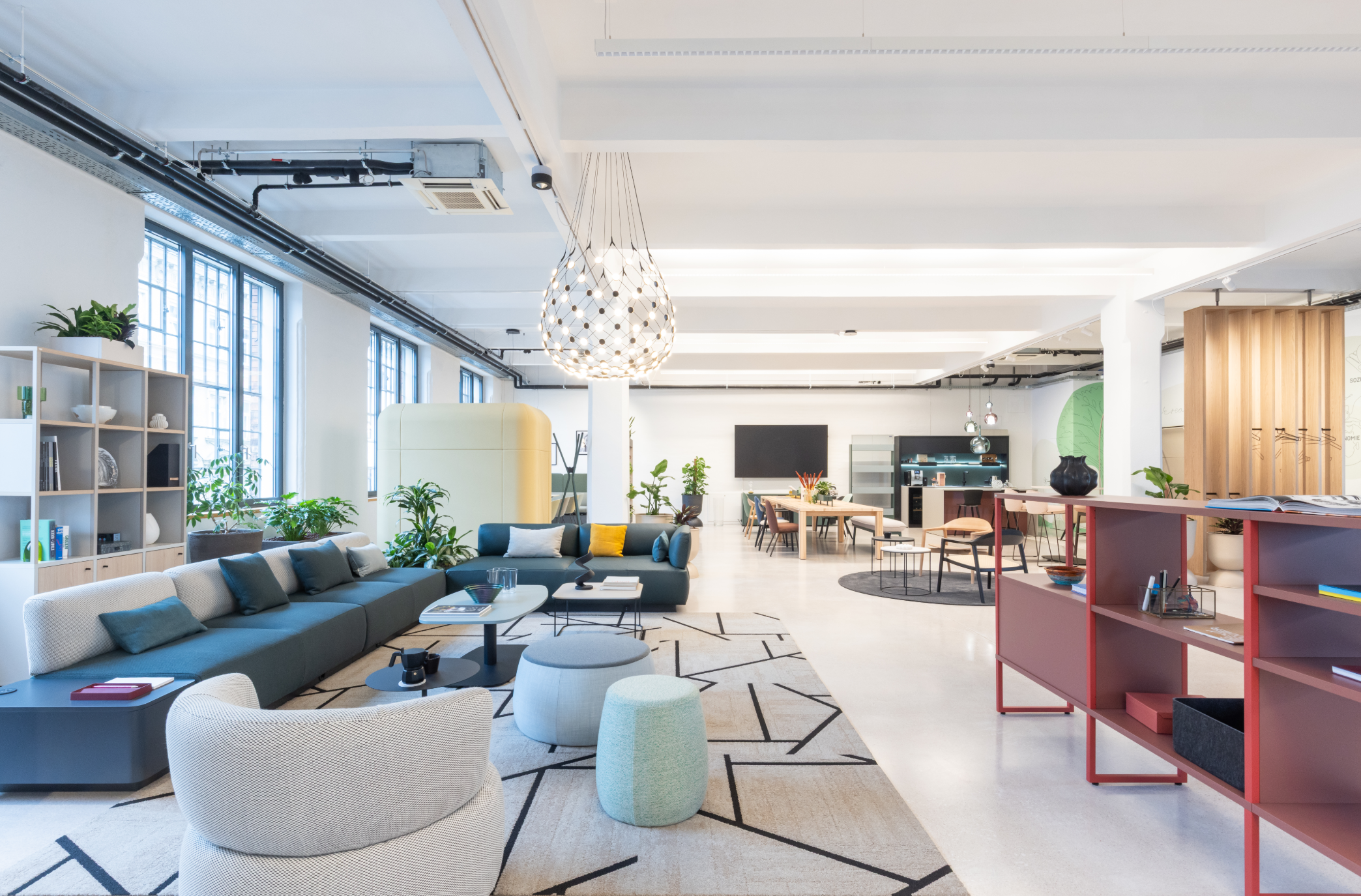
Another showroom, you might think. And you’d be right. Only this time, Sedus Stoll AG is also selling it as one of many answers to the industry’s favorite question: how do we work today – and why come to the office at all?
The stage: a former gas meter factory. Brick, loft, 440 square meters. Exactly the kind of setting where modern workspaces now like to present themselves. Historic shell, new mindset inside.
At the center – of course – sits the Work Café. Not tucked away, but placed right in the middle. The se:café bar is meant to be more than a coffee machine. It’s a “social instrument.” Rough translation: if no one has to come in anymore, at least give them a reason to show up for the coffee. There are two bars, just to be safe. Or maybe the need for conversation is higher than expected.
The rest follows a familiar script. Lounge areas for those who don’t “work” but “connect.” Team zones for collaboration. An executive corner for focused work. And with se:hive, a few retreat spaces for anyone needing a moment of quiet. Open – but not too open. That’s the real balancing act.

- Details
- Hits: 32
- Schlagzeile-EN: Wilkhahn CEO Götz Stamm calls for holistic solutions in Handelsblatt
- Verwandte Artikel: From Workplace to Use, Vom Arbeitsplatz zur Nutzung
You can play an interview safe. Or you can use it to make a point. Götz Stamm clearly opts for the latter in a recent supplement of Handelsblatt—and draws a clear line from the start: the office is no longer a place you go to because you have to. It’s a place that has to give you reasons to come. That’s where Stamm starts. And that’s where the market begins.
The term “workplace” barely appears anymore. Instead, Stamm talks about a “space of possibilities.” Sounds like a buzzword at first. But it quickly becomes tangible. Culture, identity, collaboration—none of which can be enforced via calendar invite. And this is where the provocation comes in: anyone ordering employees back to the office hasn’t solved the problem, just shifted it. The office has to convince. Otherwise, it stays empty.
That Wilkhahn supports this line of thinking is hardly surprising. Ergonomics, movement, activation—the familiar themes are all there. What’s new is the tone. Stamm argues less with conviction, more with numbers. Health as a productivity factor. Ergonomics as a lever for profitability. In short: a good chair pays off. This is no longer design romanticism, but a sober management thesis. And, unsurprisingly, one that aligns neatly with the company’s own portfolio.
On hybrid work, the message is just as clear. Stamm implicitly describes the reality in many companies as patchwork: a video call here, a meeting room there, plenty of friction in between. The response is not particularly surprising, but consistently thought through: integration. Furniture and technology need to work as one, media breaks should disappear. Programs like “Confair Next” stand as examples. Or put differently: if hybrid meetings still feel like a compromise, the setup is wrong—and that’s exactly where the market for solutions begins.

- Details
- Hits: 29
- Schlagzeile-EN: Kinnarps CEO Robert Petersson sees it differently
- Verwandte Artikel: From Workplace to Use, Vom Arbeitsplatz zur Nutzung
The debate is gaining momentum. Shorter working hours, more leisure time, new models. What sounds appealing politically is raising eyebrows in industry. Especially in sectors that produce and compete internationally.
At Swedish family-owned manufacturer Kinnarps, the stance is clear. CEO Robert Petersson sees one primary effect of a statutory reduction in working hours: rising costs with unchanged output. The equation is simple – and uncomfortable for many companies.
“Every minute that working time is reduced corresponds to a wage increase and is a direct cost increase for us,” says Petersson. That’s how he puts it in a contribution for the employers’ organisation Svenskt Näringsliv – getting straight to the point: competitiveness.
Kinnarps is not a company that argues lightly. Founded in 1942, still family-owned, around 1,800 employees, about 1,200 of them in Sweden. Production is entirely domestic, spread across several locations. Even the headquarters remains deliberately rooted in the small town of Kinnarp.
Sweden as a production base is part of the company’s identity. And a conscious economic decision. “We’ve always believed it’s possible to produce profitably in Sweden – but you have to work for it,” says Petersson. Automation, efficiency gains, process improvements – everything is on the table. But not at any cost. A certain level of craftsmanship is deliberately preserved, for example in textile production.
That balance is coming under pressure. Kinnarps sells in around 40 countries. A large share of production is exported. At the same time, competition is intensifying – also on the domestic market. Suppliers from lower-cost countries are competing directly with Swedish manufacturers.
If costs continue to rise, that balance shifts. Petersson puts it bluntly: if Swedish products become more expensive, customers are more likely to turn to imports. Quality, sustainability and control over production remain arguments – but they are not unlimited.

- Details
- Hits: 25
- Schlagzeile-EN: Lammhults faces the real test
- Verwandte Artikel: From Workplace to Use
Lammhults Design Group has published its Annual and Sustainability Report for 2025. On paper, this is standard procedure. A mandatory release. A PDF, neatly structured, ESEF-compliant – and, notably, available only in Swedish. Anyone who wants to dig deeper has to put in some effort. And it’s worth it. Because beneath the formal surface sits a company clearly in transition.
The numbers themselves don’t spark much excitement. Revenue comes in at SEK 878.5 million, growth at a modest 0.9%. That’s stabilization, not momentum. At the same time, the adjusted operating margin improves to 3.2%. A step forward, yes – but still far from the company’s own target corridor of 8 to 10%. Operating cash flow, on the other hand, shows a noticeable improvement, suggesting that internal measures are beginning to take effect. Still, the overall picture remains: Lammhults is working its way out of a weak phase, not building from a position of strength.
More interesting than the figures is the strategic direction. The group is clearly trying to reorganize itself. Moving away from a loose collection of individual brands toward a more integrated system. The guiding phrase is “Scandinavian design. Multiplied.” – which sounds like marketing, but in this case is meant quite literally. The aim is to bring brands closer together, unlock synergies, and present the portfolio as a unified offering.
This becomes particularly visible in the Office Interiors segment. Here, Lammhults has restructured its sales approach. Teams no longer operate brand by brand, but across the full portfolio. The goal is to shift from selling individual products to delivering complete solutions. It sounds straightforward, but internally it is a major shift, challenging established roles and responsibilities. Initial results from Norway are described as positive, with the rollout continuing across other markets.
At the same time, the company is rethinking how it presents itself externally. Showrooms are no longer about displaying individual products, but about staging complete environments. In cities like Stockholm, Oslo and Copenhagen, the focus is on fully developed spatial concepts rather than standalone pieces. It’s a logical move – and one that many in the industry have been talking about for years without fully executing. Lammhults is now attempting to follow through, with the clear ambition of positioning itself as a solutions provider rather than a product supplier.
Internally, a clear divide is emerging. Library Interiors appears stable, delivering consistent results and acting as a kind of backbone for the group. Office Interiors, by contrast, is the transformation zone – where efficiency programs, cost reductions, structural changes and strategic repositioning are all happening at once. This is where the real test lies. If the transformation works, it will show here first.
Alongside this, the group continues to push forward on what has effectively become the industry’s baseline: digitalization. New training platforms, deeper integration of planning tools like pCon, and a new ERP system in Library Interiors are all part of the picture. Necessary steps, certainly. But no longer a differentiator – simply the price of entry.