Zum Hauptinhalt springen

A year in condensed form

Lammhults Design Group has published its Annual and Sustainability Report for 2025. On paper, this is standard procedure. A mandatory release. A PDF, neatly structured, ESEF-compliant – and, notably, available only in Swedish. Anyone who wants to dig deeper has to put in some effort. And it’s worth it. Because beneath the formal surface sits a company clearly in transition.

The numbers themselves don’t spark much excitement. Revenue comes in at SEK 878.5 million, growth at a modest 0.9%. That’s stabilization, not momentum. At the same time, the adjusted operating margin improves to 3.2%. A step forward, yes – but still far from the company’s own target corridor of 8 to 10%. Operating cash flow, on the other hand, shows a noticeable improvement, suggesting that internal measures are beginning to take effect. Still, the overall picture remains: Lammhults is working its way out of a weak phase, not building from a position of strength.

More interesting than the figures is the strategic direction. The group is clearly trying to reorganize itself. Moving away from a loose collection of individual brands toward a more integrated system. The guiding phrase is “Scandinavian design. Multiplied.” – which sounds like marketing, but in this case is meant quite literally. The aim is to bring brands closer together, unlock synergies, and present the portfolio as a unified offering.

This becomes particularly visible in the Office Interiors segment. Here, Lammhults has restructured its sales approach. Teams no longer operate brand by brand, but across the full portfolio. The goal is to shift from selling individual products to delivering complete solutions. It sounds straightforward, but internally it is a major shift, challenging established roles and responsibilities. Initial results from Norway are described as positive, with the rollout continuing across other markets.

At the same time, the company is rethinking how it presents itself externally. Showrooms are no longer about displaying individual products, but about staging complete environments. In cities like Stockholm, Oslo and Copenhagen, the focus is on fully developed spatial concepts rather than standalone pieces. It’s a logical move – and one that many in the industry have been talking about for years without fully executing. Lammhults is now attempting to follow through, with the clear ambition of positioning itself as a solutions provider rather than a product supplier.

Internally, a clear divide is emerging. Library Interiors appears stable, delivering consistent results and acting as a kind of backbone for the group. Office Interiors, by contrast, is the transformation zone – where efficiency programs, cost reductions, structural changes and strategic repositioning are all happening at once. This is where the real test lies. If the transformation works, it will show here first.

Alongside this, the group continues to push forward on what has effectively become the industry’s baseline: digitalization. New training platforms, deeper integration of planning tools like pCon, and a new ERP system in Library Interiors are all part of the picture. Necessary steps, certainly. But no longer a differentiator – simply the price of entry.

In terms of content, Lammhults aligns itself with the familiar long-term trends: hybrid working models, increasing demand for flexible and multifunctional spaces, and a growing need for acoustic solutions. Sustainability remains a core theme as well, from durable design and certified materials to more circular product concepts. All of this makes sense. None of it is unique. The real question is who executes best.

Want to read the full article?

Ein Jahr in komprimierter Form

Lammhults Design Group hat ihren Geschäfts- und Nachhaltigkeitsbericht für 2025 veröffentlicht. Formal ist das eine Pflichtmeldung, wie sie börsennotierte Unternehmen eben liefern müssen. Der Report liegt sauber aufbereitet vor, ESEF-konform, abrufbar als PDF – allerdings nur auf Schwedisch. Wer sich also wirklich damit beschäftigen will, muss etwas investieren. Und das lohnt sich, denn hinter der formalen Oberfläche steckt ein Unternehmen, das gerade sichtbar an sich arbeitet.

Die Zahlen selbst erzählen eine eher nüchterne Geschichte. Der Umsatz liegt bei 878,5 Mio. SEK, das Wachstum beträgt 0,9 %. Das ist Stabilisierung, mehr nicht. Gleichzeitig verbessert sich die bereinigte operative Marge auf 3,2 %. Ein Fortschritt, keine Frage – aber gemessen am eigenen Anspruch immer noch weit entfernt vom Zielkorridor von 8 bis 10 %. Positiv fällt das deutlich verbesserte operative Cashflow-Niveau auf, das zeigt, dass intern durchaus an den richtigen Stellschrauben gedreht wird. Trotzdem bleibt der Eindruck: Lammhults kommt aus einer Phase der Schwäche, nicht aus einer Phase der Stärke.

Spannender als die Zahlen ist deshalb die strategische Stoßrichtung. Der Konzern versucht, sich neu zu sortieren. Weg von einer eher losen Sammlung einzelner Marken, hin zu einem integrierten System. Das Schlagwort dazu lautet „Scandinavian design. Multiplied.“ – ein Claim, der schnell nach Marketing klingt, in diesem Fall aber erstaunlich operativ gemeint ist. Es geht darum, die Marken enger zusammenzuführen, Synergien zu heben und das Portfolio als Ganzes zu denken.

Konkret wird das vor allem im Geschäftsfeld Office Interiors sichtbar. Dort hat Lammhults seine Vertriebslogik verändert. Die Teams greifen nicht mehr isoliert auf einzelne Marken zu, sondern auf das gesamte Portfolio. Ziel ist es, Kunden nicht mehr mit Einzelprodukten zu adressieren, sondern mit vollständigen Lösungen. Was banal klingt, ist intern ein tiefgreifender Eingriff, weil es gewachsene Strukturen und Zuständigkeiten aufbricht. Erste Erfahrungen aus Norwegen werden als positiv beschrieben, die Umsetzung in weiteren Märkten läuft.

Parallel dazu verändert sich auch die Außendarstellung. Die Showrooms werden neu gedacht, weg von der reinen Produktpräsentation, hin zu inszenierten Gesamtlösungen. In Städten wie Stockholm, Oslo und Kopenhagen zeigt der Konzern komplette Raumkonzepte statt einzelner Möbel. Das ist konsequent und gleichzeitig ein Schritt, den viele in der Branche seit Jahren diskutieren, aber nur wenige wirklich durchziehen. Lammhults versucht genau das – mit dem klaren Ziel, sich stärker als Systemanbieter zu positionieren.

Dabei zeigt sich auch intern eine klare Zweiteilung. Der Bereich Library Interiors gilt als stabil, liefert solide Ergebnisse und bildet so etwas wie das ruhige Fundament. Office Interiors hingegen ist die Baustelle, auf der gerade alles gleichzeitig passiert: Effizienzprogramme, Kostensenkungen, strukturelle Anpassungen und strategische Neuausrichtung. Genau dort entscheidet sich, ob die Transformation gelingt – oder eben nicht.

Flankiert wird das Ganze von weiteren Maßnahmen, die man inzwischen fast schon als Pflichtprogramm bezeichnen muss. Digitalisierung wird vorangetrieben, etwa durch neue Schulungsplattformen, die Integration von Planungstools wie pCon oder die Einführung eines neuen ERP-Systems im Library-Bereich. Das alles ist sinnvoll, notwendig und richtig – aber eben kein Differenzierungsmerkmal mehr, sondern Voraussetzung, um überhaupt mitzuspielen.

Inhaltlich setzt der Konzern auf die bekannten langfristigen Trends: hybride Arbeitsmodelle, steigende Anforderungen an flexible und multifunktionale Räume sowie eine wachsende Bedeutung von Akustiklösungen. Gleichzeitig bleibt Nachhaltigkeit ein zentraler Baustein – von langlebigem Design über zertifizierte Materialien bis hin zu stärker zirkulären Produktansätzen. Das alles fügt sich logisch zusammen, ist aber kein exklusives Narrativ. Die Frage ist nicht, ob diese Trends stimmen, sondern wer sie am besten in konkrete Projekte übersetzt.

Sie wollen den kompletten Artikel lesen?

From Experiment to Address

  • Schlagzeile-EN: Munich Design Days gain momentum

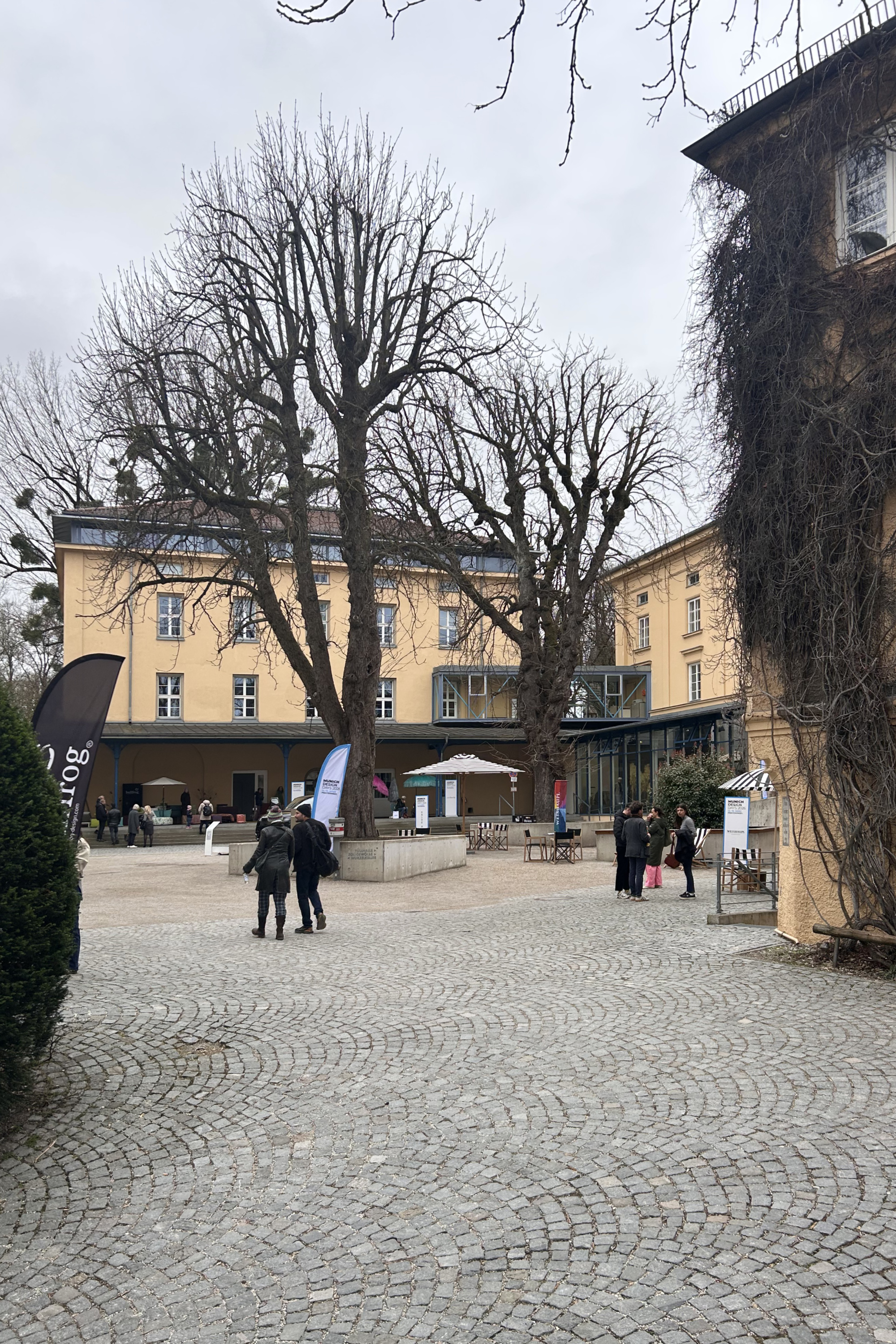
The Munich Design Days have just entered their second round – and they clearly gained momentum. From March 12 to 15, the event once again drew manufacturers, retailers, and planners to Munich’s Praterinsel, running parallel to Munich’s Stoff Spring. The mood? Remarkably positive. More exhibitors than at last year’s premiere, significantly more visitors – and, above all, a growing share from the contract sector.

Even the first edition last year was something of a surprise success. But of course, many people initially wanted to see whether the event would become more than a pleasant industry get-together. After the second edition, the answer seems fairly clear: yes, this thing works.

What stood out most was the audience. More architects, more interior designers, more decorators. Exactly the target group that many manufacturers want to reach in the project business. The geographic reach also expanded. While the first edition was still strongly dominated by visitors from southern Germany, this year voices from Austria, Switzerland, and northern Germany were much more common.

At the same time, the exhibitor list continues to grow. Brands such as Bullfrog, Draenert, Kettnaker, KFF, Ligne Roset, and Pulpo were already present last year. In 2026, a number of new names joined them, including Artemide, Brühl, Thonet, Wittmann, Walter Knoll, and Voglauer. Specialists such as Schönbuch, Mobimex, and Rohi also made their debut. In short: considerably more weight in the premium interior segment. Only a few companies disappeared from the list, including A&D Ambiente und Design, Femira, and tRACK. Overall, the format is clearly expanding.

What many exhibitors particularly appreciate is the organization. Several mentioned that the organizers listen closely and implement feedback from brands quickly. In an industry where trade show formats sometimes react rather slowly, that does not go unnoticed.

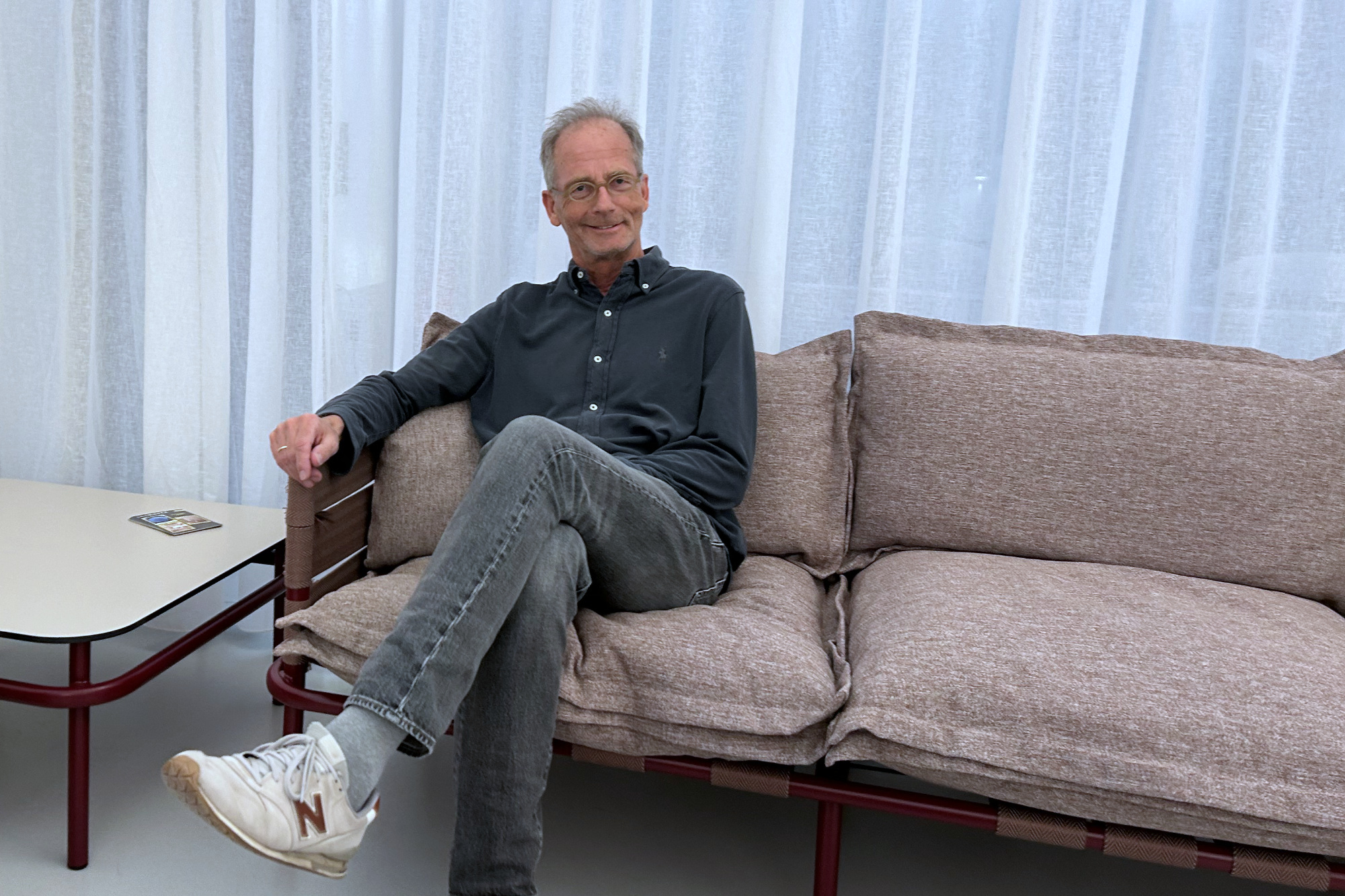
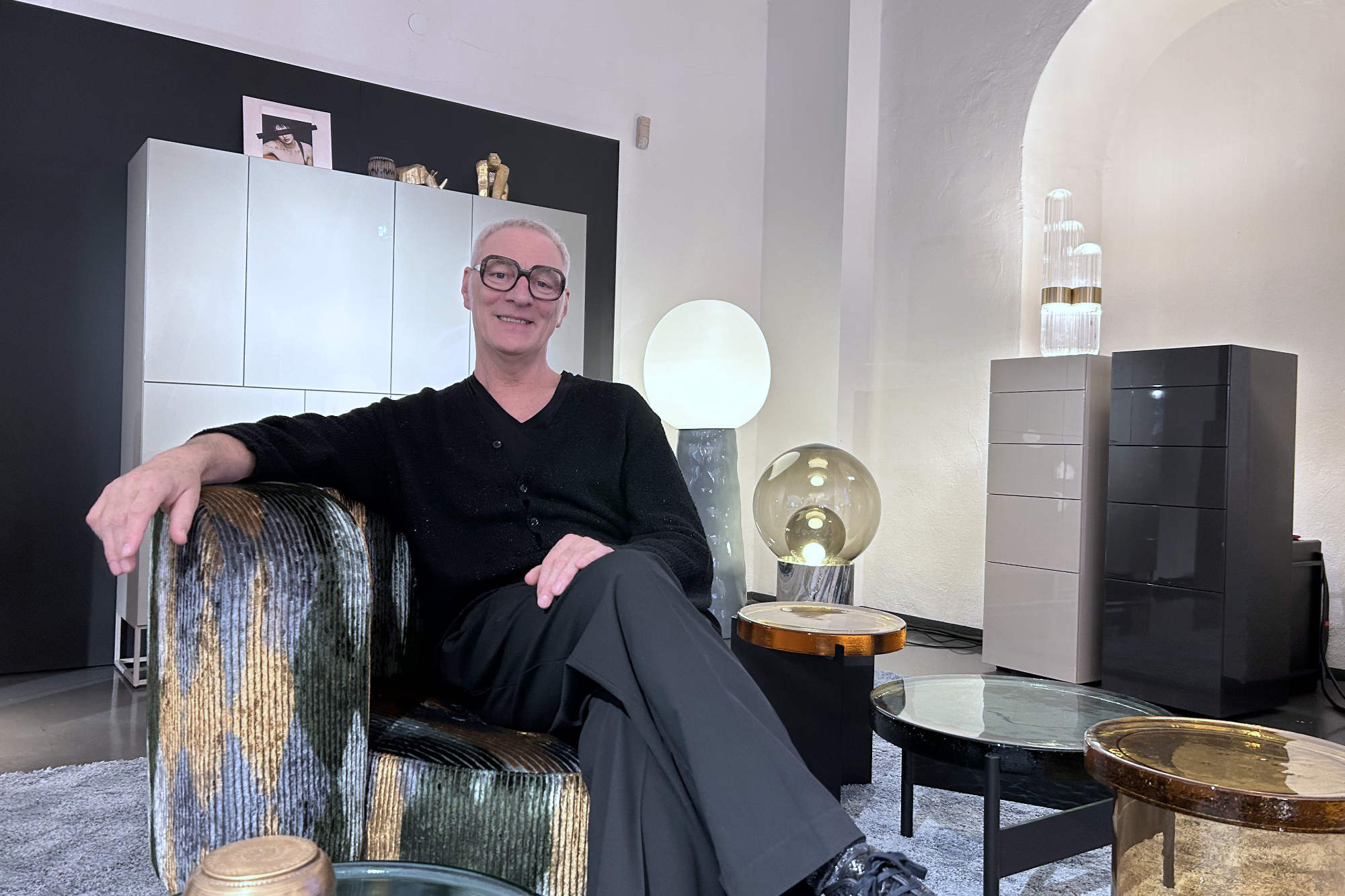
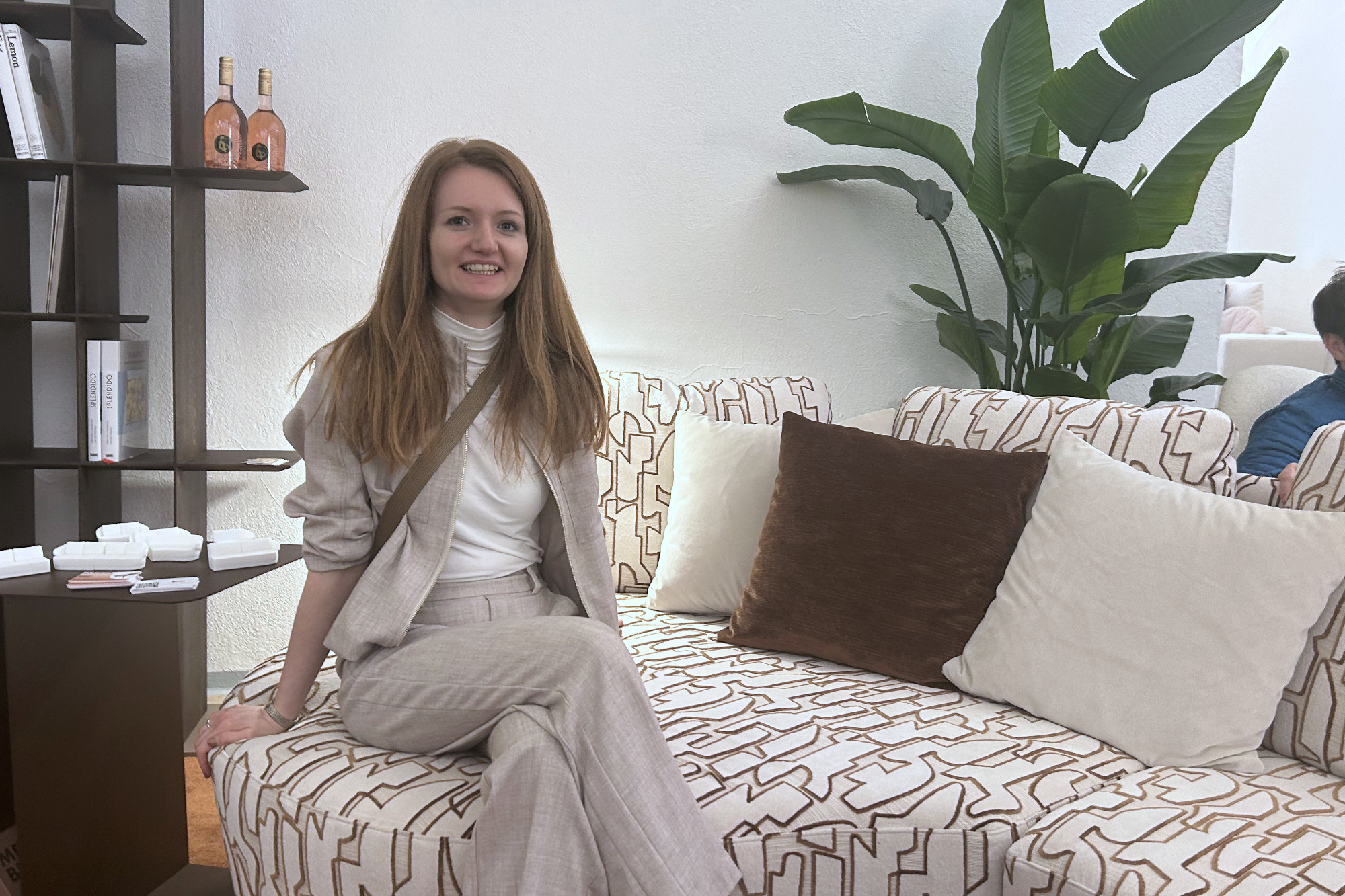
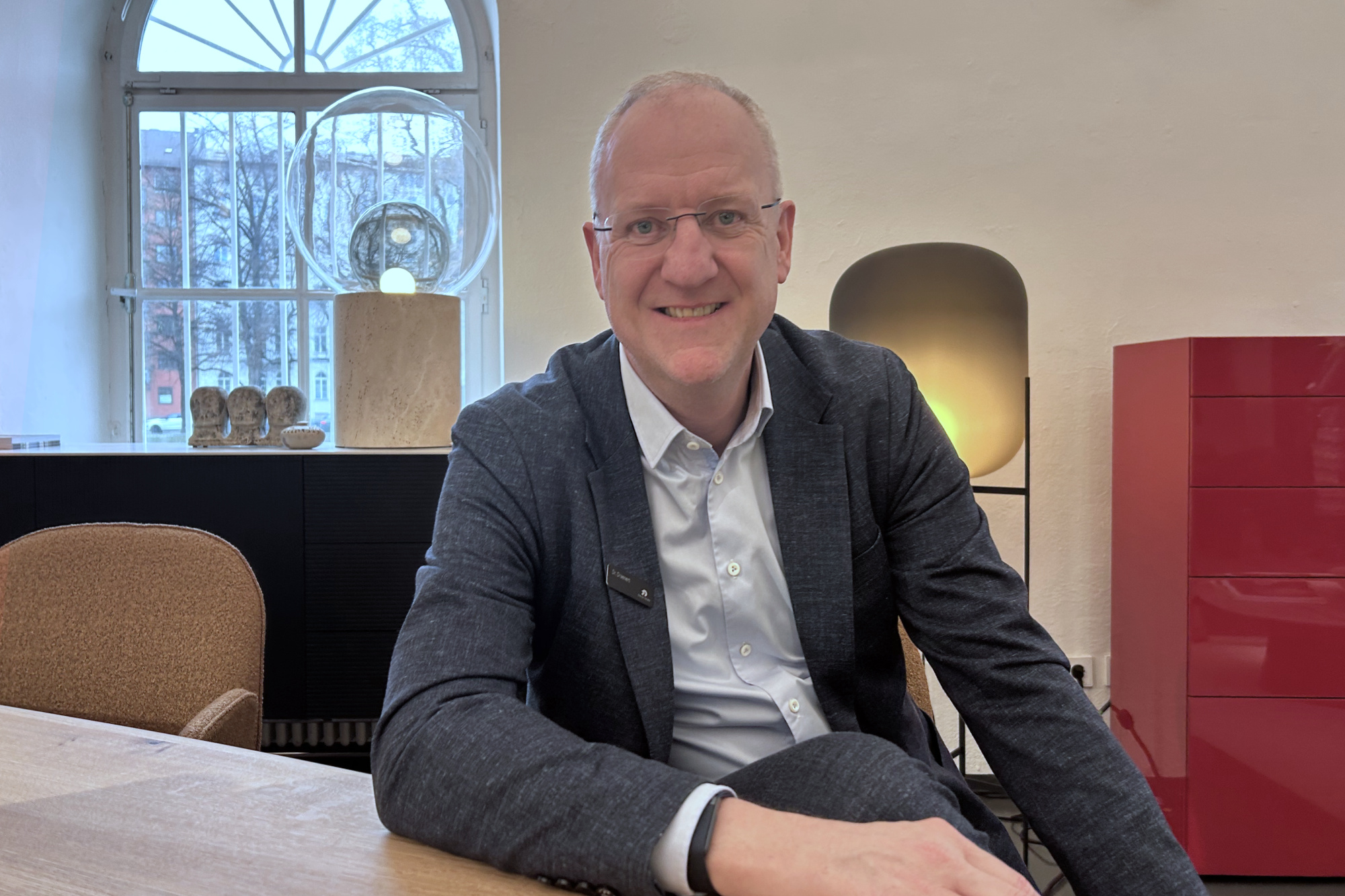
Jan Kurtz (Jan Kurtz)

Patrick L'hoste (Pulpo)

Lea Oberwelland (Werther)

Patric Draenert (Draenert)

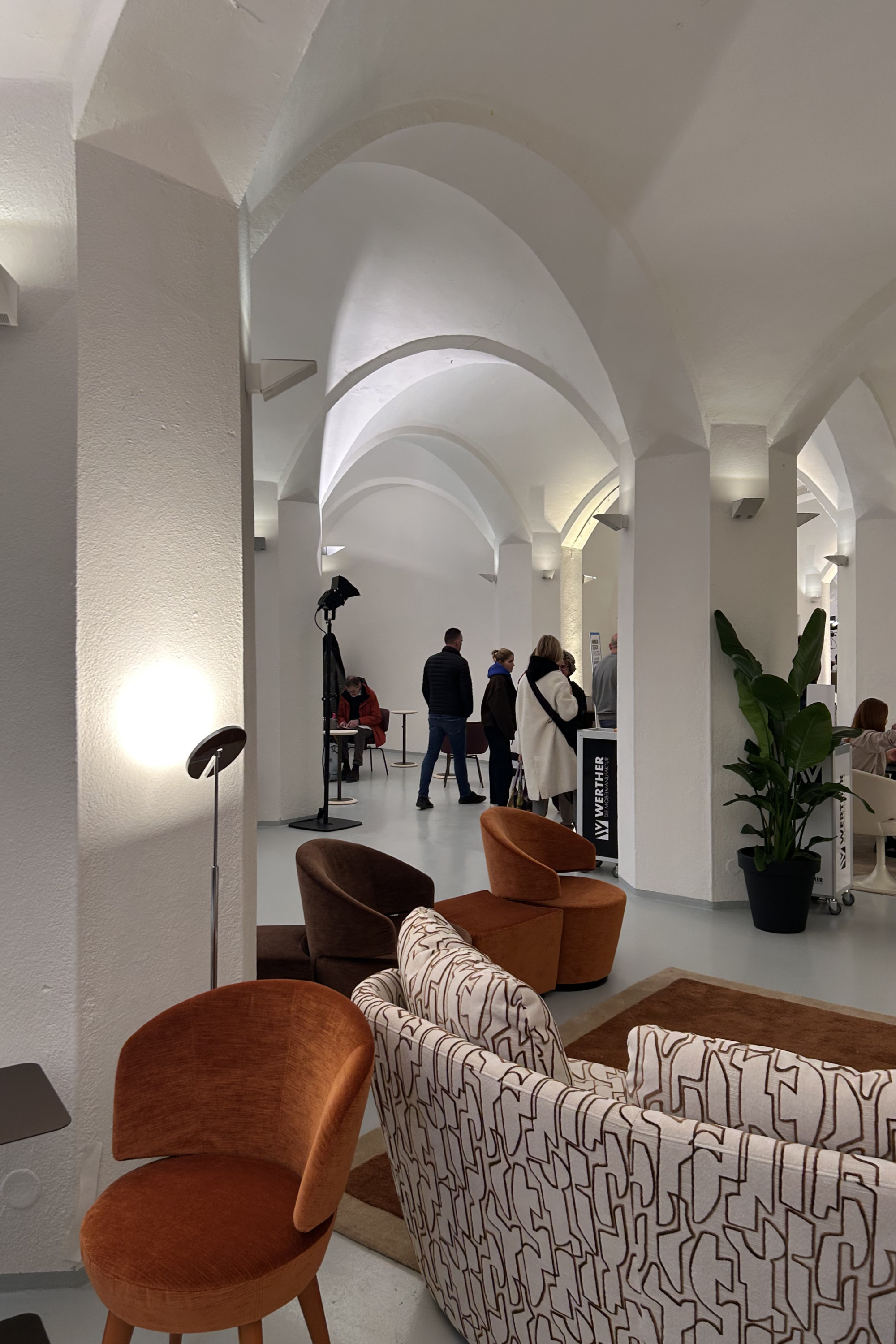
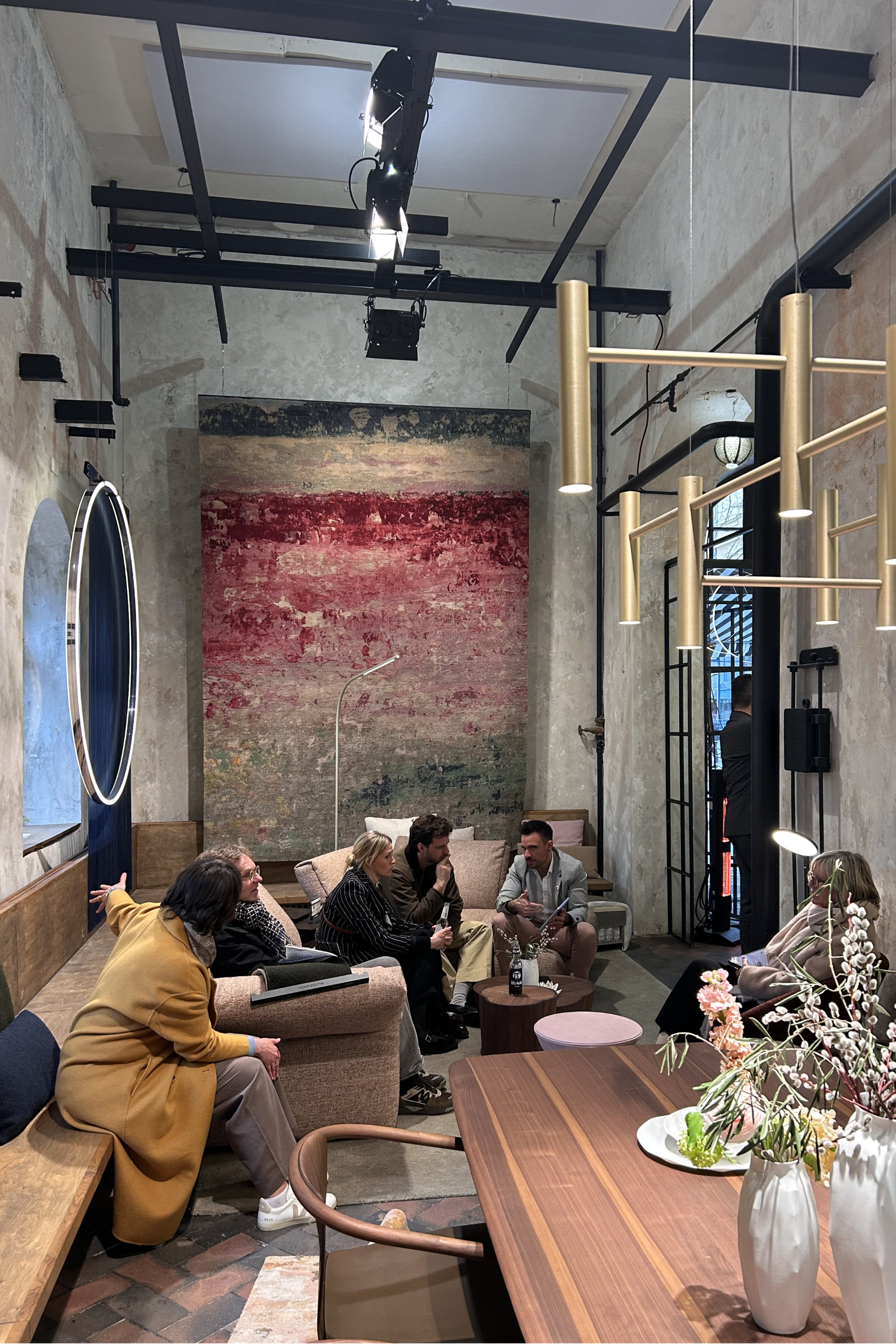
Behind Munich Design Days are Malte Perlitz and Klaus Winkler. Two industry insiders who set out to create a platform that would deliberately remain smaller and more personal than traditional trade shows. And it works. Anyone walking through the showrooms on Praterinsel quickly notices it: short distances, lots of conversations, no hectic exhibition halls. Instead, a mix of exhibition, industry gathering and networking event.

Malte Perlitz himself remained rather understated when asked about the development. He said he was “very grateful.” Not much more. But you didn’t have to be a psychologist to see that he was quite pleased.

The success of the event may also have something to do with the broader context. Munich’s Stoff Spring has been attracting textile and interior planning professionals for years. Munich Design Days connects to that audience and expands the offer with furniture and interior brands. Textiles meet furniture. Furniture meets planners. A combination that clearly works.

Yes, the format is still relatively compact. And that seems to be exactly what many people appreciate. As one visitor from the planning community put it:

“It’s not about size here. It’s about meeting the right people.”

If the development continues at this pace, Munich could well establish a second fixed interior design date in March.

At this point, it’s no longer just a small plant beginning to grow.

The Munich Design Days have just entered their second round – and they clearly gained momentum. From March 12 to 15, the event once again drew manufacturers, retailers and planners to Munich’s Praterinsel, running parallel to Munich’s Stoff Spring. The mood? Remarkably positive. More exhibitors than at last year’s premiere, significantly more visitors – and, above all, a growing share from the contract sector.

Even the first edition last year was something of a surprise success. But of course, many people initially wanted to see whether the event would become more than a pleasant industry get-together. After the second edition, the answer seems fairly clear: yes, this thing works.

What stood out most was the audience. More architects, more interior designers, more decorators. Exactly the target group many manufacturers want to reach in the project business. The geographic reach also expanded. While the first edition was still strongly dominated by visitors from southern Germany, this year voices from Austria, Switzerland and northern Germany were much more common.

At the same time, the exhibitor list continues to grow. Brands such as Bullfrog, Draenert, Kettnaker, KFF, Ligne Roset, Pulpo and Thonet were already present last year. In 2026, a number of new names joined them, including Artemide, Brühl, Wittmann, Walter Knoll and Voglauer. Specialists such as Schönbuch, Mobimex and Rohi also made their debut. In short: considerably more weight in the premium interior segment. Only a few companies disappeared from the list, including A&D Ambiente und Design, Femira and tRACK. Overall, the format is clearly expanding.

What many exhibitors particularly appreciate is the organization. Several mentioned that the organizers listen closely and implement feedback from brands quickly. In an industry where trade show formats sometimes react rather slowly, that does not go unnoticed.

Behind Munich Design Days are Malte Perlitz and Klaus Winkel. Two industry insiders who set out to create a platform that would deliberately remain smaller and more personal than traditional trade shows. And it works. Anyone walking through the showrooms on Praterinsel quickly notices it: short distances, lots of conversations, no hectic exhibition halls. Instead, a mix of exhibition, industry gathering and networking event.

Malte Perlitz himself remained rather understated when asked about the development. He said he was “very grateful.” Not much more. But you didn’t have to be a psychologist to see that he was quite pleased.

The success of the event may also have something to do with the broader context. Munich’s Stoff Spring has been attracting textile and interior planning professionals for years. Munich Design Days connects to that audience and expands the offer with furniture and interior brands. Textiles meet furniture. Furniture meets planners. A combination that clearly works.

Yes, the format is still relatively compact. And that seems to be exactly what many people appreciate. As one visitor from the planning community put it:

“It’s not about size here. It’s about meeting the right people.”

If the development continues at this pace, Munich could well establish a second fixed interior design date in March.

At this point, it’s no longer just a small plant beginning to grow.

Less product, more system

When on a Tuesday in Milan the head of government, the president of the Senate and both deputy prime ministers turn up one after the other at a furniture fair, the matter is no longer about chairs. Foreign Minister Antonio Tajani and Senate President Ignazio La Russa cut the ribbon for the 64th edition of the Salone del Mobile at Fiera Milano Rho on 21 April at 10.30 a.m.; Prime Minister Giorgia Meloni joined them around 1 p.m. and stayed for roughly two hours, and Deputy Prime Minister Matteo Salvini followed in the early afternoon. A political turnout that in Italy is otherwise reserved for state visits. Tajani conferred on Salone president Maria Porro the state-awarded title of „Ambasciatore del design italiano nel mondo" and signed a framework agreement between the Foreign Ministry and the furniture federation FederlegnoArredo. At the press point Meloni supplied the rationale for all this attention: more than 50 billion euros in turnover, 2.3 percent of Italian gross domestic product, 300,000 employees. In Rome, the furniture industry is treated as a matter of state — not despite the unstable global situation, but because of it.

This industrial-policy framing finds its substantive counterpart in an operation through which the fair itself responds to the crisis. On the speaker list in Pavilion 14 on Wednesday stood a Pritzker Prize laureate. On stage sat the Europe Editor at Large of Monocle. In the background, the Milanese fair organisation, with the support of the Italian Trade Agency ITA, is bringing 250 hand-picked international top players from the project business to Fiera Milano. A furniture fair that invests this much effort in its supporting programme either has an attention problem — or a plan. In the case of the Salone del Mobile it is the latter, and it bears the name Salone Contract. The fact that the 64th edition has sold out all 169,000 square metres of hall space with 1,900 exhibitors from 32 countries belongs to the expected baseline. What is more remarkable is what the organiser, Federlegno Arredo Eventi, has additionally built into this sold-out house: a multi-year strategic initiative whose actual format will only debut in 2027.

The choreography of the preparatory phase follows an unusual logic. The masterplan has been signed by Rem Koolhaas and David Gianotten of OMA — that is, by an architecture practice, not a trade-fair consultancy. On 22 April Koolhaas presented his lectio magistralis „Current Preoccupations" at the Drafting Futures Arena, flanked by the opening panel „Contract Sector Opportunities in a Transforming Industry" moderated by Ed Stocker (Monocle) and a closing roundtable led by Christele Harrouk (ArchDaily). In parallel, a thematic itinerary across the pavilions guides visitors through those exhibitors already active in the project business. From September 2026 onwards, the initiative shifts into an international road tour through key regions for large-scale and giga-projects; in April 2027 the first full edition follows, including a three-day Salone Contract Forum with a B2B programme. Local partner for the 2027 edition will be the Milan-based practice PMP Architecture. What is taking shape here is not an additional sub-format, but the attempt to build the international contract business its own dedicated trade-fair stage — beyond the existing halls for residential, kitchen and bathroom furnishings.

The economic rationale rests on a shift that has long since arrived at the major manufacturers, and which Maria Porro tries to capture with her concise formula of a „shift from product culture to project culture". In plain terms: in the contract segment, value is increasingly generated not through the individual piece of furniture but through the integration of systems, data, logistics and services. The PwC and Urban Land Institute study „Emerging Trends in Real Estate 2026", referenced by OMA, places the movement in quantitative terms: the largest sub-segment by volume remains the office sector, while the most stable growth rates between 2018 and 2024 were recorded in high-end hospitality, education, healthcare and marine — the latter supported by the recovery of cruise traffic and the persistent demand from the yacht and superyacht segment for bespoke furnishings. Against the backdrop of an Italian wood and furniture supply chain that closed 2025 with a turnover above 52 billion euros, but is now defending its growth story against tariffs, inflation and an escalating Middle East conflict, the logic of the staging becomes clear: the industry needs a narrative that is bigger than the single chair. For architects and planners in the international project business, the implication is straightforward: Europe's central trade-fair platform for the sector is ceasing to think of itself as primarily a furniture fair — a development likely to shape the next two seasons.

Vom Versuch zur Adresse

  • Schlagzeile-DE: Munich Design Days legen zu

Die Munich Design Days sind in diesen Tagen in ihre zweite Runde gegangen – und legten spürbar zu. Vom 12. bis 15. März zog das Format, parallel zum Münchner Stoff Frühling, auf der Münchner Praterinsel erneut Hersteller, Händler und Planer in die Isar-Metropole. Die Stimmung? Auffällig gut. Mehr Aussteller als zur Premiere im vergangenen Jahr, deutlich mehr Besucher – und vor allem: ein wachsender Anteil aus dem Contract-Bereich.

Schon die Premiere im vergangenen Jahr war ein kleiner Überraschungserfolg. Aber klar, viele wollten erst einmal sehen, ob daraus mehr wird als ein sympathisches Branchen-Get-together. Die Antwort fällt nach der zweiten Ausgabe ziemlich klar aus: Ja, das Ding funktioniert.

Auffällig war vor allem das Publikum. Mehr Architekten, mehr Innenarchitekten, mehr Raumausstatter. Genau die Zielgruppe, die viele Hersteller im Projektgeschäft erreichen wollen. Auch geografisch hat sich der Radius erweitert. Während 2025 noch stark süddeutsch geprägt war, hörte man diesmal deutlich öfter Stimmen aus Österreich, der Schweiz oder Norddeutschland.

Parallel wächst auch die Ausstellerliste. Namen wie Bullfrog, Draenert, Kettnaker, KFF, Ligne Roset oder Pulpo waren bereits im vergangenen Jahr dabei. 2026 kamen zahlreiche Marken neu hinzu: unter anderem Artemide, Brühl, Thonet, Wittmann, Walter Knoll oder Voglauer. Dazu Spezialisten wie Schönbuch, Mobimex oder Rohi. Kurz gesagt: deutlich mehr Gewicht im Premium-Interior. Nicht mehr dabei waren dagegen nur wenige Unternehmen – etwa A&D Ambiente und Design, Femira oder tRACK. Unterm Strich wächst das Format also deutlich.

Was viele Aussteller besonders loben: die Organisation. Mehrfach war zu hören, dass die Veranstalter genau zuhören – und Wünsche der Marken schnell umsetzen. In einer Branche, in der Messeformate gern einmal etwas behäbig reagieren, fällt das auf.

Jan Kurtz (Jan Kurtz)

Patrick L'hoste (Pulpo)

Lea Oberwelland (Werther)

Patric Draenert (Draenert)

Hinter den Munich Design Days stehen bekanntlich Malte Perlitz und Klaus Winkler. Zwei Branchenkenner, die mit der Veranstaltung eine Plattform schaffen wollten, die bewusst kleiner und persönlicher bleibt als klassische Messen. Dass das Konzept funktioniert, merkt man spätestens beim Rundgang durch die Showrooms auf der Insel. Kurze Wege. Viele Gespräche. Keine hektischen Hallen. Stattdessen eine Mischung aus Ausstellung, Branchentreffen und Netzwerktreffen.

Malte Perlitz selbst blieb bei seinem Auftritt eher zurückhaltend. Er sei „sehr dankbar“, sagte er kurz. Viel mehr nicht. Aber man musste kein Branchenpsychologe sein, um zu sehen: Der Mann ist ziemlich zufrieden.

Dass es so gut funktioniert, liegt vielleicht auch am Gesamtkontext. Der Münchner Stoff Frühling liefert seit Jahren den Besucherstrom der Textil- und Interior-Planer. Die Munich Design Days docken daran an – und erweitern das Ganze um Möbel und Interior-Marken. Textil trifft Möbel. Möbel treffen Planer. Eine Kombination, die offensichtlich funktioniert.

Ja, noch ist das Format überschaubar. Genau das scheint vielen zu gefallen. Oder wie es eine Besucherin aus der Planungsszene formulierte:

„Hier geht es nicht um Größe. Hier geht es um die richtigen Leute.“

Wenn sich die Entwicklung so fortsetzt, könnte München im März langfristig einen zweiten festen Interior-Termin bekommen. Ein Pflänzchen ist das jedenfalls nicht mehr.

Die Munich Design Days sind in diesen Tagen in ihre zweite Runde gegangen – und legten spürbar zu. Vom 12. bis 15. März zog das Format, parallel zum Münchner Stoff Frühling, auf der Münchner Praterinsel erneut Hersteller, Händler und Planer in die Isar-Metropole. Die Stimmung? Auffällig gut. Mehr Aussteller als zur Premiere im vergangenen Jahr, deutlich mehr Besucher – und vor allem: ein wachsender Anteil aus dem Contract-Bereich.

Schon die Premiere im vergangenen Jahr war ein kleiner Überraschungserfolg. Aber klar, viele wollten erst einmal sehen, ob daraus mehr wird als ein sympathisches Branchen-Get-together. Die Antwort fällt nach der zweiten Ausgabe ziemlich klar aus: Ja, das Ding funktioniert.

Auffällig war vor allem das Publikum. Mehr Architekten, mehr Innenarchitekten, mehr Raumausstatter. Genau die Zielgruppe, die viele Hersteller im Projektgeschäft erreichen wollen. Auch geografisch hat sich der Radius erweitert. Während 2025 noch stark süddeutsch geprägt war, hörte man diesmal deutlich öfter Stimmen aus Österreich, der Schweiz oder Norddeutschland.

Parallel wächst auch die Ausstellerliste. Namen wie Bullfrog, Draenert, Kettnaker, KFF, Ligne Roset, Pulpo oder Thonet waren bereits im vergangenen Jahr dabei. 2026 kamen zahlreiche Marken neu hinzu: unter anderem Artemide, Brühl, Wittmann, Walter Knoll oder Voglauer. Dazu Spezialisten wie Schönbuch, Mobimex oder Rohi. Kurz gesagt: deutlich mehr Gewicht im Premium-Interior. Nicht mehr dabei waren dagegen nur wenige Unternehmen – etwa A&D Ambiente und Design, Femira oder tRACK. Unterm Strich wächst das Format also deutlich.

Was viele Aussteller besonders loben: die Organisation. Mehrfach war zu hören, dass die Veranstalter genau zuhören – und Wünsche der Marken schnell umsetzen. In einer Branche, in der Messeformate gern einmal etwas behäbig reagieren, fällt das auf.

Hinter den Munich Design Days stehen bekanntlich Malte Perlitz und Klaus Winkel. Zwei Branchenkenner, die mit der Veranstaltung eine Plattform schaffen wollten, die bewusst kleiner und persönlicher bleibt als klassische Messen. Dass das Konzept funktioniert, merkt man spätestens beim Rundgang durch die Showrooms auf der Insel. Kurze Wege. Viele Gespräche. Keine hektischen Hallen. Stattdessen eine Mischung aus Ausstellung, Branchentreffen und Netzwerktreffen.

Malte Perlitz selbst blieb bei seinem Auftritt eher zurückhaltend. Er sei „sehr dankbar“, sagte er kurz. Viel mehr nicht. Aber man musste kein Branchenpsychologe sein, um zu sehen: Der Mann ist ziemlich zufrieden.

Dass es so gut funktioniert, liegt vielleicht auch am Gesamtkontext. Der Münchner Stoff Frühling liefert seit Jahren den Besucherstrom der Textil- und Interior-Planer. Die Munich Design Days docken daran an – und erweitern das Ganze um Möbel und Interior-Marken. Textil trifft Möbel. Möbel treffen Planer. Eine Kombination, die offensichtlich funktioniert.

Ja, noch ist das Format überschaubar. Genau das scheint vielen zu gefallen. Oder wie es eine Besucherin aus der Planungsszene formulierte:

„Hier geht es nicht um Größe. Hier geht es um die richtigen Leute.“

Wenn sich die Entwicklung so fortsetzt, könnte München im März langfristig einen zweiten festen Interior-Termin bekommen. Ein Pflänzchen ist das jedenfalls nicht mehr.

Weniger Produkt, mehr System

Als am Dienstag in Mailand die Regierungschefin, der Senatspräsident und beide Vizepremiers nacheinander auf einer Möbelmesse erschienen, hatte das erstmal wenig mit Stühlen, Schränken oder Polstermöbeln zu tun. Außenminister Antonio Tajani und Senatspräsident Ignazio La Russa schnitten am 21. April um 10:30 Uhr in der Fiera Milano Rho das Band der 64. Ausgabe des Salone del Mobile durch. Gegen 13 Uhr stieß Premierministerin Giorgia Meloni hinzu und blieb rund zwei Stunden, am frühen Nachmittag folgte Vizepremier Matteo Salvini. Ein politisches Aufgebot, das in Italien sonst Staatsbesuchen vorbehalten ist. Tajani verlieh Salone-Präsidentin Maria Porro den staatlich vergebenen Titel „Ambasciatore del design italiano nel mondo" und unterzeichnete mit FederlegnoArredo eine Rahmenvereinbarung zwischen Außenministerium und Möbelverband. Meloni lieferte am Pressetermin die Begründung dieser Aufmerksamkeit: über 50 Milliarden Euro Umsatz, 2,3 Prozent des italienischen Bruttoinlandsprodukts, 300.000 Beschäftigte. In Rom ist die Möbelbranche Staatsangelegenheit – nicht trotz der instabilen Lage, sondern wegen ihr.

Genau dieser industriepolitischen Aufladung entspricht eine inhaltliche Operation, mit der die Messe selbst auf die Krise antwortet. Auf der Vortragsliste in Pavillon 14 stand am Mittwoch ein Pritzker-Preisträger. Auf der Bühne saß der Europa-Editor von Monocle. Im Hintergrund holt das Mailänder Messehaus mit Unterstützung der italienischen Außenhandelsagentur ITA 250 selektierte internationale Top-Player aus dem Objektgeschäft an die Fiera. Eine Möbelmesse, die so viel Aufwand in ihr Rahmenprogramm steckt, hat entweder ein Aufmerksamkeitsproblem – oder einen Plan. Im Falle des Salone del Mobile ist es Letzteres, und er trägt den Namen Salone Contract. Dass die 64. Ausgabe der Mailänder Messe die 169.000 Quadratmeter Hallenfläche bei vollen 1.900 Ausstellern aus 32 Ländern restlos verkauft hat, gehört zum erwartbaren Pflichtbestand. Bemerkenswert ist eher, was die Veranstalterin Federlegno Arredo Eventi in dieses ausverkaufte Haus zusätzlich hineingebaut hat: eine mehrjährige strategische Initiative, deren eigentliches Format erst 2027 debütiert.

Die Choreografie der Vorbereitungsphase folgt einer ungewohnten Logik. Den Masterplan zeichnen Rem Koolhaas und David Gianotten von OMA – also ein Architekturbüro, kein Messeberater. Am 22. April präsentierte Koolhaas im Drafting Futures Arena seine „Current Preoccupations", flankiert vom Eröffnungspanel „Contract Sector Opportunities in a Transforming Industry" unter Moderation von Ed Stocker (Monocle) und einer Abschlussrunde, die Christele Harrouk (ArchDaily) leitete. Parallel führt ein thematischer Rundgang durch jene Aussteller, die bereits im Objektgeschäft tätig sind. Ab September 2026 verlagert sich das Vorhaben in eine internationale Roadshow durch Schlüsselregionen für Großprojekte und Giga-Vorhaben; im April 2027 folgt die erste vollständige Ausgabe samt dreitägigem Salone Contract Forum mit B2B-Programm. Lokaler Partner für 2027 ist das Mailänder Büro PMP Architecture. Was sich hier ankündigt, ist nicht ein zusätzliches Sub-Format, sondern der Versuch, dem internationalen Contract-Geschäft eine eigene messeökonomische Bühne zu bauen – jenseits der bestehenden Hallen für Wohn-, Küchen- und Badmöbel.

Die wirtschaftliche Begründung liegt in einer Verschiebung, die bei den großen Herstellern längst angekommen ist und die Maria Porro mit dem griffigen Satz von der „Verschiebung von der Produkt- zur Projektkultur" zu fassen versucht. Übersetzt heißt das: Wertschöpfung entsteht im Contract-Segment zunehmend nicht mehr über das einzelne Möbel, sondern über die Integration von Systemen, Daten, Logistik und Service. Die von OMA referenzierte Studie „Emerging Trends in Real Estate 2026" von PwC und Urban Land Institute ordnet die Bewegung quantitativ ein: Den volumengrößten Teilbereich stellt nach wie vor der Bürosektor, die stabilsten Wachstumsraten zwischen 2018 und 2024 verzeichneten dagegen die Bereiche High-End-Hotellerie, Bildung, Gesundheit und Schiffsinterieur – Letzterer gestützt durch die Erholung des Kreuzfahrtgeschäfts und die anhaltende Nachfrage des Yacht- und Superyacht-Segments nach maßgeschneiderten Einrichtungen. Vor dem Hintergrund einer italienischen Holz- und Möbel-Lieferkette, die 2025 zwar einen Umsatz von über 52 Milliarden Euro auswies, ihre Wachstumsstory aber gegen Zölle, Inflation und einen eskalierenden Nahost-Konflikt verteidigen muss, ist die Logik des Auftritts erkennbar: Die Branche braucht eine Erzählung, die größer ist als der einzelne Stuhl. Für Architekten und Planer im internationalen Objektgeschäft heißt das: Die zentrale europäische Branchenmesse hört auf, sich primär als Möbelmesse zu denken – ein Vorgang, der die nächsten zwei Saisons prägen dürfte.