Zum Hauptinhalt springen

Learning becomes spatial

  • Schlagzeile-EN: A campus rethinks itself
  • Verwandte Artikel: Beijing listens in
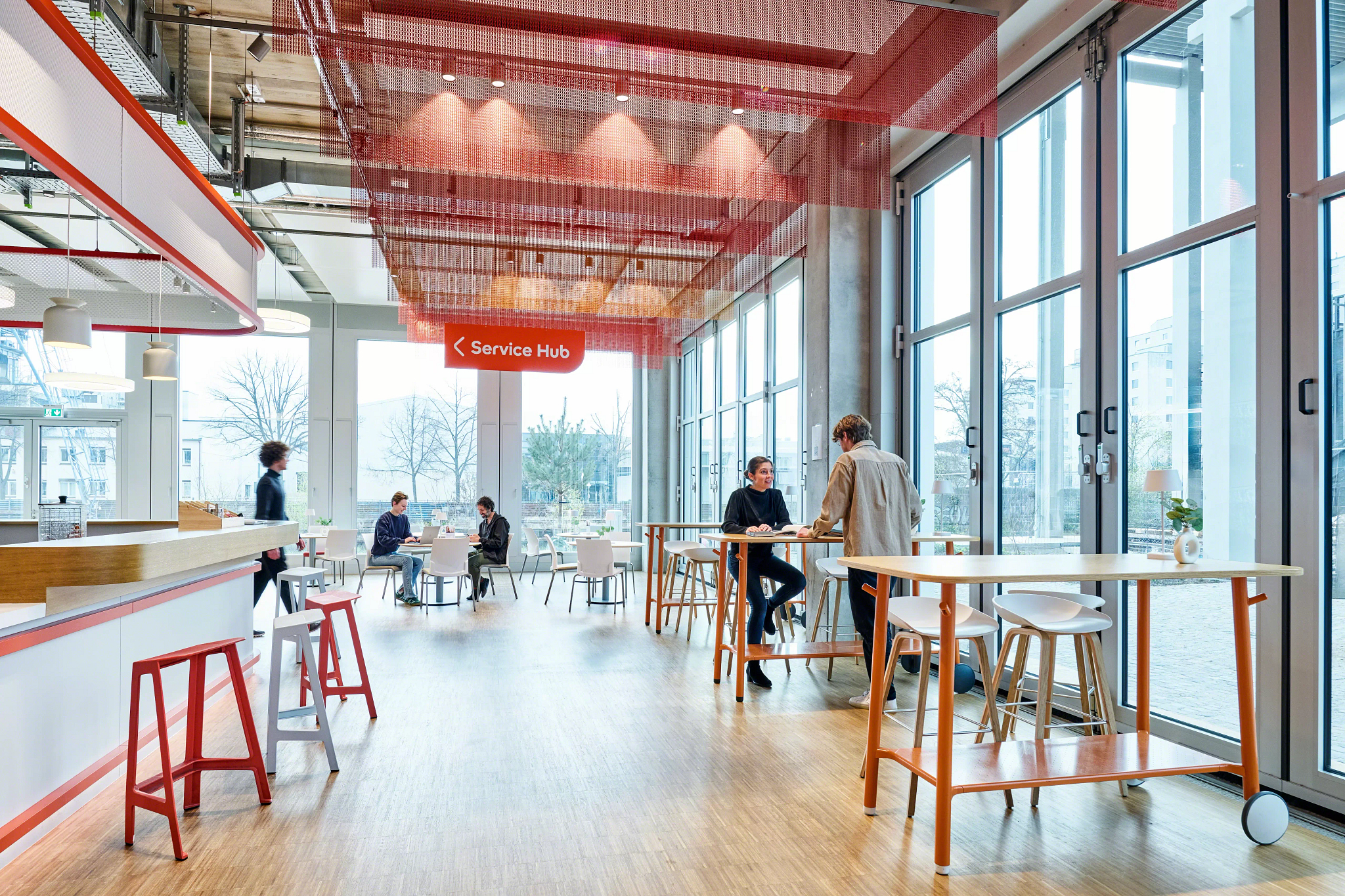
  • Desktop: Erstes Bild links: The “Service Hub” acts as a social anchor where learning, working and staying merge seamlessly.
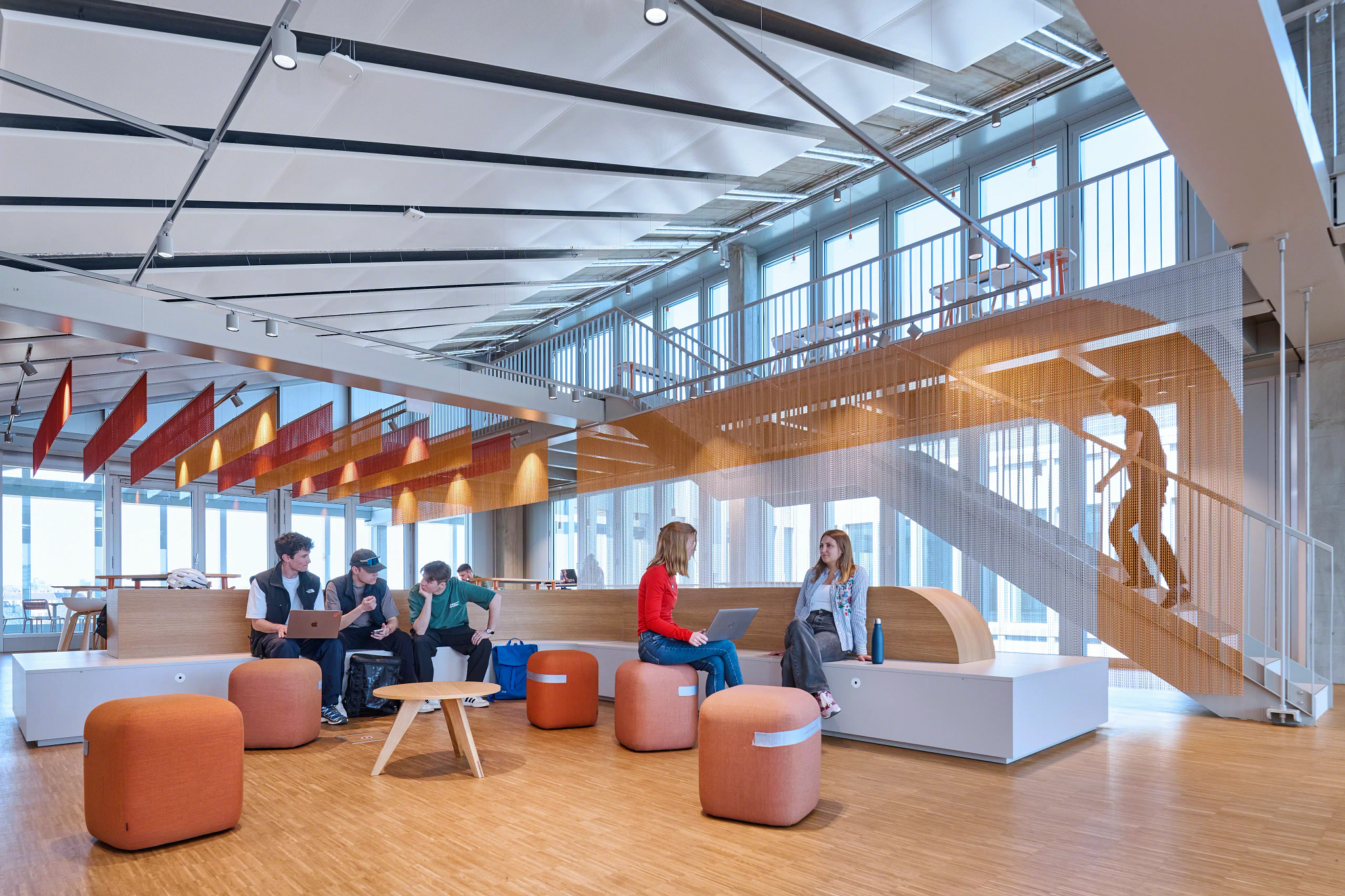
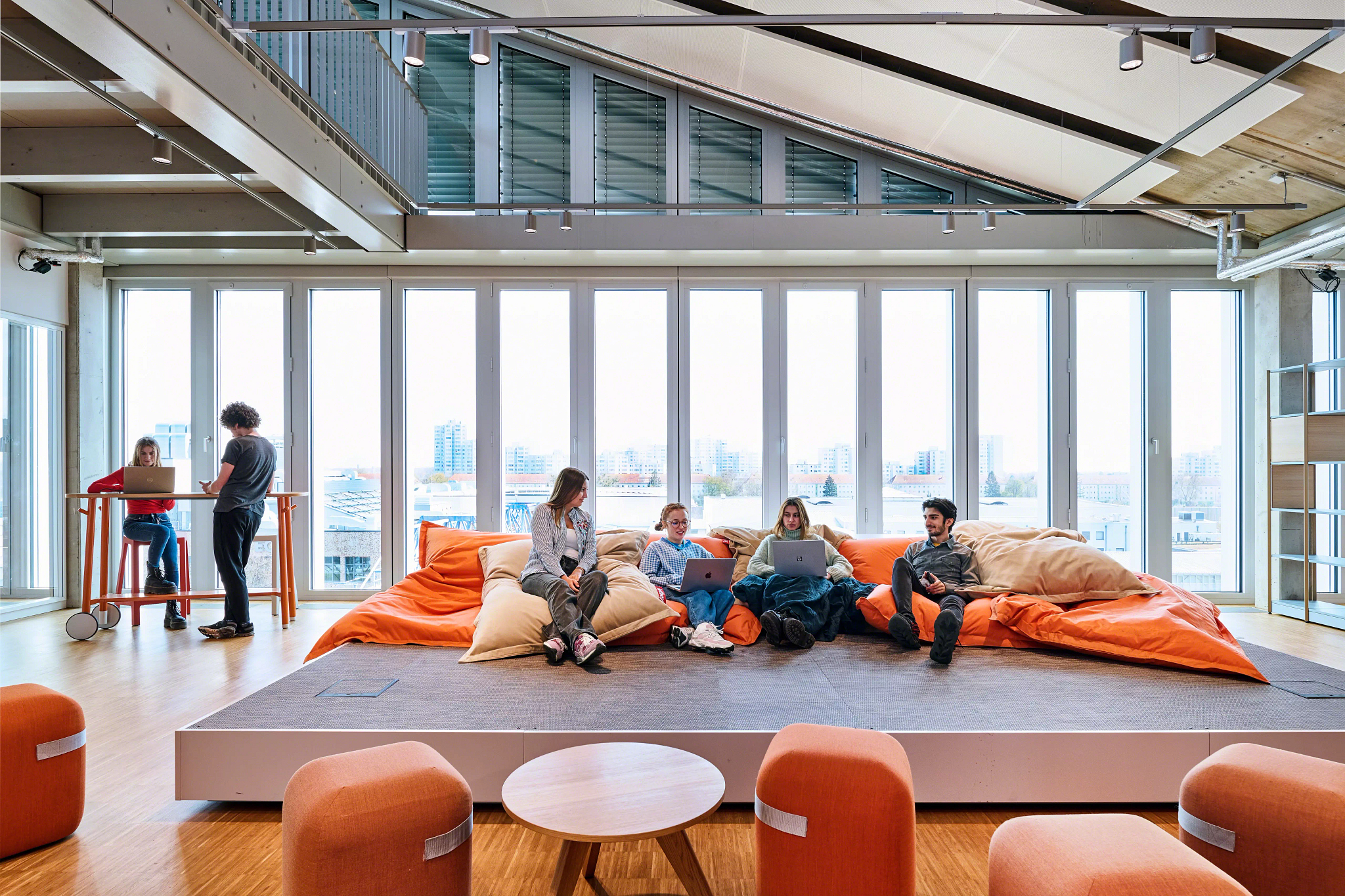
  • Desktop: Hintergrundbild: Open lounge area at SRH Campus Berlin: modular seating and informal zones encourage spontaneous exchange beyond traditional classrooms.
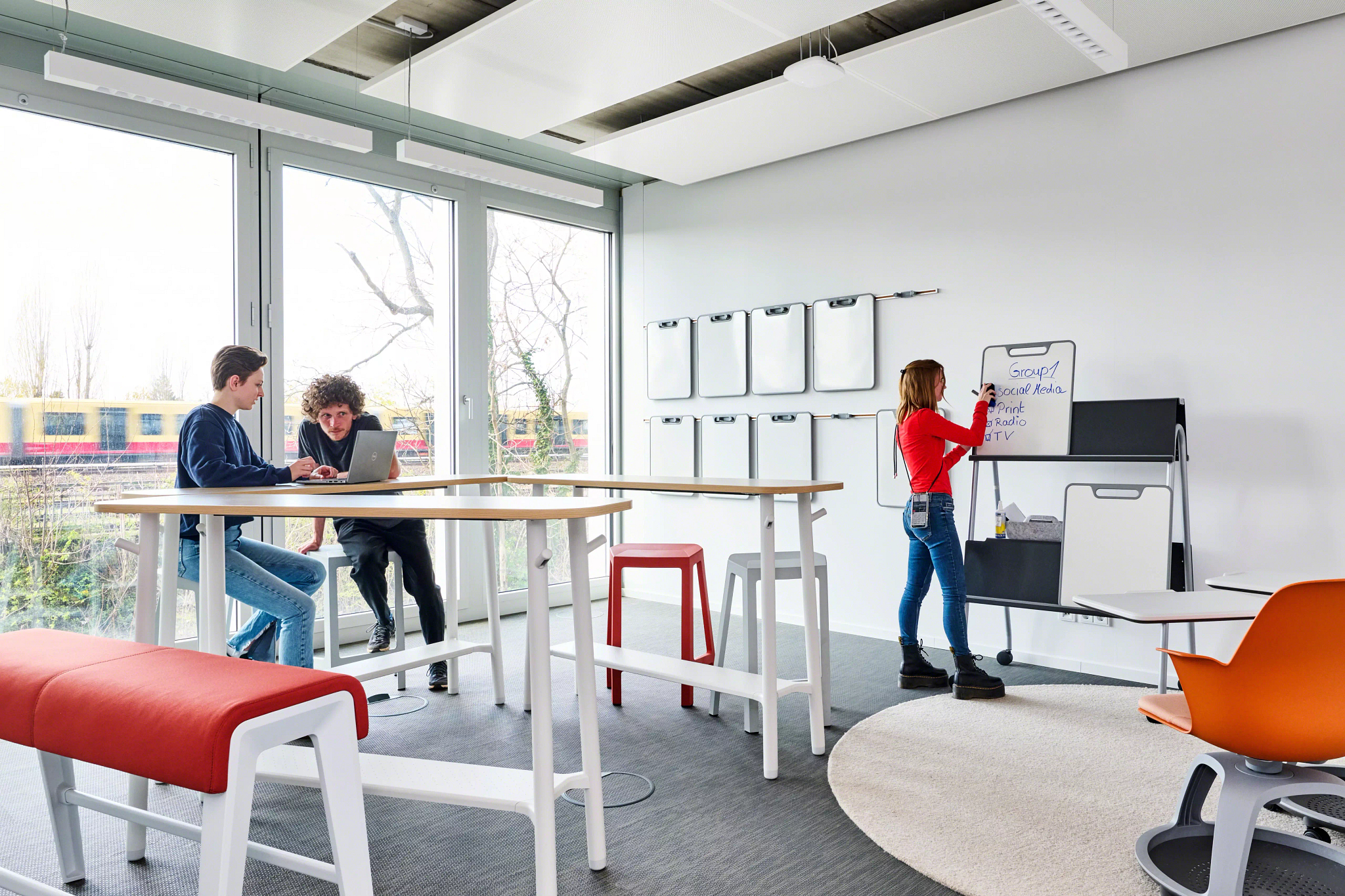
  • Desktop: Dreierreihe, erstes Bild: Flexible group workspace: mobile furniture and writable surfaces turn the room into an active tool for collaboration.
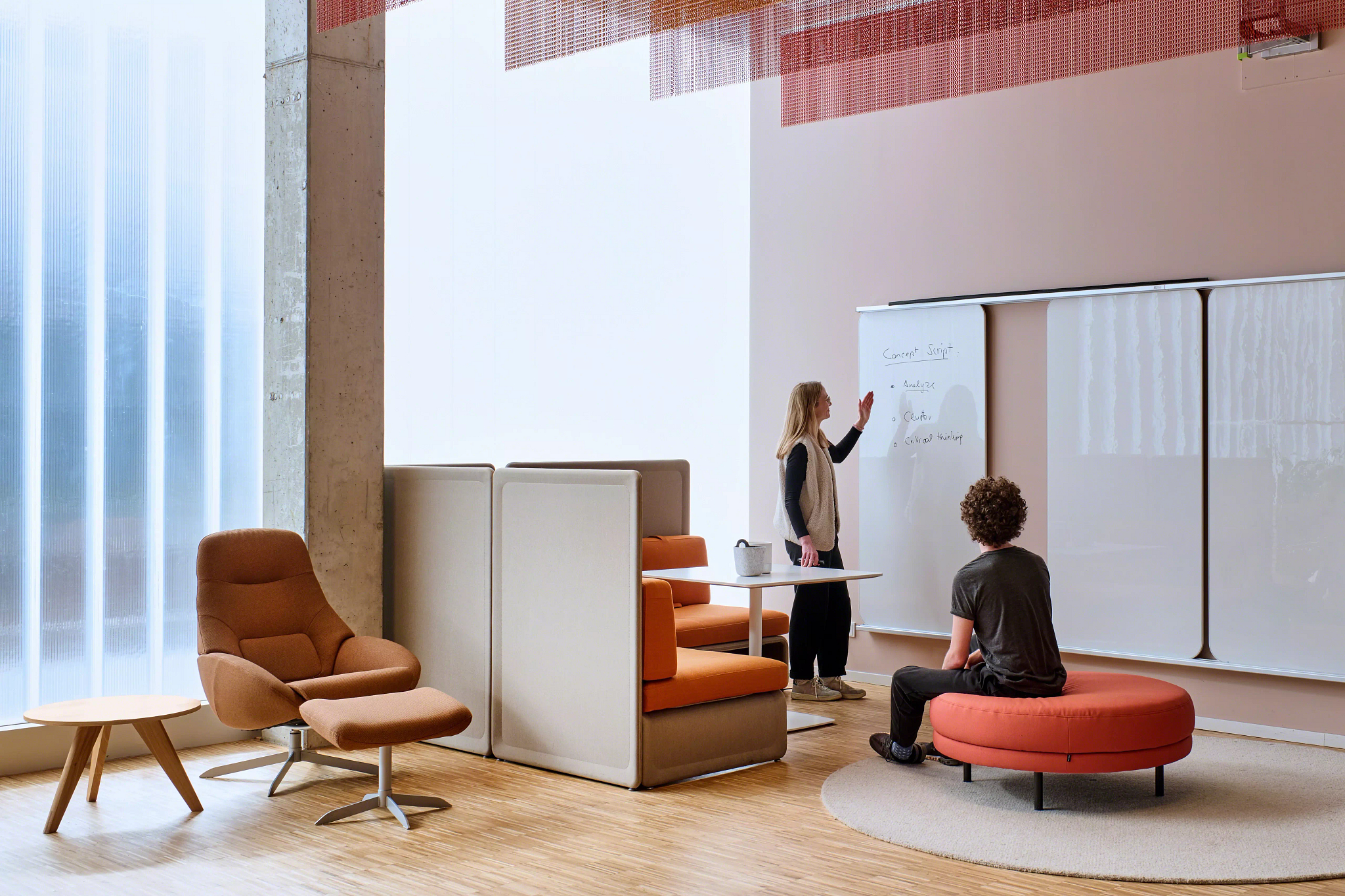
  • Desktop: Dreierreihe, zweites Bild: Semi-enclosed retreat area: spaces for focused work are integrated without isolating users from the overall environment.
  • Desktop: Dreierreihe, drittes Bild: Learning as a shared experience: generous open areas support interaction, movement and informal study formats.
  • Desktop: Weiterführender Artikeltext:

    At the same time, everything remains part of an overarching narrative. The brand is not additive, but integrative. It is embedded in surfaces, colors, and light just as much as in the furniture. Even the details follow this principle. Rounded shapes, specific color tones, custom-designed lighting – everything contributes to the same overall image.

    Design as a strategic instrument

    What is striking is how clearly the ambition is defined. The campus is not only meant to function, but to influence behavior. To encourage exchange. To create identity. To provide orientation. This only works if design is not the final step, but the starting point. That is exactly what the jury highlights: the award is a process consistently shaped by its users' needs.

    In this way, design becomes strategy. And university architecture becomes a field of experimentation. The SRH Campus in Berlin shows how far this development has already progressed. Spaces are no longer a neutral shell. They become an active part of teaching, brand, and culture. Or put differently: anyone who wants to understand how education is changing needs to look at the spaces. And right now, Berlin offers a very clear example.

  • Mobil: Kompletter Artikeltext:

    You can enter this campus like any other. Glass, concrete, open spaces. And yet it works differently. The SRH University Campus in Berlin is not a building that simply organizes teaching. It is a system that makes identity visible – and that is precisely why the project received the German Design Award 2026.

    The jury recognizes not only the design, but an approach: interior architecture, brand management, and learning environment are seamlessly intertwined. Spaces provide orientation, create a sense of belonging, and at the same time remain flexible enough to adapt to new requirements. That sounds abstract. In Berlin, it becomes tangible.

    Around 12,000 square meters of space, located directly by the water and connected to the Ringbahn. More than 3,000 students from over 120 countries use the campus. Internationality is part of the concept – and shapes the spatial structure just as much as the visual language.

    The real leverage, however, lies in the details. The project consistently follows the principle of “Brand in Space.” Materials, colors, furniture types and even the smallest design elements are carefully defined and translate the university’s brand into a spatial experience. This level of consistency is rare. And it is intentional.

    From space to tool

    The concept was developed by the Berlin-based agency dan pearlman under the direction of Marcus Fischer. Since 2021, the team has been supporting SRH in developing its spatial brand. At the same time, Steelcase contributes as a strategic partner. Not only with products, but with a clear vision of work and learning environments. The result is not static rooms, but zones that can be transformed. Furniture is modular, spaces can be reconfigured, and uses are conceived as open-ended.

    This shifts the campus's function. The lecture hall loses importance. Instead, hybrid spaces emerge: for workshops, group work, retreat or spontaneous encounters. A forum with stage and event technology is just as much a part of it as traditional seminar areas. The campus thus becomes a “New Learning Hub” – a term explicitly used by the jury. What is meant is the transformation of traditional learning environments into dynamic, networked spaces.

    The “Common Path” as a guiding motif

    What stands out is the clear spatial dramaturgy. The so-called “Common Path” runs through the campus as a defining design element. It structures circulation, connects zones, and provides orientation in everyday use. This is more than a design gesture. It is an attempt to accompany learning spatially. Students do not simply move through corridors, but through a sequence of situations: focused, communicative, open, secluded.

    At the same time, everything remains part of an overarching narrative. The brand is not additive, but integrative. It is embedded in surfaces, colors, and light just as much as in the furniture. Even the details follow this principle. Rounded shapes, specific color tones, custom-designed lighting – everything contributes to the same overall image.

    Design as a strategic instrument

    What is striking is how clearly the ambition is defined. The campus is not only meant to function, but to influence behavior. To encourage exchange. To create identity. To provide orientation. This only works if design is not the final step, but the starting point. That is exactly what the jury highlights: the award is a process consistently shaped by its users' needs.

    In this way, design becomes strategy. And university architecture becomes a field of experimentation. The SRH Campus in Berlin shows how far this development has already progressed. Spaces are no longer a neutral shell. They become an active part of teaching, brand, and culture. Or put differently: anyone who wants to understand how education is changing needs to look at the spaces. And right now, Berlin offers a very clear example.

You can enter this campus like any other. Glass, concrete, open spaces. And yet it works differently. The SRH University Campus in Berlin is not a building that simply organizes teaching. It is a system that makes identity visible – and that is precisely why the project received the German Design Award 2026.

The jury recognizes not only the design, but an approach: interior architecture, brand management, and learning environment are seamlessly intertwined. Spaces provide orientation, create a sense of belonging, and at the same time remain flexible enough to adapt to new requirements. That sounds abstract. In Berlin, it becomes tangible.

Around 12,000 square meters of space, located directly by the water and connected to the Ringbahn. More than 3,000 students from over 120 countries use the campus. Internationality is part of the concept – and shapes the spatial structure just as much as the visual language.

The real leverage, however, lies in the details. The project consistently follows the principle of “Brand in Space.” Materials, colors, furniture types and even the smallest design elements are carefully defined and translate the university’s brand into a spatial experience. This level of consistency is rare. And it is intentional.

From space to tool

The concept was developed by the Berlin-based agency dan pearlman under the direction of Marcus Fischer. Since 2021, the team has been supporting SRH in developing its spatial brand. Steelcase is also positioning itself as a strategic partner. Not only through its products, but also through a clear vision of work and learning environments, which are gaining importance in the contract market. Other projects, such as the one in Beijing, underscore this point. The result in Berlin is not static spaces, but zones that can be adapted. Furniture is modular, spaces can be reconfigured, and uses are conceived as open-ended.

This shifts the campus's function. The lecture hall loses importance. Instead, hybrid spaces emerge: for workshops, group work, retreat or spontaneous encounters. A forum with stage and event technology is just as much a part of it as traditional seminar areas. The campus thus becomes a “New Learning Hub” – a term explicitly used by the jury. What is meant is the transformation of traditional learning environments into dynamic, networked spaces.

The “Common Path” as a guiding motif

What stands out is the clear spatial dramaturgy. The so-called “Common Path” runs through the campus as a defining design element. It structures circulation, connects zones, and provides orientation in everyday use. This is more than a design gesture. It is an attempt to accompany learning spatially. Students do not simply move through corridors, but through a sequence of situations: focused, communicative, open, secluded.

Lernen wird räumlich

  • Schlagzeile-DE: Ein Campus denkt sich neu
  • Verwandte Artikel: Peking hört mit
  • Desktop: Erstes Bild links: „Service Hub“ als sozialer Mittelpunkt: Übergänge zwischen Lernen, Arbeiten und Aufenthalt verschwimmen bewusst.
  • Desktop: Hintergrundbild: Offene Lounge-Zone im SRH Campus Berlin: Flexible Sitzmodule und informelle Treffpunkte fördern Austausch jenseits klassischer Seminarstrukturen. Fotos: Steelcase
  • Desktop: Dreierreihe, erstes Bild: Gruppenarbeit im flexiblen Setting: Mobile Möbel und beschreibbare Flächen machen den Raum zum Werkzeug.
  • Desktop: Dreierreihe, zweites Bild: Rückzugsbereich mit halbhohen Abschirmungen: Konzentration wird hier genauso mitgedacht wie Kommunikation.
  • Desktop: Dreierreihe, drittes Bild: Lernen als Gemeinschaftserlebnis: Großzügige Flächen und variable Nutzung schaffen Raum für spontane Interaktion.
  • Desktop: Weiterführender Artikeltext:

    Gleichzeitig bleibt alles Teil einer übergeordneten Erzählung. Die Marke ist nicht additiv, sondern integrativ. Sie steckt in Oberflächen, Farben und Licht ebenso wie in der Möblierung. Selbst Details folgen diesem Prinzip. Abgerundete Formen, spezifische Farbtöne, eigens entwickelte Leuchten – alles zahlt auf das gleiche Bild ein.

    Design als strategisches Instrument

    Interessant ist, wie klar der Anspruch formuliert wird. Der Campus soll nicht nur funktionieren, sondern Verhalten beeinflussen. Austausch fördern. Identität stiften. Orientierung geben. Das gelingt nur, wenn Gestaltung nicht am Ende steht, sondern am Anfang. Genau das hebt auch die Jury hervor: ausgezeichnet wird ein Prozess, der konsequent von den Bedürfnissen der Nutzer gedacht ist.

    Damit wird Design zur Strategie. Und Hochschulbau zum Experimentierfeld. Der SRH Campus in Berlin zeigt, wie weit diese Entwicklung inzwischen ist. Räume sind keine neutrale Hülle mehr. Sie werden zum aktiven Bestandteil von Lehre, Marke und Kultur. Oder anders gesagt: Wer verstehen will, wie sich Bildung verändert, muss sich die Räume anschauen. In Berlin lässt sich das gerade ziemlich gut beobachten.

  • Mobil: Kompletter Artikeltext:

    Man kann diesen Campus betreten wie jeden anderen. Glas, Beton, offene Flächen. Und doch funktioniert er anders. Der SRH University Campus in Berlin ist kein Gebäude, das nur Lehre organisiert. Er ist ein System, das Identität sichtbar macht – und genau dafür erhält das Projekt den German Design Award 2026. Die Jury würdigt nicht nur Gestaltung, sondern einen Ansatz: Innenarchitektur, Markenführung und Lernumgebung greifen hier ineinander. Räume geben Orientierung, schaffen Zugehörigkeit und bleiben gleichzeitig flexibel genug, um sich an neue Anforderungen anzupassen.

    Das klingt abstrakt. In Berlin wird es konkret. Rund 12.000 Quadratmeter Fläche, direkt am Wasser und angebunden an die Ringbahn. Mehr als 3.000 Studierende aus über 120 Ländern nutzen den Campus. Die Internationalität ist Teil des Konzepts – und prägt die räumliche Struktur ebenso wie die visuelle Sprache.

    Der eigentliche Hebel liegt jedoch im Detail. Das Projekt folgt konsequent dem Prinzip „Brand in Space“. Materialien, Farben, Möbeltypen und sogar kleinste Gestaltungselemente sind durchdefiniert und übersetzen die Marke der Hochschule in eine räumliche Erfahrung. Diese Konsequenz ist selten. Und sie ist gewollt.

    Vom Raum zum Werkzeug

    Entwickelt wurde das Konzept von der Berliner Agentur dan pearlman unter Leitung von Marcus Fischer. Seit 2021 begleitet das Team die SRH bei der räumlichen Markenentwicklung. Steelcase bringt sich parallel als strategischer Partner ein. Nicht nur mit Produkten, sondern mit einer klaren Idee von Arbeits- und Lernumgebungen. Das Ergebnis sind keine statischen Räume, sondern Zonen, die sich verändern lassen. Möbel sind modular, Räume verschiebbar, Nutzungen offen gedacht.

    Damit verschiebt sich die Funktion des Campus. Der Hörsaal verliert an Bedeutung. Stattdessen entstehen hybride Flächen: für Workshops, Gruppenarbeit, Rückzug oder spontane Begegnung. Ein Forum mit Bühne und Veranstaltungstechnik gehört ebenso dazu wie klassische Seminarbereiche.

    Der Campus wird damit zum „New Learning Hub“ – ein Begriff, den die Jury explizit aufgreift. Gemeint ist die Transformation klassischer Lernorte in dynamische, vernetzte Umgebungen.

    Der „Common Path“ als Leitmotiv

    Auffällig ist die klare räumliche Dramaturgie. Der sogenannte „Common Path“ zieht sich als gestalterisches Motiv durch den Campus. Er strukturiert Wege, verbindet Zonen und gibt Orientierung im Alltag. Das ist mehr als ein gestalterischer Kniff. Es ist ein Versuch, Lernen räumlich zu begleiten. Studierende bewegen sich nicht nur durch Flure, sondern durch eine Abfolge von Situationen: konzentriert, kommunikativ, offen, zurückgezogen.

    Gleichzeitig bleibt alles Teil einer übergeordneten Erzählung. Die Marke ist nicht additiv, sondern integrativ. Sie steckt in Oberflächen, Farben und Licht ebenso wie in der Möblierung. Selbst Details folgen diesem Prinzip. Abgerundete Formen, spezifische Farbtöne, eigens entwickelte Leuchten – alles zahlt auf das gleiche Bild ein.

    Design als strategisches Instrument

    Interessant ist, wie klar der Anspruch formuliert wird. Der Campus soll nicht nur funktionieren, sondern Verhalten beeinflussen. Austausch fördern. Identität stiften. Orientierung geben. Das gelingt nur, wenn Gestaltung nicht am Ende steht, sondern am Anfang. Genau das hebt auch die Jury hervor: ausgezeichnet wird ein Prozess, der konsequent von den Bedürfnissen der Nutzer gedacht ist.

    Damit wird Design zur Strategie. Und Hochschulbau zum Experimentierfeld. Der SRH Campus in Berlin zeigt, wie weit diese Entwicklung inzwischen ist. Räume sind keine neutrale Hülle mehr. Sie werden zum aktiven Bestandteil von Lehre, Marke und Kultur. Oder anders gesagt: Wer verstehen will, wie sich Bildung verändert, muss sich die Räume anschauen. In Berlin lässt sich das gerade ziemlich gut beobachten.

Man kann diesen Campus betreten wie jeden anderen. Glas, Beton, offene Flächen. Und doch funktioniert er anders. Der SRH University Campus in Berlin ist kein Gebäude, das nur Lehre organisiert. Er ist ein System, das Identität sichtbar macht – und genau dafür erhält das Projekt den German Design Award 2026. Die Jury würdigt nicht nur Gestaltung, sondern einen Ansatz: Innenarchitektur, Markenführung und Lernumgebung greifen hier ineinander. Räume geben Orientierung, schaffen Zugehörigkeit und bleiben gleichzeitig flexibel genug, um sich an neue Anforderungen anzupassen.

Das klingt abstrakt. In Berlin wird es konkret. Rund 12.000 Quadratmeter Fläche, direkt am Wasser und angebunden an die Ringbahn. Mehr als 3.000 Studierende aus über 120 Ländern nutzen den Campus. Die Internationalität ist Teil des Konzepts – und prägt die räumliche Struktur ebenso wie die visuelle Sprache.

Der eigentliche Hebel liegt jedoch im Detail. Das Projekt folgt konsequent dem Prinzip „Brand in Space“. Materialien, Farben, Möbeltypen und sogar kleinste Gestaltungselemente sind durchdefiniert und übersetzen die Marke der Hochschule in eine räumliche Erfahrung. Diese Konsequenz ist selten. Und sie ist gewollt.

Vom Raum zum Werkzeug

Entwickelt wurde das Konzept von der Berliner Agentur dan pearlman unter Leitung von Marcus Fischer. Seit 2021 begleitet das Team die SRH bei der räumlichen Markenentwicklung. Steelcase bringt sich parallel als strategischer Partner ein. Nicht nur mit Produkten, sondern mit einer klaren Idee von Arbeits- und Lernumgebungen, die im Objektmarktan Bedeutung gewinnen. Andere Projekte wie eines in Peking unterstreichen das. Das Ergebnis in Berlin sind keine statischen Räume, sondern Zonen, die sich verändern lassen. Möbel sind modular, Räume verschiebbar, Nutzungen offen gedacht.

Damit verschiebt sich die Funktion des Campus. Der Hörsaal verliert an Bedeutung. Stattdessen entstehen hybride Flächen: für Workshops, Gruppenarbeit, Rückzug oder spontane Begegnung. Ein Forum mit Bühne und Veranstaltungstechnik gehört ebenso dazu wie klassische Seminarbereiche.

Der Campus wird damit zum „New Learning Hub“ – ein Begriff, den die Jury explizit aufgreift. Gemeint ist die Transformation klassischer Lernorte in dynamische, vernetzte Umgebungen.

Der „Common Path“ als Leitmotiv

Auffällig ist die klare räumliche Dramaturgie. Der sogenannte „Common Path“ zieht sich als gestalterisches Motiv durch den Campus. Er strukturiert Wege, verbindet Zonen und gibt Orientierung im Alltag. Das ist mehr als ein gestalterischer Kniff. Es ist ein Versuch, Lernen räumlich zu begleiten. Studierende bewegen sich nicht nur durch Flure, sondern durch eine Abfolge von Situationen: konzentriert, kommunikativ, offen, zurückgezogen.