
700 square meters. One corridor. Several rooms. And a clear plan. The music department at the Western Academy of Beijing was not expanded, but reorganized. studio vapore works within the existing structure—and uses it consistently. And it provides a compelling example of the education sector as a growth segment in the contract market, of which there are now an increasing number.
The layout follows a simple logic: one classroom, several assigned practice rooms. Each teaching space belongs to a specific instructor and is directly linked to adjacent practice rooms. The advantage is obvious: lessons, ensemble rehearsals, and individual practice can take place simultaneously—without double bookings or unnecessary circulation.
The rooms are connected through glass partitions. Visual contact remains. Teachers retain oversight, even with parallel activities. The traditional separation between “inside” and “outside” no longer applies.
Good acoustics don’t have to be silent
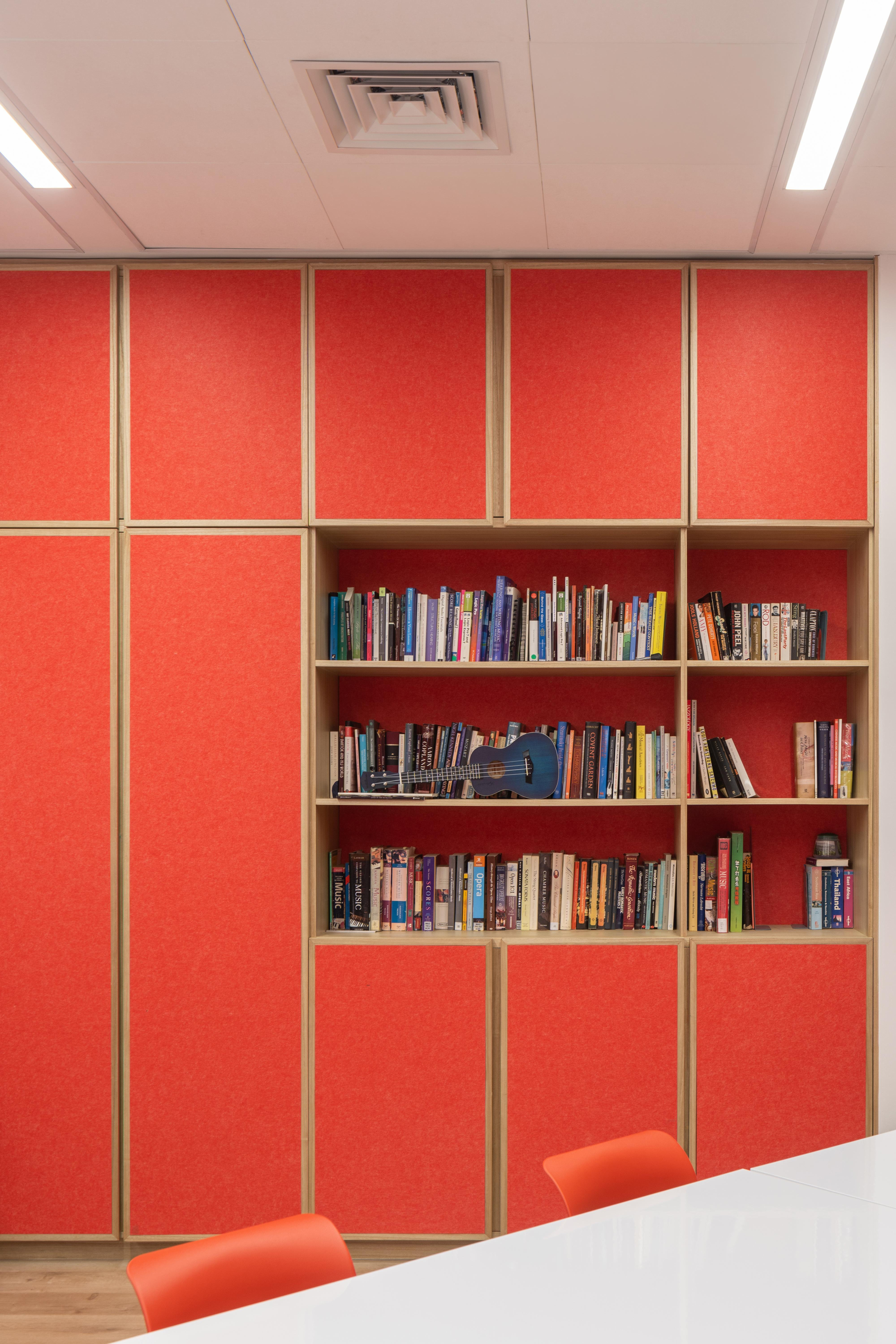
Acoustics is where the project becomes decisive. Developed together with Delhom Acoustics, sound is not fully isolated but carefully controlled. Walls, ceilings, floors, and built-in elements are all treated accordingly. The result: reduced reverberation and limited sound transfer—but not total isolation.
This is intentional. The spaces are calibrated to allow a controlled overlap of sound. Walking through the corridor, you hear fragments from adjacent rooms. Teaching remains audible without becoming disruptive. Music extends beyond individual rooms and becomes part of the entire department.
Colour with a function: orientation by age group
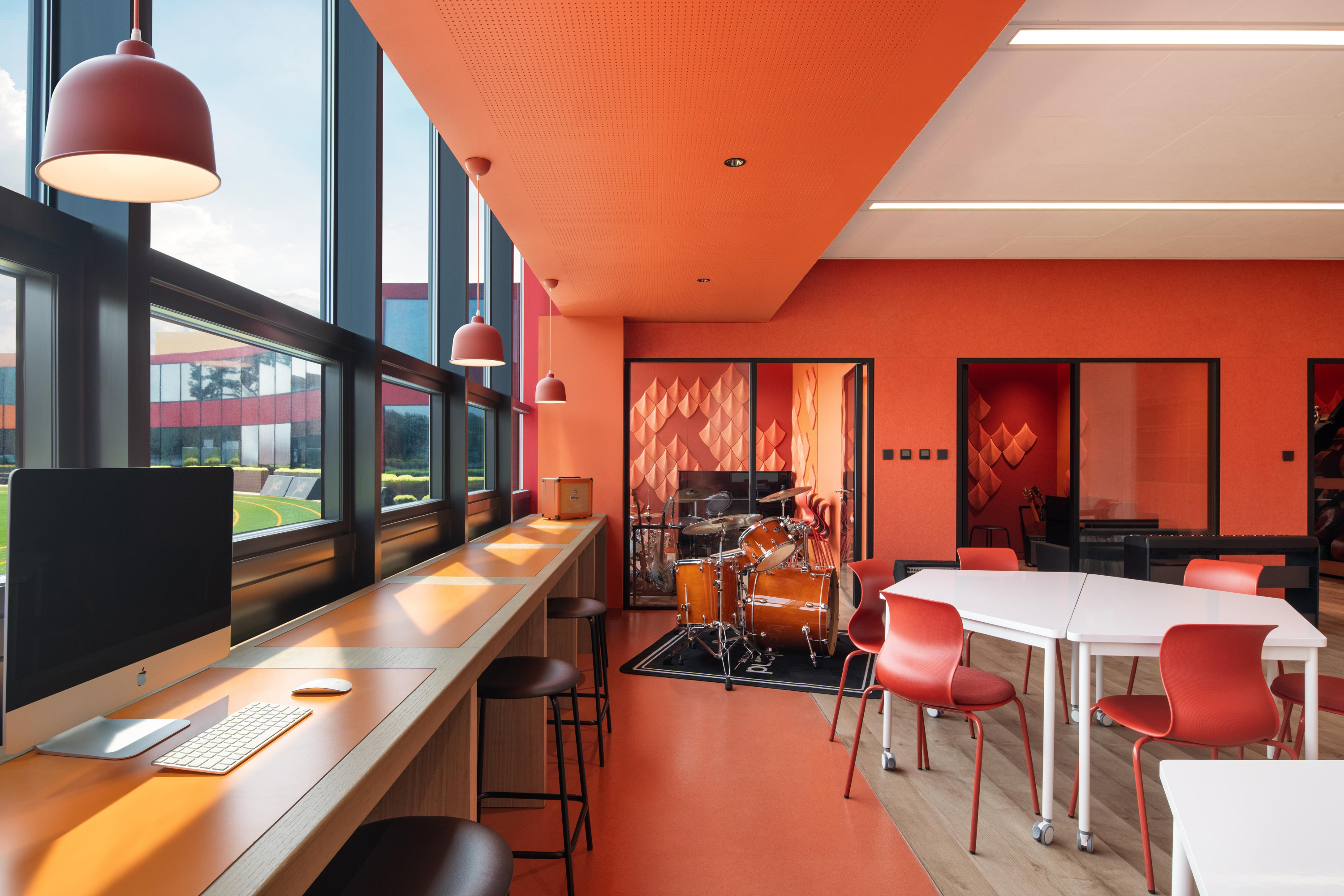
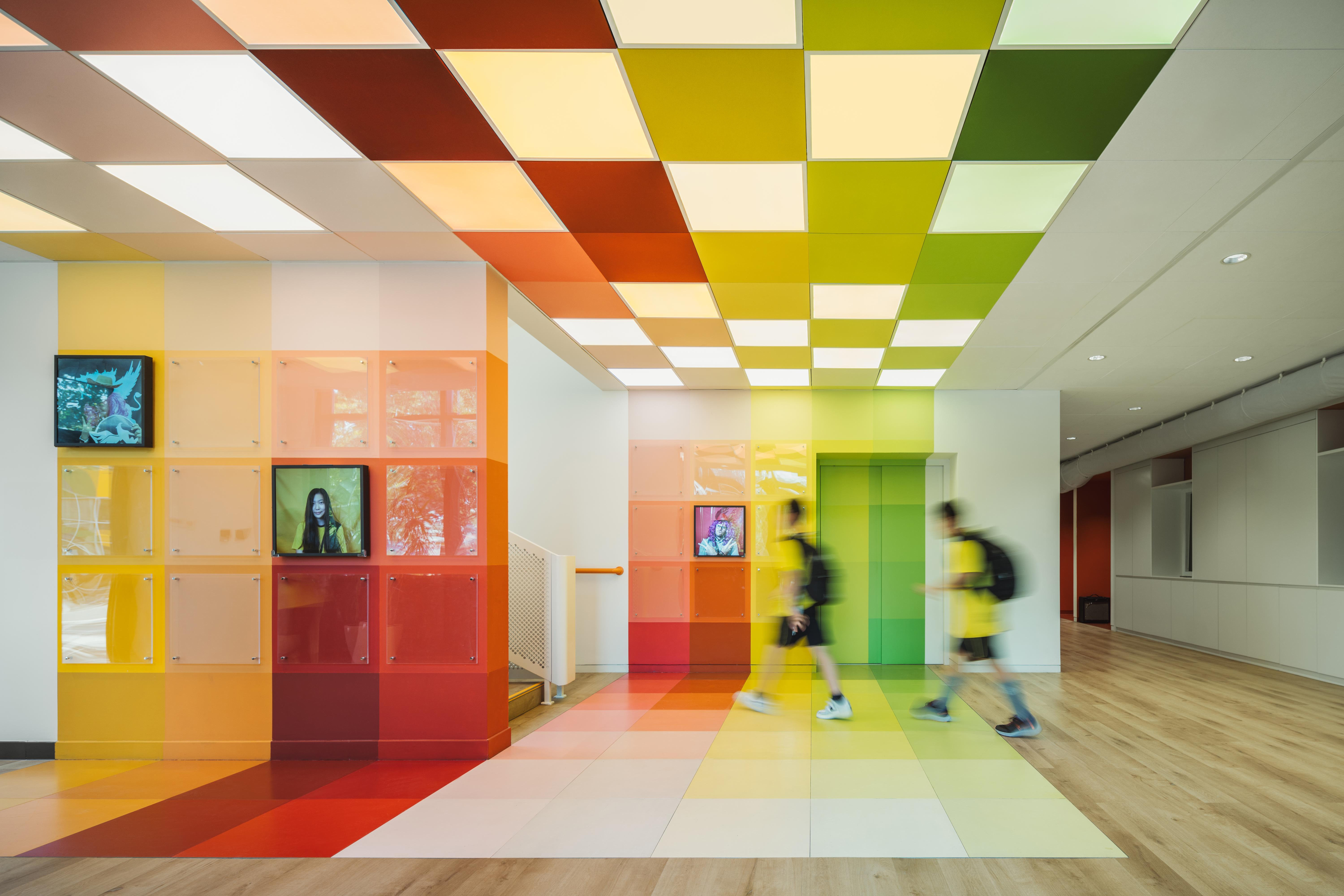
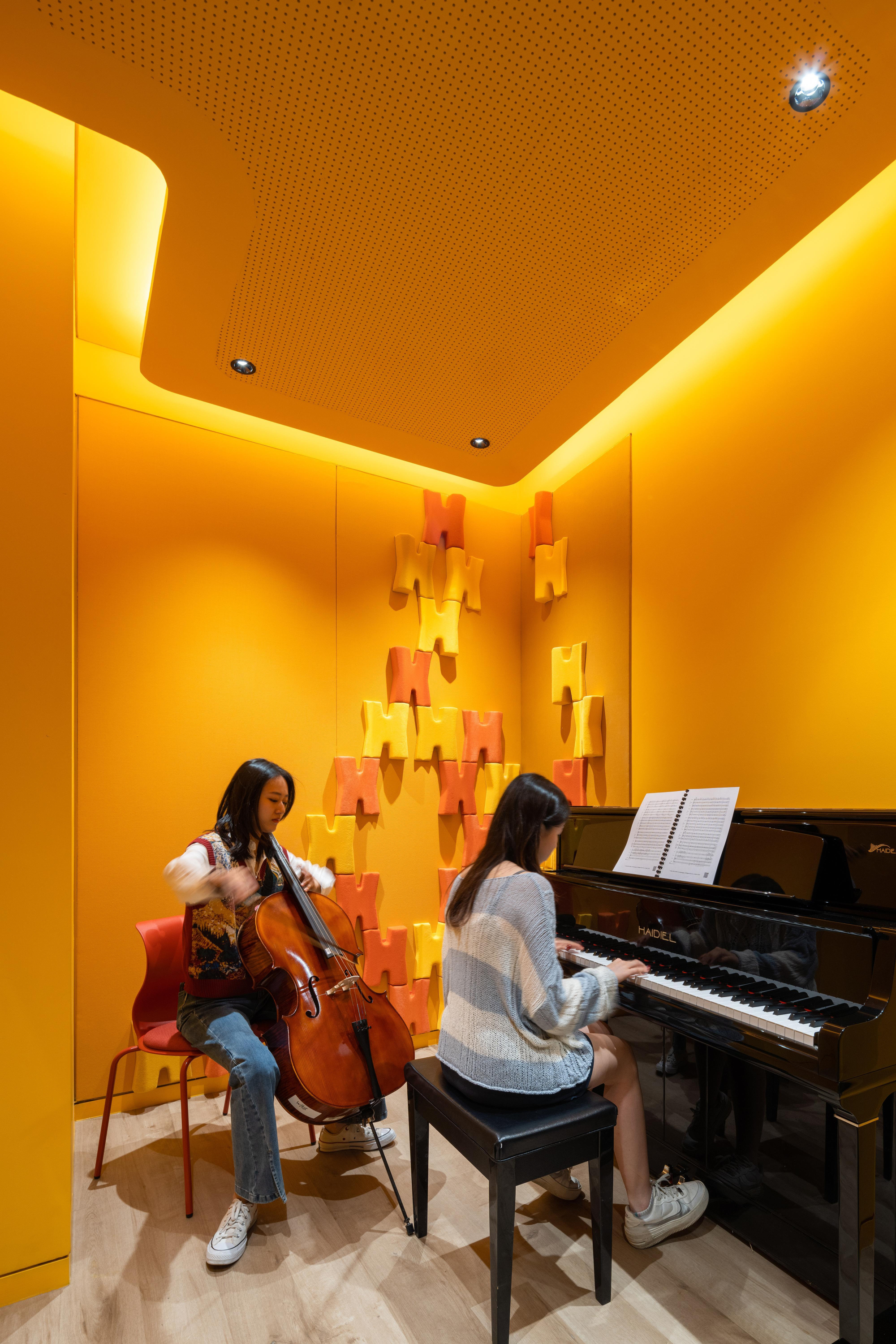
Colour forms a second layer of organization. Three main classrooms, three colours: red, orange, and yellow. Each corresponds to a different age group. At the same time, they mark the entrances. Moving through the corridor, it is immediately clear which space belongs where.
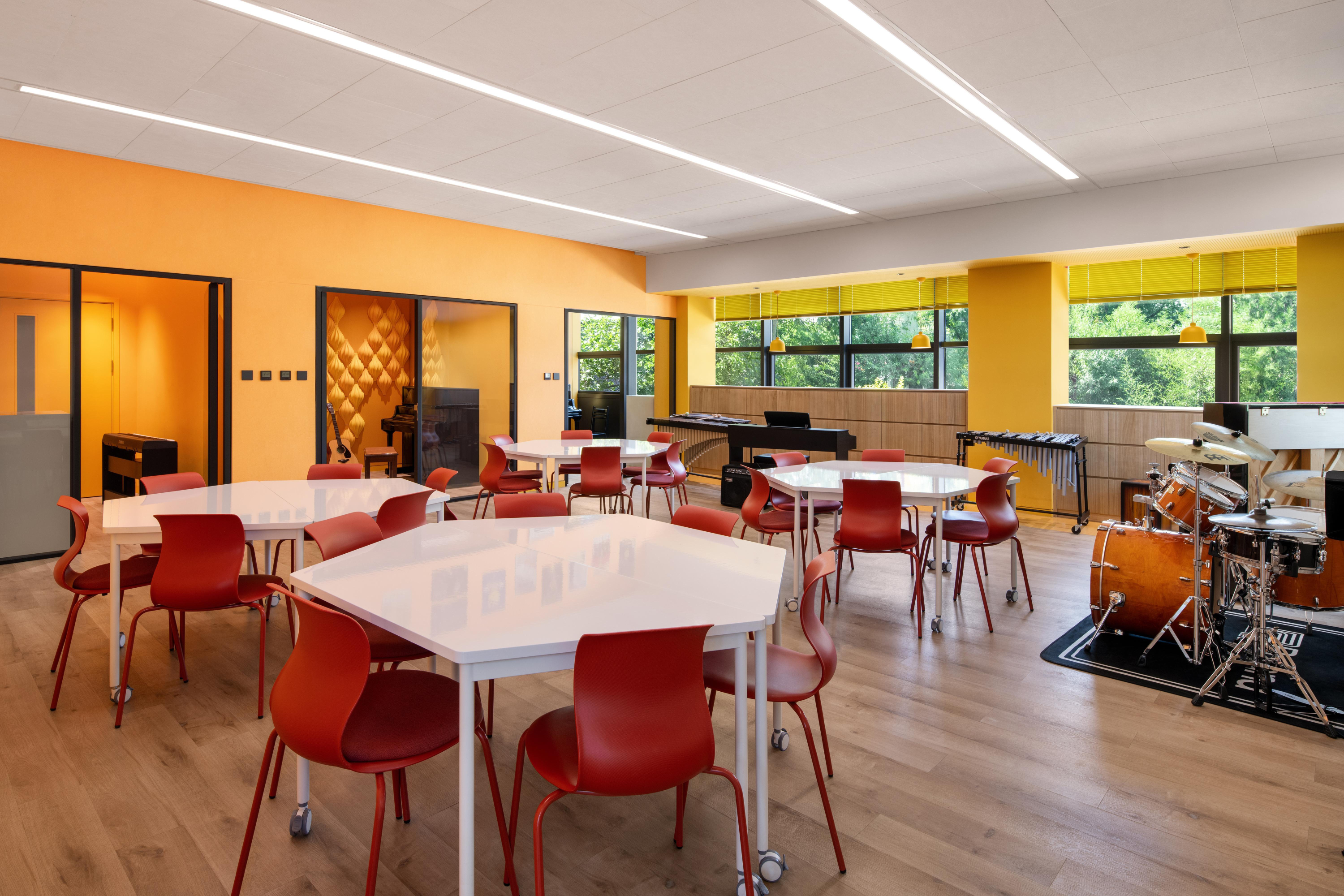
Inside the classrooms, the design remains restrained. Teaching areas are deliberately kept neutral. Colour appears as a defined band along the window side, linking each classroom to its associated practice rooms. A visual connector that makes the system readable.
The practice rooms follow a different approach. Here, colour is fully applied. Each room is entirely defined by its assigned palette. Felt panels, textile surfaces, and three-dimensional acoustic elements reinforce this. Variations within each tone prevent the spaces from feeling overwhelming despite their intensity.
Lighting is also adapted. Even, consistent illumination in the classrooms contrasts with warmer, more focused lighting in the practice rooms. The shift is subtle but effective—atmosphere changes with use.
The acoustic elements serve a dual purpose. They regulate sound while structuring the walls. Their three-dimensional arrangement introduces a visual rhythm—a direct, but precisely executed reference to music.