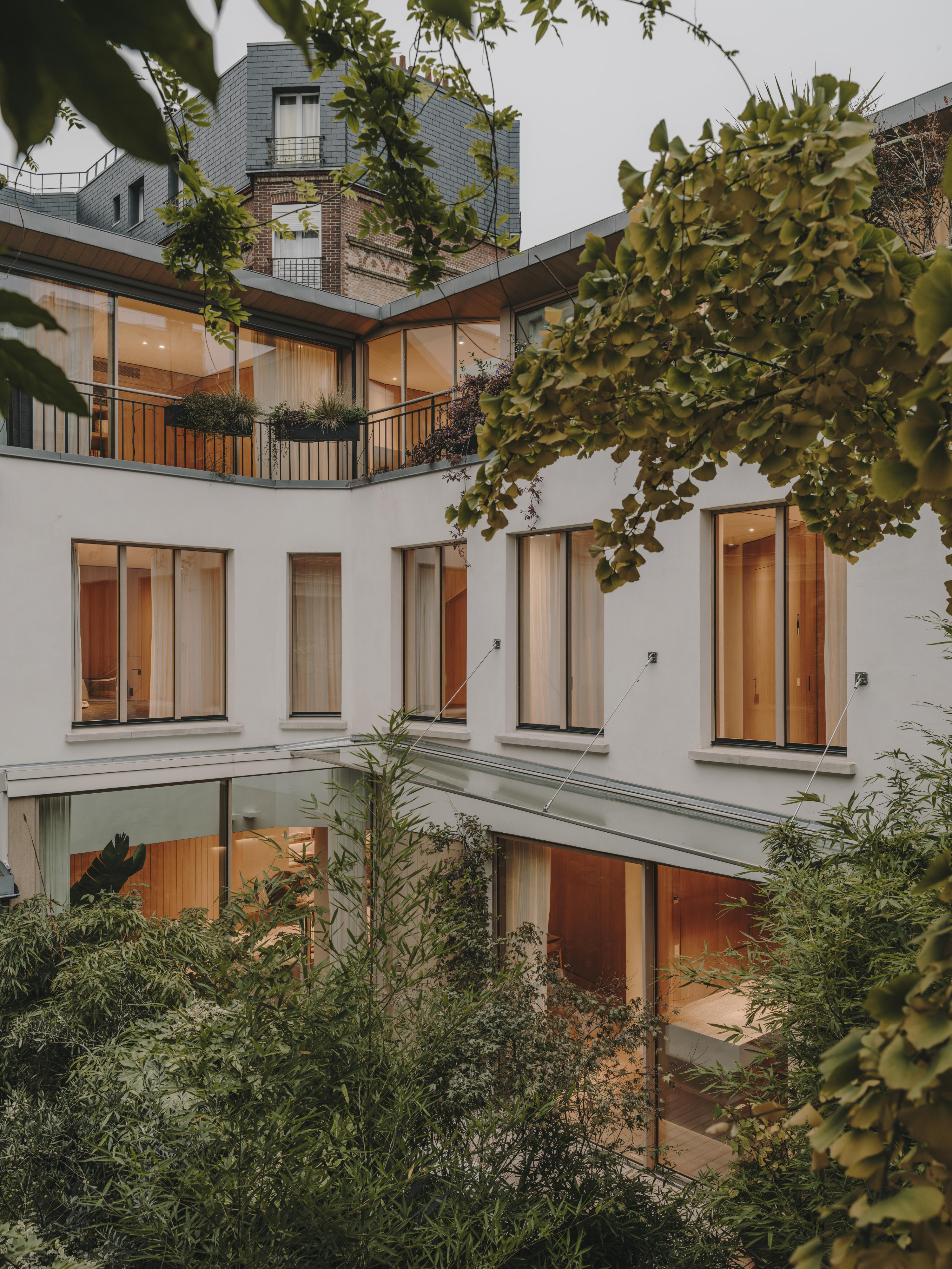
Paris can do many things. Above all: be loud, dense, crowded. Always on. The 11th arrondissement is one of those districts that never stops condensing itself. And right here—behind a gate, along an elongated courtyard, almost defiantly—sits a house that wants nothing to do with any of it.
The interior was designed and executed by Holzrausch.
For years, the Munich-based studio has been doing what many like to claim, but few actually follow through on: they don’t see interior design as styling, but as a system. Planning, construction, fabrication—everything under one roof. Tobias Petri and Sven Petzold started this about 20 years ago, back when they were still carpenters with a rather unfashionable idea: designing their own work instead of just executing someone else’s. Today, that sounds obvious. Back then, it was… let’s say: bold.
A client with no urge to decorate
And now, Paris. And the client? Former model, gallery owner, creative. Exactly the kind of person you would expect to want art, statements, collectible pieces—maybe just a bit too much of everything. Instead: the opposite. No pictures. No objects. No “I’ve been to Art Basel” attitude. Calm. Just calm.
Petri puts it politely. One could also say: finally someone who dares to want nothing.
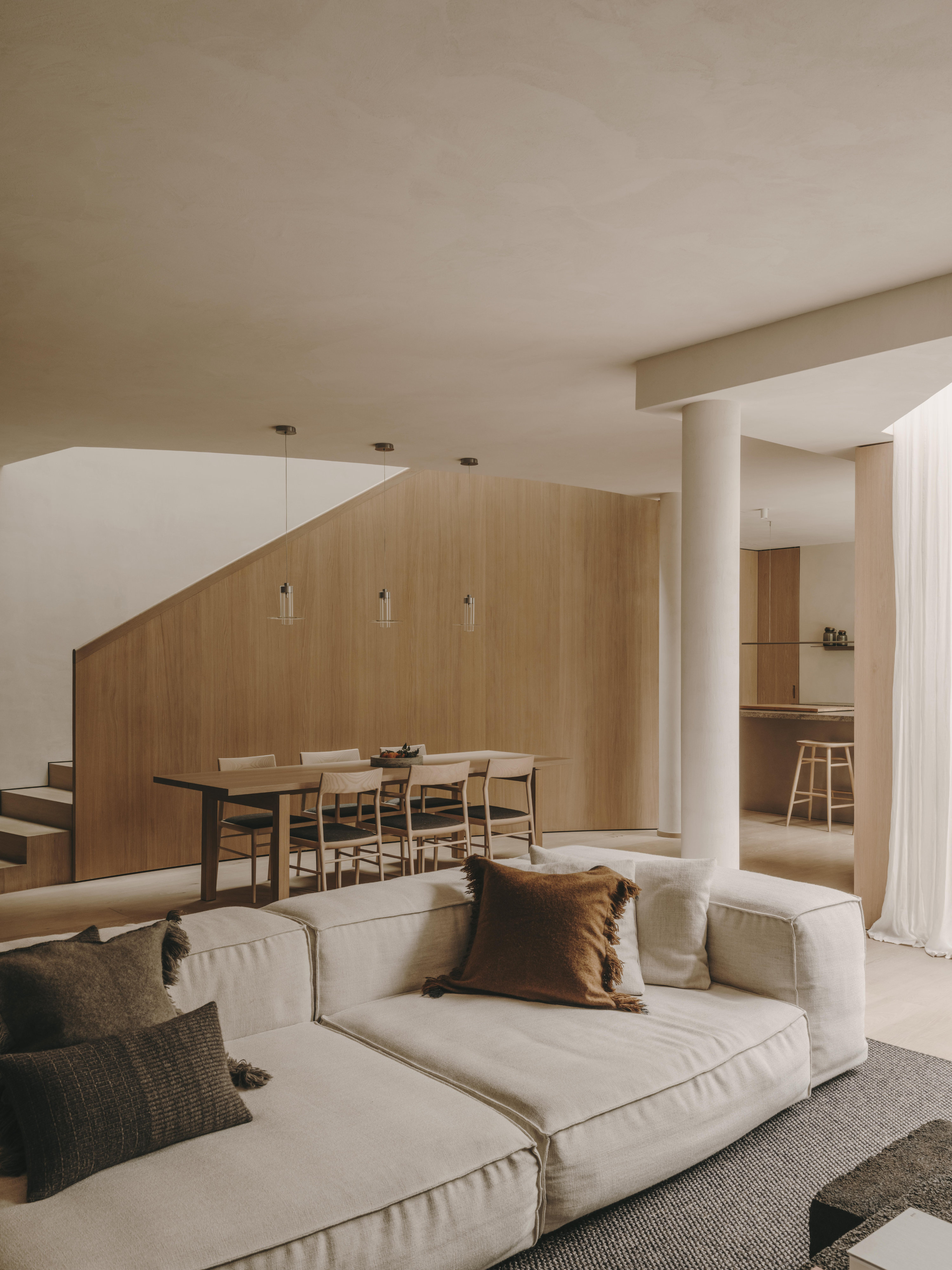
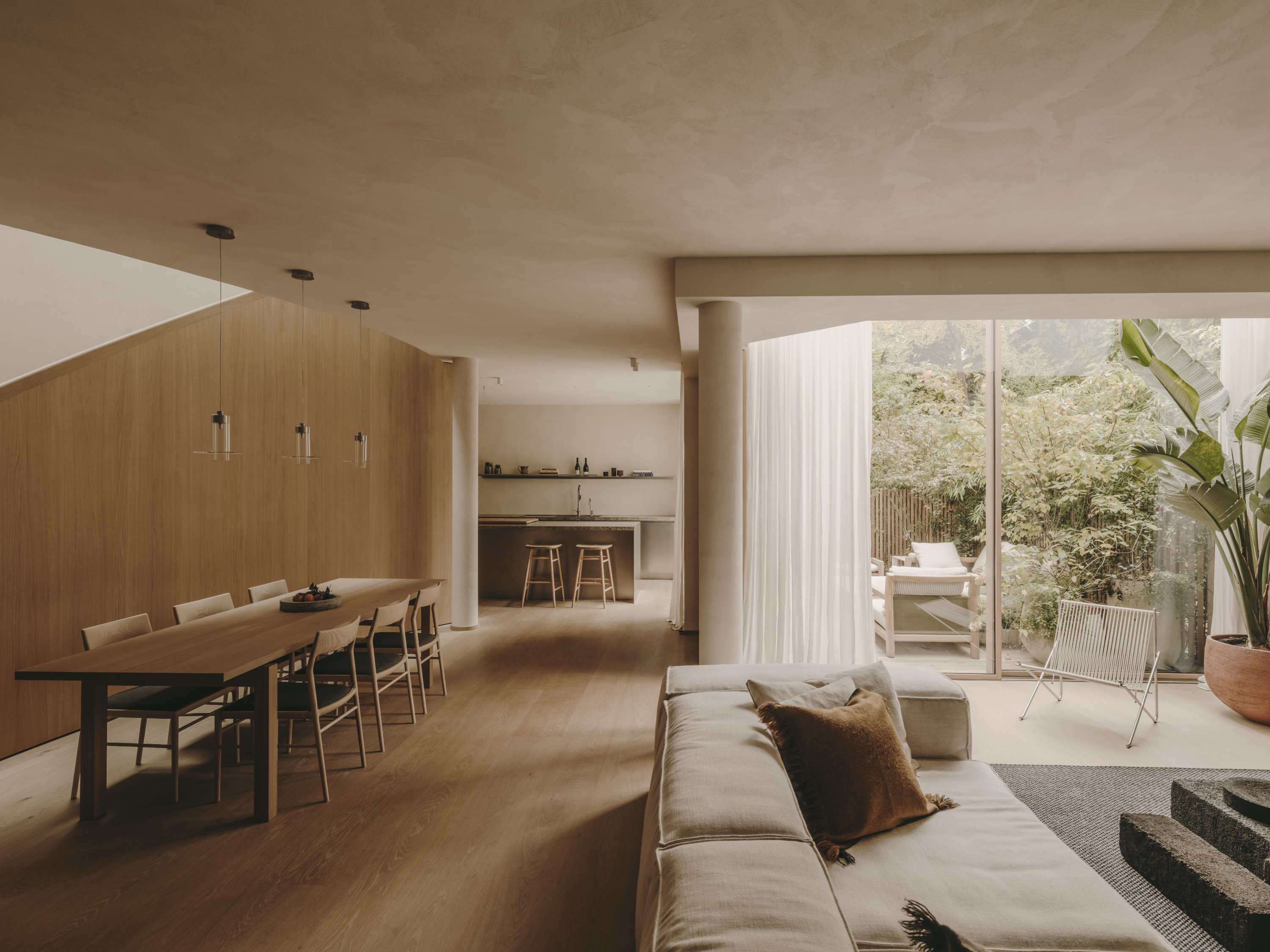
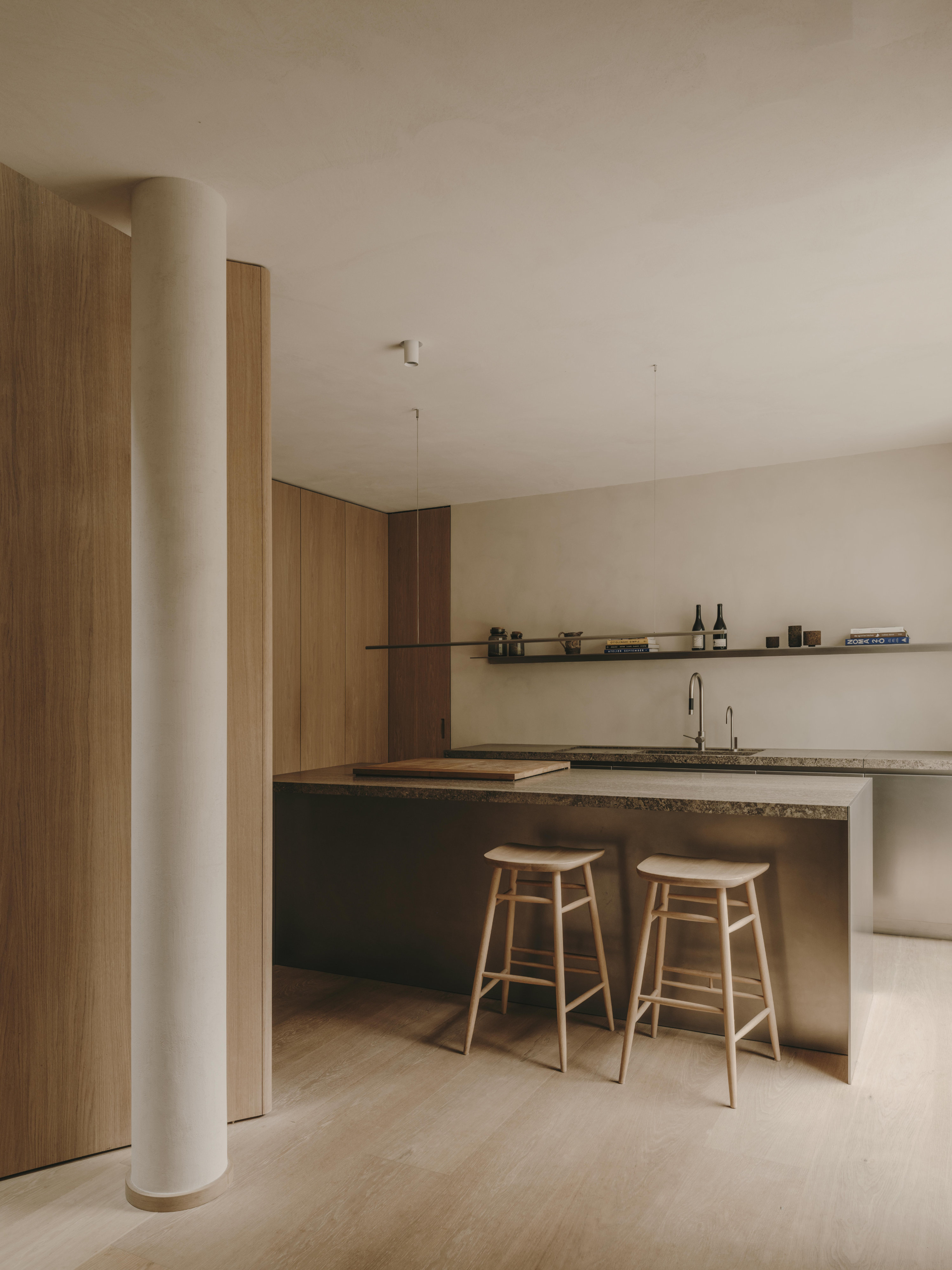
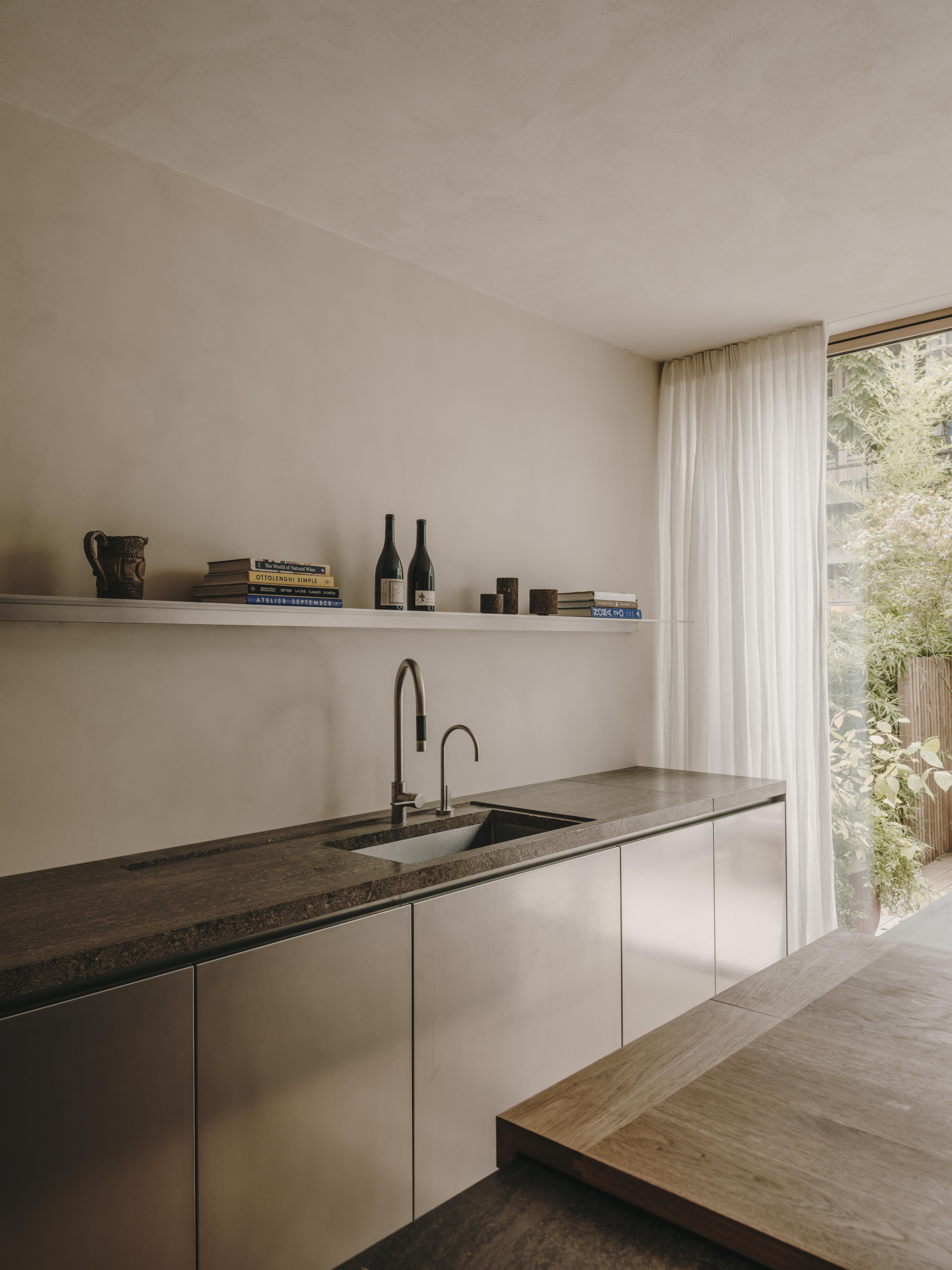
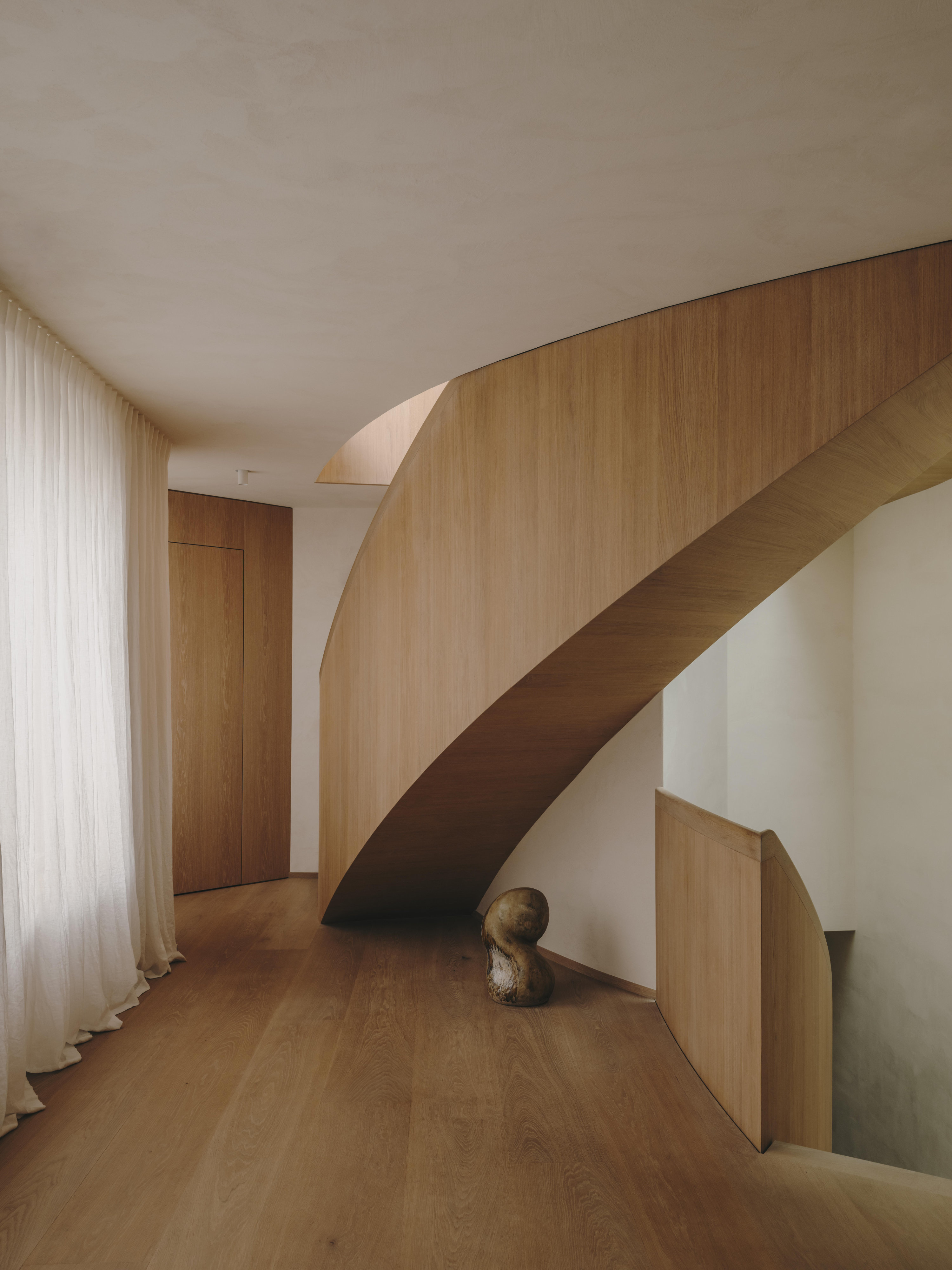
The result is accordingly radical. Four materials. Oak, plaster, stone, stainless steel in the kitchen. That’s it. No material fetish, no surface circus, no “we discovered a new finish.” Anyone who still believes minimalism is easy should take a look at this house. Reduction is brutal. It forgives nothing. Every joint, every edge, every decision is suddenly under the spotlight. A consistent use of materials, as was most recently seen in the Pulpo collection.
Planning meets workshop
And this is exactly where Holzrausch plays to its real strength: the proximity between concept and execution. “Many clients come directly to us because the distance from design to fabrication is extremely short,” says Petri. It sounds unspectacular, but it’s the decisive difference. If you design and build yourself, there are no excuses.
The house itself avoids any grand gesture. Four levels, around 3,800 square feet. An L-shaped layout, all windows facing the courtyard. At first, that sounds like a problem. It is.
So the light comes from above.
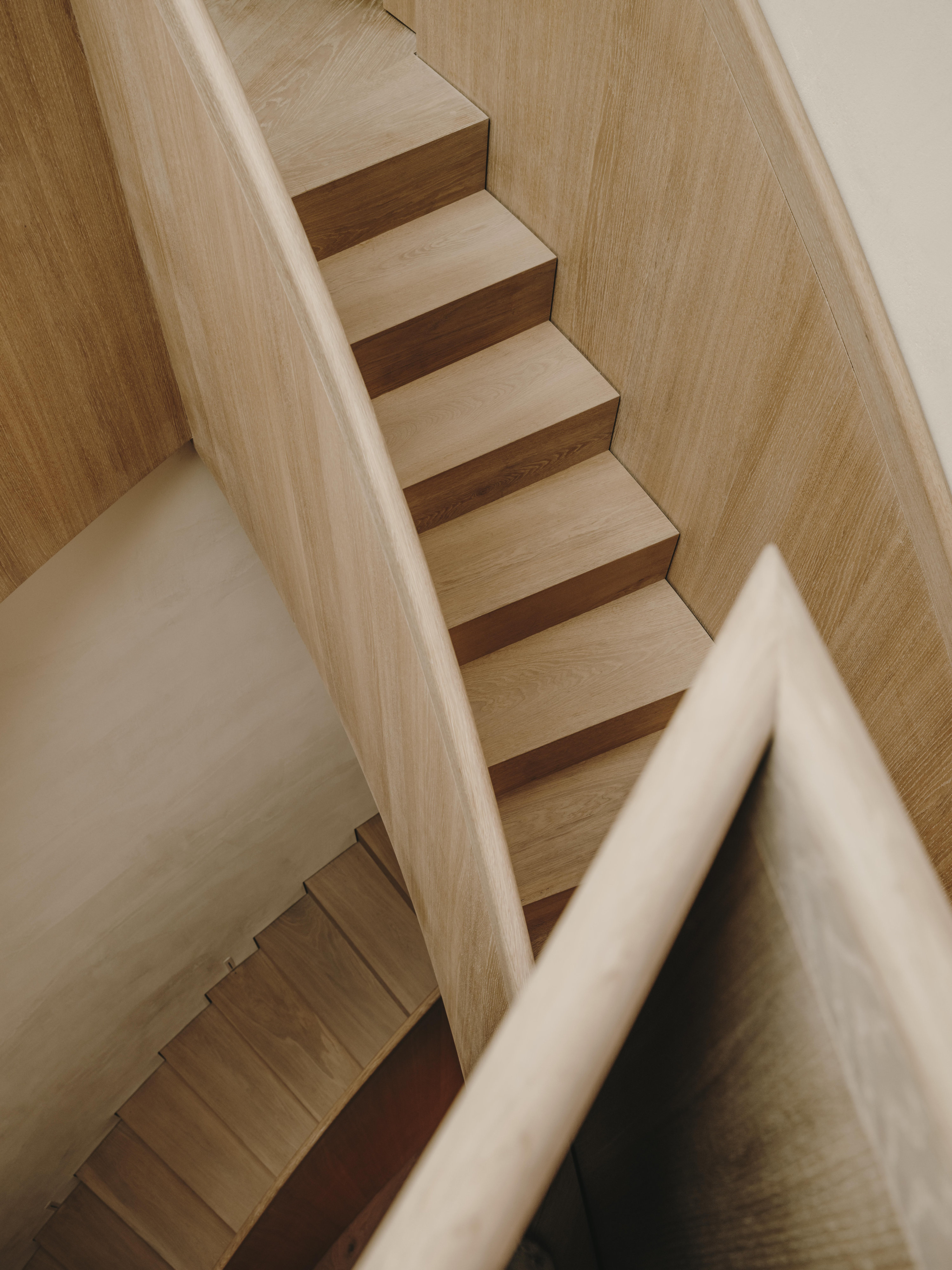
And suddenly, something interesting happens. The staircase—usually the unloved necessity between floors—becomes the central element. Curved, sculptural, almost dramatic without being loud. It distributes light across all levels, organizes the space, holds the house together. Spine meets light machine.
That’s typical Holzrausch. They don’t think in furniture, but in structures. Even in their kitchen projects like J*GAST, it was never just about fronts or appliances, but about construction as a design principle. Leaving frames visible, showing systems honestly, not hiding what can be understood.