

Pulpo presented two new collections at Maison&Objet. One is called "Industrial Art" and means it. The other makes glass square. Both work – for one simple reason.
There are product categories that should have been exhausted long ago. Side tables. Mirrors. Lounge chairs. Then a label from Weil am Rhein comes along and turns structural steel beams into furniture – and it doesn't feel like a provocation. It feels like the only logical conclusion.
At Maison&Objet earlier this year (Hall 1, Stand D84–E83), Pulpo showed two things: the new "Industrial Art" collection and an extension of Sebastian Herkner's Alwa series. Both are worth a second look – especially for interior architects and specifiers who are quietly tired of furniture that apologises for itself.
Construction materials. For living spaces. Why not?
The idea behind "Industrial Art" is straightforward: don't clad concrete, steel and aluminium. Don't prettify them. Don't dip them in colours they're not. Just leave them as they are – and see whether furniture can come of it.
It can.
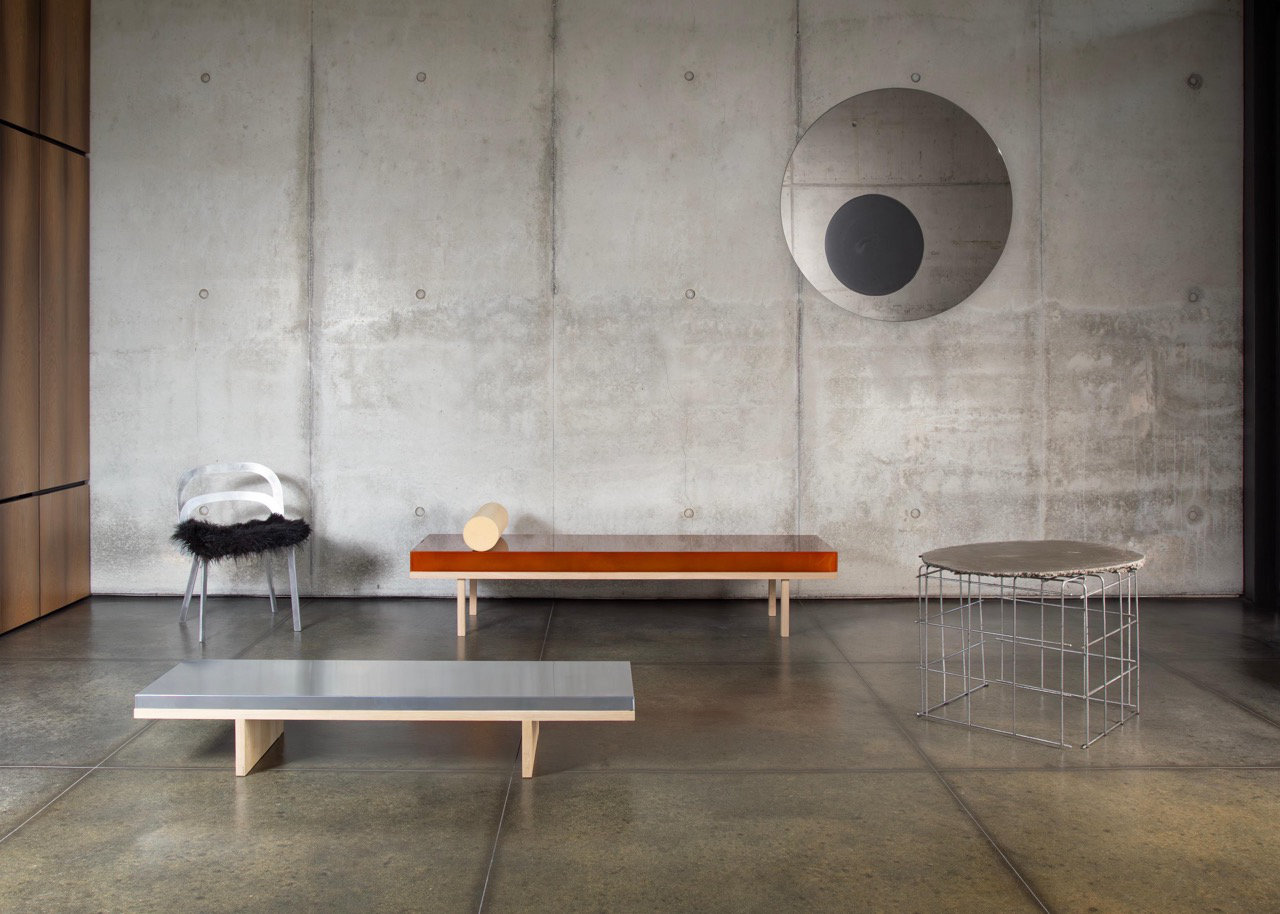
Kai Linke takes the classic I-beam in structural steel and turns it into side tables. Hot-dip galvanised, two heights, no ornament. The K Table looks like something an architect rescued from a construction site – and that's exactly the point. For projects that want an industrial character without quoting it: this is the real thing, not a reference to rawness.
Samuel Treindl combines concrete with galvanised steel in the S Table. Rough, heavy, unambiguous. A table that doesn't pretend to be made of something else. That's rarer than it sounds.
Xaver Sedelmeier works with bronze-tinted mirrors carrying deep black pigment marks – produced by the manufacturing process, not by intention. Every piece looks different. Alongside these: wooden benches and tables skinned in chrome, powder-coated metal or hot-dip galvanised steel. Objects that oscillate between function and sculpture without fully arriving in either category. Meant as a compliment.